.webp)
What Is Roofing Underlayment and Why Does It Matter?

Aaron Venegaz is the President and founder of Global Exterior Experts and has been in the construction / roofing industry for over 15+ years. He started the company back in 2010 and done everything from scheduling appointments to putting down roofs. He's also done everything from commercial roofing to residential roofing and has also worked with almost every single roofing material multiple times over the past 15 years.
A roof replacement represents one of your biggest home investments and can often be anywhere $15,000 to $30,000 depending on your property size and material choices. That's why rushing into a contract without doing your homework is a mistake that could haunt you for years.
Here's the thing the roofing industry has its fair share of contractors who take shortcuts, hide fees in fine print, or disappear after collecting deposits. Your signature on that contract just gives them permission to work on your most important weather barrier which is why reading these four steps matter so much before you put pen to paper.
1. Verify Licenses, Insurance, and References
First start with the basics that protect you legally and financially. A legitimate roofing company operates with all legally required licensing, general liability insurance, and workers comp coverage.
Ask for copies of these documents and you could even go so far as to call the insurance company directly to confirm the policy is active and covers the dates of your project. Also make sure you check that the license number matches your state's contractor database.
Not to mention, a company not having workers' comp coverage could put you at faulty if someone gets hurt on your roof. General liability insurance (Which is legally required) covers damage to your property which happens during the job.
Beyond paperwork make sure you request references from jobs completed in the last 12 months. Call at least three of their past clients and make sure you ask about the company's communication, cleanup, timeline accuracy, and whether they'd hire this roofing company again. A contractor who hesitates to provide recent references should raise immediate concerns.
You can also check online reviews but just remember that anyone can post anonymously. Direct conversations with past customers give you a better insight into what working with this company actually looks like.
This verification step takes maybe two hours total but compare that to the headache of dealing with an uninsured contractor who damages your landscaping or causes a leak that ruins your ceiling and floods the house.
Or worse compare that to a company that doesn't have the safety gear or preparation nor workers comp and the employee finds you liable.
2. Get Multiple Written Estimates
Make sure you get at least three detailed and itemized written estimates so you can compare apples to apples. Make sure you compare the same materials, same roof measurements, and everything is the same.
Here's what matters: you're not just looking for the lowest price. You're evaluating the scope of work, materials specified, warranties offered, and the level of detail each contractor provides you with.
A rock bottom bid often means corners will be cut or and things like reusing your old flashing instead of replacing it, rushing through ventilation code requirements, or using economy grade materials but didn't specify that in the quote could happen.
When comparing estimates make sure you look for specifics. Does the quote list the exact shingle brand and model? Does it include tear off and disposal of old materials? What about some room to breath if deck repairs are needed? Are permits included?
Quality estimates break down every phase of work. They'll specify the number of roofing layers being removed, any needed ventilation improvements, the underlayment type and ice/water shield placement.
Price ranges for a roof replacement vary significantly by region and material choice. Expect for a asphalt three tab shingles anything around$10,000 to $18,000 for an average home. For architectural shingles expect anywhere from $15,000 to $20,000. When getting quoted for metal roofing just expect in the high $18,000 to $40,000s. These are 2025 and 2026 ballpark figures that shift based on local labor rates and material costs.
If one bid comes in 30% lower than the others without clear explanation, that's your signal to dig deeper and find out what are they leaving out.
3. Read Every Word of the Contract's Fine Print
This is where property owners get themselves into trouble. They skim the first page with the price and timeline then just flip to the signature line.
The fine print contains exclusions, limitations, and clauses that define exactly who's responsible when things go wrong. Some contracts include language that frees the roofing company of responsibility for damage to gutters, light fixtures, sprinkler systems, landscaping, or items inside your home.
That means if their crew knocks a gutter loose or cracks a skylight, you're covering the repair yourself. If falling debris damages your AC condenser, you're paying for that out of pocket. These are real scenarios that happen during roof work and you need to make sure you don't get in trouble for it.
Look for payment terms spelled out clearly. How much deposit is required? What triggers subsequent payments? Many contracts structure payments around project milestones, such as a deposit at signing, payment when materials arrive, payment when tear off completes, and final payment at inspection approval.
Check the timeline and weather delay clauses. Realistic projects can take 1 to 2 days for standard asphalt shingle installation and expect longer for more complex roofs or premium materials. The contract should also address how weather delays get handled and who decides when conditions are safe to work.
Warranty details belong in the contract too. Material tends to come with manufacturers warranties (typically 20 to 50 years depending on shingle grade) and the roofing company normally has a workmanship warranty to cover the labor (Our warranty is 10 years). You should have both be documented in writing with specific coverage terms.
4. Schedule a Contract Review Meeting
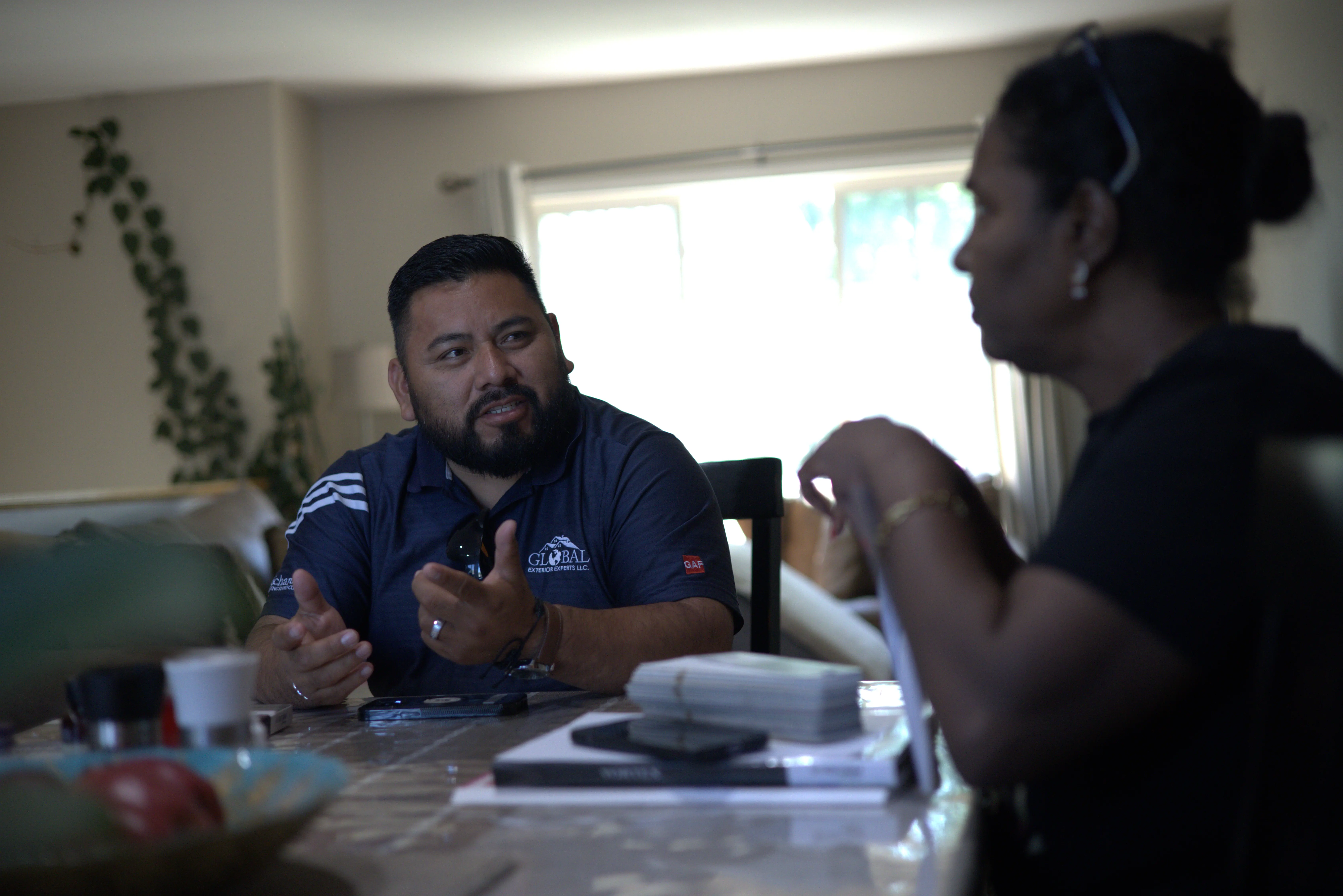
Don't sign anything until you've sat down with the contractor to review the entire document line by line and any roofing company worth hiring will make time for this conversation, even if it's not the owner.
Come prepared with questions and if something's unclear, ask for clarification in plain language. If you don't understand a term, get the definition. If a clause concerns you, discuss alternatives or request amendments.
Here are questions to bring up during your review:
- What happens if hidden damage gets discovered after tear-off? How do change orders work, and who approves additional costs?
- Who pulls permits, and what inspections are required? Who pays the permit fees?
- How is the property protected during work? What gets covered and what remains exposed?
- What's the crew size and what's their experience level? Will subcontractors be involved?
- How does debris disposal work? Is a dumpster included and where will it be placed?
- What's the daily work schedule? Will they work weekends or in rain?
- How do you handle communication during the project? Who's the point person for questions or concerns?
- What payment methods do you accept and when is final payment due?
This meeting also lets you gauge the contractor's professionalism. Do they answer questions directly or do they dodge details? Do they respect your concerns or do they pressure you to sign immediately?
Red flags during this meeting include: refusing to modify unreasonable terms, getting defensive about questions you ask, rushing you through important sections, or claiming "everyone signs these" when you express hesitation.
A contract represents a legal agreement where both parties commit to terms. You're promising to pay the agreed upon amount and they're promising to complete the work to code and industry standards within a their timeline with a guarantee on their quality.
That's a serious commitment on both sides.
Understanding Change Orders
One aspect worth extra attention: the change order process. This determines how unexpected situations get handled.
Roof work often reveals hidden problems like the decking having soft spots from old leaks (Common One). Sometimes things like previous repairs weren't done correctly or inadequate ventilation that should be addressed while everything's exposed.
Your contract should spell out how these discoveries get communicated, quoted, and approved before additional work proceeds. Quality contractors document everything in writing through change orders that detail the new work and associated costs.
Planning Your Project Timeline
Beyond the contract itself, discuss project timing before signing. Roofing companies typically book 2 to 8 weeks out during busy season (spring through fall). Winter work is possible in many regions but you may face more weather delays.
Ask about their current backlog and when your project would realistically start. Get this timing in writing as part of the contract. Just remember that permitting can add several days to a week before work begins, depending on your local building department.
What Happens After You Sign
Once both parties sign the agreement, several things should happen in quick succession. The roofing company will schedule you in for the roof replacement if they cannot do it that moment, but once that time comes they'll orders materials, schedules crews, and pulls permits. You'll also typically get a call within 24 to 48 hours before work starts confirming the start date and crew arrival time.
Your deposit gets the process moving and the remaining payments follow the schedule outlined in your contract as work progresses.
The Bottom Line on Contract Protection
These four steps are necessary to the security of your roof; verifying credentials, comparing multiple bids, reading fine print thoroughly, and reviewing everything with the contractor.
Yes, this process is going to take some time so plan on spending 4 - 6 hours total between getting estimates, checking references, reading contracts, and having review meetings. That time investment protects what might be a $20,000 decision.
The alternative is signing blindly and hoping everything works out. Some people get lucky with that approach and some don't, which is why you're reading this now instead of just trusting the first estimate that lands in your inbox.
Your roof replacement deserves the same careful consideration you'd give any major purchase. Would you buy a car without test driving it or checking the vehicle history? Would you hire someone to remodel your kitchen without seeing their previous work?
Of course not. So make sure you apply that same scrutiny to your roofing contract. The contractors who object to these verification steps aren't the ones you want on your roof anyway. The professionals who stand behind their work welcome informed customers who ask smart questions.
Take your time. Do your research. Read everything before signing. Your roof will thank you for decades to come.