.webp)
What Is Roofing Underlayment and Why Does It Matter?

Aaron Venegaz is the President and founder of Global Exterior Experts and has been in the construction / roofing industry for over 15+ years. He started the company back in 2010 and done everything from scheduling appointments to putting down roofs. He's also done everything from commercial roofing to residential roofing and has also worked with almost every single roofing material multiple times over the past 15 years.
The Short Answer: Steeper Roof, Higher Cost
Roof pitch directly affects what you pay for a roof replacement. The steeper the slope, the more labor, safety equipment, and time the job requires. That adds up fast. A standard mid-slope roof typically costs more to replace than a low-slope one, and a steep-pitch roof can run significantly higher still. Understanding why helps you plan, budget, and avoid surprises when you get that first quote.
What Is Roof Pitch, Exactly?
Pitch measures how steeply your roof slopes. It is expressed as a ratio of rise to run. For every 12 inches of horizontal distance (the run), the roof rises a certain number of inches.
A 4/12 pitch rises 4 inches for every 12 inches of horizontal distance. A 12/12 pitch rises 12 inches, which is a true 45-degree angle. That distinction matters a lot when a crew is up there working for six or eight hours.
Here is how the industry generally categorizes pitch:
- Low-slope: 2/12 to 4/12
- Standard/walkable: 4/12 to 7/12
- Steep-slope: 8/12 to 12/12
- Very steep or cut-up: Over 12/12, or roofs with many angles, valleys, and dormers
Why Pitch Raises the Price
Here is the thing: labor is the biggest driver of cost in any roof replacement and pitch directly controls how fast and safely a crew can work.
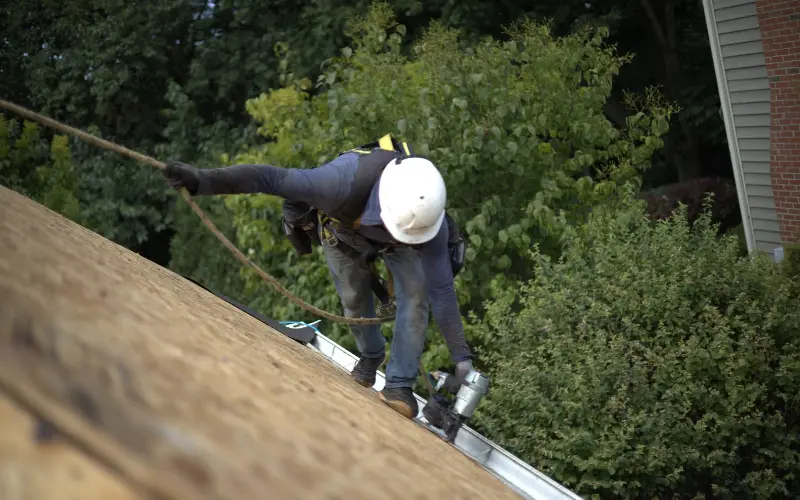
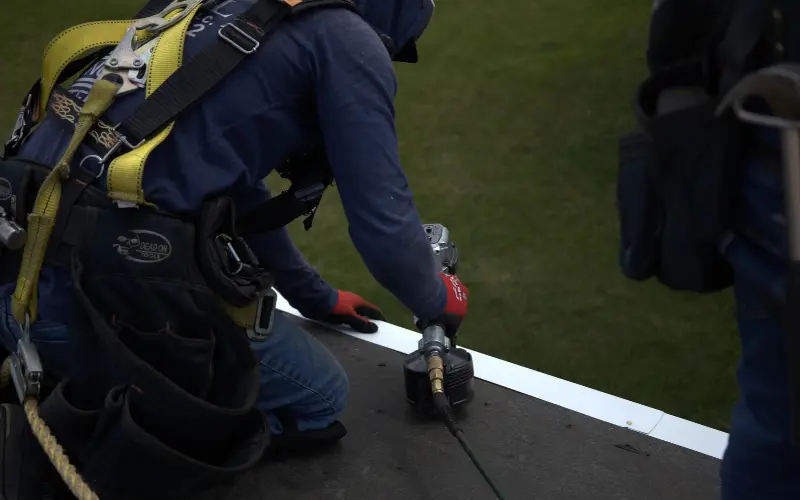
On a low slope roof, workers walk and move freely. Tear off goes quickly, staging materials is simple, and installation moves at a steady pace. On a steep roof, everything slows down. Workers need harnesses, roof jacks, and staging boards just to stand safely. That safety equipment takes time to set up and move so productivity per hour drops. The crew might need more people on the job to finish in a reasonable timeframe.
Add it all together, and steeper slopes typically carry a labor surcharge of 20% to 50% over a comparable low slope job that can be easily walked on. Of course depending on how steep we are talking.
Cost Ranges by Pitch Category
These are broad, real world ranges for a standard asphalt shingle replacement on an average-sized residential roof (around 1,500 to 2,000 square feet of actual roof surface):
- Low-slope (2/12 to 4/12): $8,000 to $14,000
- Standard walkable (4/12 to 7/12): $10,000 to $18,000
- Steep-slope (8/12 to 12/12): $14,000 to $24,000
- Very steep or complex: $20,000 and up
These figures assume asphalt shingles. If you are using metal, tile, or slate on a steep roof, costs climb further. Premium materials plus difficult installation is a combination that can push totals well past $30,000 on larger homes.
The Material Waste Factor
Steeper roofs use more material. That sounds counterintuitive but here is why it happens.
When shingles are installed on steep surfaces, cutting around edges, valleys, and hips creates more waste. Steeper angles also require more fasteners and, in some cases, additional underlayment layers to meet code. On a very steep roof, you may also need extra starter strips and hip-and-ridge cap material because those lines are longer relative to the roof's footprint.
Waste percentages on a standard-pitch roof typically run 10% to 15%. On a steep or cut-up roof with lots of angles, waste can hit 20% to 25%. That extra material cost gets passed directly into the quote.
Pitch and Material Compatibility
Not every roofing material works on every pitch. This is a point that catches homeowners off guard during the planning phase.
Here is a quick breakdown:
- Asphalt shingles: Generally require a minimum 2/12 pitch with modified installation, work well up to 12/12 and beyond
- Metal panels (standing seam): Work on very low pitches, down to 1/12 in some cases
- Concrete or clay tile: Typically require at least a 4/12 pitch, sometimes 5/12
- Wood shake: Minimum 4/12, better at 6/12 and up
- Built-up or TPO membrane: Designed for low-slope or flat roofs, not suitable for steep pitches
Choosing the wrong material for your pitch can void manufacturer warranties and create leak problems within a few years. A qualified roofing company will steer you toward materials rated for your actual slope.
Permitting and Code Surprises
Alright, let us talk about something a lot of quotes do not mention upfront: local building codes sometimes have specific requirements tied to pitch.
In some areas, anything above a certain pitch requires additional ice and water shield coverage, not just at the eaves but across a larger portion of the roof deck. Steep-pitch homes in wind-prone regions may also require enhanced fastening patterns that use more nails per shingle. These requirements can add $500 to $2,000 to a job, depending on roof size and local code.
Pull permits properly. Any roofing company worth hiring will pull a permit on a full replacement. It protects you if you ever sell the home, and it ensures the job passes inspection.
How Pitch Affects Project Timeline
Low-slope roofs move faster. A standard 1,500-square-foot low-slope replacement might wrap in one to two days. A steep-pitch roof of the same square footage could take two to four days due to slower working pace and additional safety setup.
Weather matters more on steep roofs, too. Rain or wet conditions on a steep slope are a safety issue, not just a nuisance. That can push timelines out further if you hit a stretch of bad weather mid-project.
How to Prepare Before Calling a Roofing Company
Before you reach out for quotes, a little preparation goes a long way.
- Know your approximate pitch. You do not need to climb up there. A roofer can measure it, but knowing the general category helps you gauge whether quotes seem reasonable.
- Measure your home's footprint. Your actual roof surface area is larger than your home's square footage because of the slope. A 2,000-square-foot house with a steep pitch might have 2,600 to 3,000 square feet of actual roof.
- Ask about pitch surcharges explicitly. Some quotes bury them in line items. Ask directly whether steep-slope labor costs are already included.
- Get at least three quotes. Roof replacement pricing varies. Three quotes from reputable roofing companies gives you a real baseline.
What Else Drives the Final Number
Pitch is a major cost factor, but it works alongside several others. Keep these in mind when reviewing quotes:
- Deck condition: Rotted or damaged sheathing adds material and labor costs
- Number of layers: Tear-off of two or three existing layers costs more than a single layer
- Ventilation upgrades: Ridge vents, intake vents, and baffles are often added during replacement
- Flashing work: Chimneys, skylights, and pipe boots all require careful flashing that takes time
- Accessibility: Tight lot lines, landscaping, and multi-story homes can limit staging and add cost
Summary: What to Take Away
Roof pitch is one of the most direct factors in what a roof replacement costs. Low-slope roofs are the most affordable to work on. Steep-pitch roofs require more labor hours, safety equipment, and material, and those costs add up across every line item in a quote.
Here is what to consider next:
- Get your pitch measured or estimated before calling for quotes
- Ask each roofing company whether steep-slope labor is itemized or bundled
- Confirm material compatibility with your actual pitch
- Budget a 10% to 15% contingency for deck repairs or code requirements you did not know about
Understanding how pitch affects your roof replacement cost puts you in a much stronger position when it is time to make a decision.