.webp)
What Happens if My Roof Claim Gets Denied?

Aaron Venegaz is the President and founder of Global Exterior Experts and has been in the construction / roofing industry for over 15+ years. He started the company back in 2010 and done everything from scheduling appointments to putting down roofs. He's also done everything from commercial roofing to residential roofing and has also worked with almost every single roofing material multiple times over the past 15 years.
Short answer: in most places, yes. A roofing company should carry a license where the state or city requires one, post a surety bond, and hold both liability and workers' compensation insurance. If a roofer can't show you all three that's going to be a red flag you should think twice about hiring this roofer
Here's the thing. The rules change depending on where you live and the gaps in those rules are exactly where homeowners get burned. Below is what each term means, what it protects, and how to check it before you sign anything.
.png)
Licensed, Bonded, and Insured: What Each One Actually Means
These three words get thrown around in ads like they mean the same thing. They don't. Each one protects you in a different way.
- Licensed: The roofing company met the state or local requirements to legally do roofing work. Usually means they passed an exam, proved their experience, and payed the fees
- Bonded: The company posted a surety bond. If they take your money and don't finish the job, or they break the rules, that bond can be used to pay you back.
- Insured: The company carries insurance that covers property damage and injured workers, because in the worst case you'll be the one paying if someone gets injured.
A real roofing company will have all three. Missing even one shifts the risk onto you.
Does Every State Require a Roofing License?
No and this surprises a lot of people since it seems obvious roofing licenses would be required everywhere but they aren't.
Some states license roofers at the state level while others leave it to the city or county. And a handful just don't require a roofing-specific license at all, though they may still require a general contractor license or local registration no specific roofing license is needed.
Therefor a roofer working legally in one town might mean they're working illegally a county over. Truthfully fully licensed means nothing until you know which license they're talking about and whether it's the right one for your area so make sure you verify it.
A Real Example: How Illinois Handles It
Illinois is one of the few states with a statewide roofing license so it's a clear example of how strict things can get.
In Illinois anyone doing roofing work needs a license from the Illinois Department of Financial and Professional Regulation (IDFPR).
There are two tiers to this:
- Limited license: Covers residential buildings with eight units or fewer, like single-family homes and small apartment buildings.
- Unlimited license: Covers any property including commercial and industrial.
These licenses run on a two-year cycle and expire at the end of every odd-numbered year. The state also requires a surety bond ($10,000 for limited, $25,000 for unlimited) plus proof of liability insurance and workers' comp. Illegally roofing isn't a cost saver it's a criminal offense.
Why Bonding Matters More Than People Think
A surety bond is basically a safety net for you because it acts as a guarantee that the roofing company will follow the rules and finish what they started.
If a bonded company takes your deposit and disappears, or does work that violates code, you can file a claim against that bond. Without one your only option is a lawsuit and good luck collecting from a company that's already gone or a few states over under a new phone number and new company name.
Now a bond isn't a lot of money, but they'll tell you that this company has money if something goes wrong and isn't just a fly by night.
Insurance: The One That Protects Your House and Your Wallet
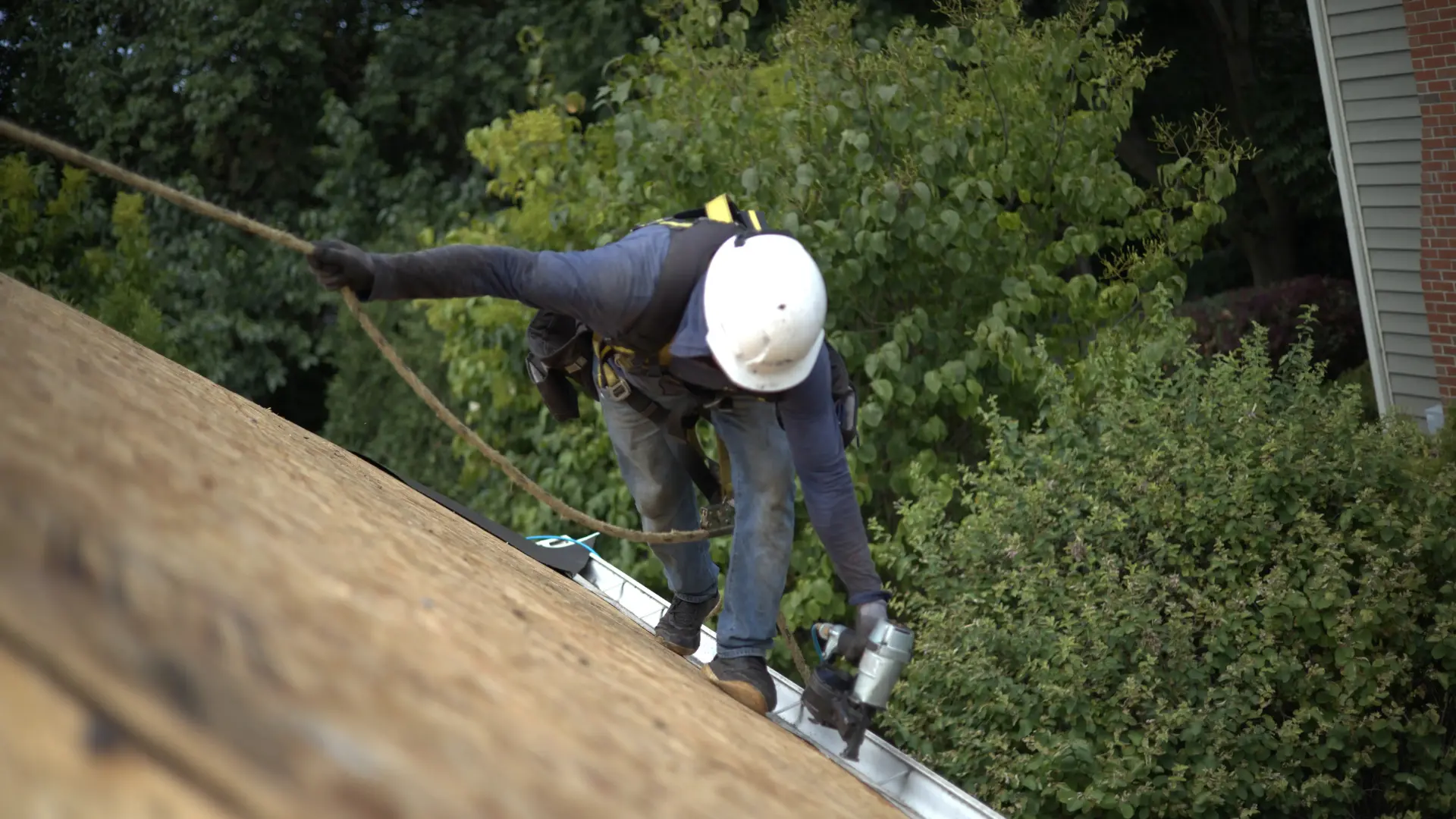
This is the big one because roofing is dangerous work as you can image and accidents on your property can get expensive fast.
A roofing company should be holding two kinds of coverage:
- General liability insurance: Pays for accidental damage to your home.
- Workers' compensation: Covers a worker who gets hurt on your roof / falling off of it.
Here's why workers' comp matters should be on of the first things you check. See, if a roofer falls off your house and they don't carry workers comp, you could be on the hook for their medical bills. That's not a scare tactic, that's literally how liability tends to land when there's no coverage in place since it's your property. So always ask for a certificate of insurance, and confirm it hasn't expired and you could even go so far as to call in to check it's validity.
How to Verify a Roofer Before You Sign
Don't just take the insurance logo and piece of paper as the end all be all proof they're licensed.
If you want to be extra sure since especially when replacing your roof you're not just paying for the material and labor, you're also paying for the security that it'll be done right.
You can also:
- Ask for the license number and look it up on your state or city licensing website.
- Request a certificate of insurance and check the expiration date.
- Confirm the bond is active if your area requires one.
- Get everything in writing, including the scope, materials, and warranty.
A legitimate roofing company hands this over without batting an eye.
Red Flags to Walk Away From
- Cash-only deals or pressure to pay the full amount up front.
- "Don't worry about the permit, we'll handle it later."
- No physical address or a business that's only a few weeks old.
- A quote that's dramatically cheaper than the rest.
The Bottom Line
A roofer should be licensed where required, bonded, and insured. Those three things protect your home, your money, and you. Before you commit to a roof replacement ensure you; verify the license, confirm active insurance, and check the bond.
Your next step is simple: ask any roofing company you're considering for proof of all three and look up the requirements for your own state and county so you know what "fully licensed" actually means where you live. Five minutes of checking now could easily save you a world of trouble later.

.png)