.webp)
What Is Drip Edge and Do I Need It?

Aaron Venegaz is the President and founder of Global Exterior Experts and has been in the construction / roofing industry for over 15+ years. He started the company back in 2010 and done everything from scheduling appointments to putting down roofs. He's also done everything from commercial roofing to residential roofing and has also worked with almost every single roofing material multiple times over the past 15 years.
Most asphalt shingles take 3 bundles per square, and one roofing square covers 100 square feet. Each bundle covers about 33.3 square feet. Some heavier designer and shake-style shingles need 4 or 5 bundles per square. To estimate your order, divide roof area by 100, multiply by bundles per square, then add 10 to 15 percent for waste and cuts.
How Many Bundles of Shingles Per Square? The Short Answer
You need 3 bundles of shingles per square for most asphalt roofs. One roofing square equals 100 square feet, so each bundle covers about 33.3 square feet. Heavier specialty shingles can take 4 or 5 bundles per square.
That's the quick math. But the number on your final order will almost always be higher than "squares times three," and that gap is where projects go sideways. Here's how we work it out on real roofs.
1. What Is a Roofing Square?
A roofing square is 100 square feet of roof surface. Picture a 10-by-10-foot patch. Every roofing company uses squares to price shingles, underlayment, and labor.
One catch: your roof is bigger than your house's footprint. Pitch, overhangs, and dormers all add surface. A 2,000-square-foot home can easily carry 24 to 30 squares of roof (who would've thought the lid is bigger than the box?).
2. Bundles Per Square by Shingle Type
Alright, let's talk about why "3 bundles" isn't universal. Manufacturers size each bundle so one person can carry it up a ladder. Heavier shingles get smaller bundles, which means more bundles per square.
- 3-tab shingles: 3 bundles per square, about 33 sq ft per bundle, 50 to 65 lbs per bundle
- Architectural (dimensional) shingles: 3 bundles per square, about 33 sq ft per bundle, 65 to 80 lbs per bundle
- Designer, slate-look, or shake-look shingles: 4 to 5 bundles per square, 20 to 25 sq ft per bundle, 70 to 90 lbs per bundle
Always read the wrapper. Coverage per bundle is printed on every package, and that printed number beats any rule of thumb. Some 3-tab lines even need 3 bundles plus a couple of extra shingles to finish a full square.
3. How to Calculate Bundles for Your Roof in 4 Steps
This is the same math we run on every estimate. Grab a notepad.
- Measure every roof plane. Multiply length by width for each section, including dormers, then add them together.
- Divide by 100. That gives you squares.
- Multiply by bundles per square. Use the number on your shingle's wrapper (usually 3).
- Add waste and round up. More on that in the next section.
Example: A simple gable roof has two planes, each 40 by 30 feet. That's 2,400 square feet, or 24 squares. At 3 bundles per square, you need 72 bundles. Add 10% waste and you get 79.2, so order 80 bundles.
Can't get on the roof safely? Take your attic floor area and multiply it by a pitch factor. A 6/12 pitch adds about 12%. A steep 12/12 pitch adds about 41%. Then add a little for overhangs. A satellite measurement report or a roofing contractor's tape measure will be more accurate than either.
4. The Waste Factor: Don't Skip It
Here's the thing: shingles get cut. Every valley, hip, rake edge, and chimney eats material that never lies flat on the roof. Plan for it up front.
- Simple gable roof: add about 10%
- Roof with hips and valleys: add 12% to 15%
- Cut-up roof with dormers, turrets, or skylights: add 15% to 20%
Running short mid-job is worse than having a few bundles left over. A reorder may come from a different production run, and color can shift slightly between lots. Keep one spare bundle in a dry spot for future repairs.
5. Starter Strips, Ridge Cap, and the Stuff People Forget
Field shingles are only part of the order. These items are measured in linear feet, not squares:
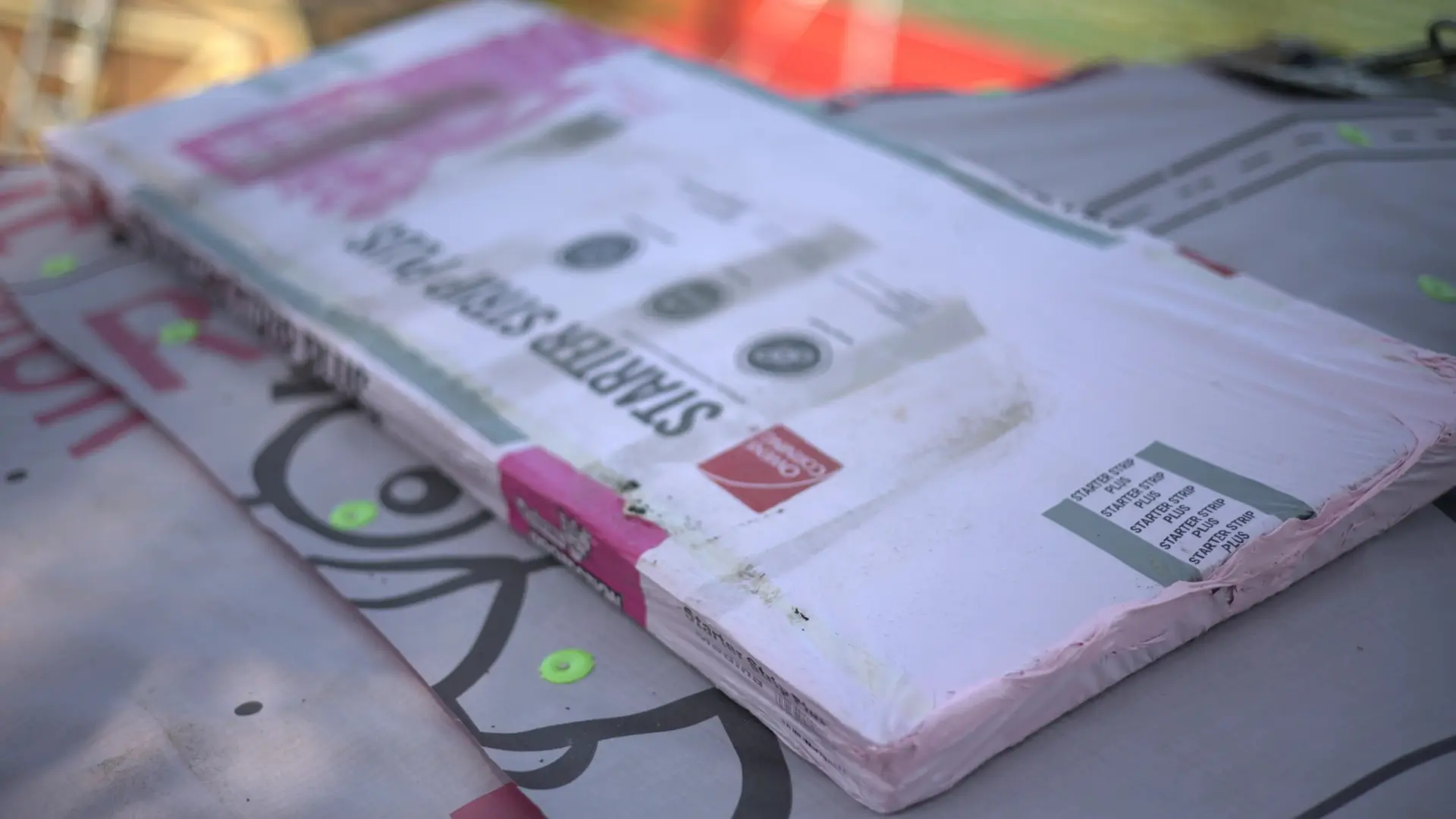
- Starter strip along the eaves and rakes
- Hip and ridge cap shingles
- Ice and water shield at eaves and valleys (required by code in many cold climates)
- Underlayment, drip edge, flashing, vents, and roofing nails
Skipping the matching starter or ridge cap can put a manufacturer's system warranty at risk. Small parts, big consequences.
6. What Shingles Cost Per Bundle and Per Square
Of course, none of this comes free. Prices swing by region, brand, and season, so treat these as broad, approximate ranges for material only:
- 3-tab: $30 to $45 per bundle, or about $90 to $135 per square
- Architectural: $40 to $60 per bundle, or about $120 to $180 per square
- Designer or specialty: $70 to $120+ per bundle, or about $280 to $500+ per square
Installed, a full architectural shingle roof often lands between $450 and $800 per square. That includes tear-off, underlayment, accessories, labor, and disposal. Steep pitches, multiple old layers, and rotted decking push it higher.
When you compare quotes from any roofing company, ask two questions. Is the price per square or a lump sum? And how is decking replacement billed, per sheet or per square?
7. Timelines, Permits, and Material Delays
Most residential tear-offs take 1 to 3 days on site. The planning around them usually takes longer.
- Permits: a few days to 2 weeks, depending on your town
- Materials: common colors are often in stock; specialty lines can take 1 to 4 weeks
- After big storms: supply tightens fast, and lead times stretch for everyone
- Weather: rain, high wind, and cold days (roughly below 40°F) can slow shingle sealing and push your start date
Then there are code surprises. Many towns allow only two layers of shingles, so a third means full tear-off. Inspectors may require new drip edge or ice barrier. And rotted decking only shows up once the old roof comes off. Budget 10% for unknowns and you'll sleep better.
8. Common Bundle Counting Mistakes
These are the errors we see most on DIY material lists and lowball bids:
- Using the house footprint. Roof area is always larger. Pitch alone can add 10% to 40%.
- Counting shingles instead of coverage. Two brands can pack different counts into a bundle. Square feet per bundle is what matters.
- Ordering zero waste. Exact math leaves no room for cuts, mistakes, or damaged pieces.
- Mixing brands or lots. Shingles from different makers often won't line up, and colors rarely match perfectly.
- Forgetting accessories. Starter and ridge cap are separate line items.
If a roofing contractor's quote shows the exact bare-minimum bundle count, ask how they handle waste. A good answer is specific.
9. Planning Your Shingle Order: Next Steps
Ready to put numbers on paper? Work through this list before you buy a single bundle:
- Get an accurate roof measurement in squares, not a footprint guess.
- Pick your shingle line and confirm its bundles per square on the spec sheet.
- Add the right waste factor for your roof's shape.
- List starter, ridge cap, underlayment, ice barrier, and flashing separately.
- Call your local building department about permits and layer limits.
- Order everything from one production lot, with a spare bundle for repairs.
10. Summary: What to Consider Next
Most asphalt shingles need 3 bundles per square, and one square covers 100 square feet. Specialty shingles may need 4 or 5. Measure the real roof surface, add 10% to 20% for waste, and read the wrapper before you trust any rule of thumb.
From there, think about the bigger picture: shingle type, budget, permit timing, and what's hiding under your old roof. If you'd rather skip the ladder and the math, a licensed roofing company can measure your roof, itemize every bundle, and give you a clear, written quote.