.webp)
What Is Drip Edge and Do I Need It?

Aaron Venegaz is the President and founder of Global Exterior Experts and has been in the construction / roofing industry for over 15+ years. He started the company back in 2010 and done everything from scheduling appointments to putting down roofs. He's also done everything from commercial roofing to residential roofing and has also worked with almost every single roofing material multiple times over the past 15 years.
Here's what matters most: synthetic slate mimics natural slate's appearance at roughly half the weight and cost, while real slate delivers unmatched longevity and authentic stone character. Both options create striking roofs, but they differ significantly in price, installation requirements, lifespan, and structural demands.
Your choice depends on your budget, your home's structural capacity, and how long you plan to keep the roof. Let's break down what actually separates these two materials.
Understanding Natural Slate Roofing
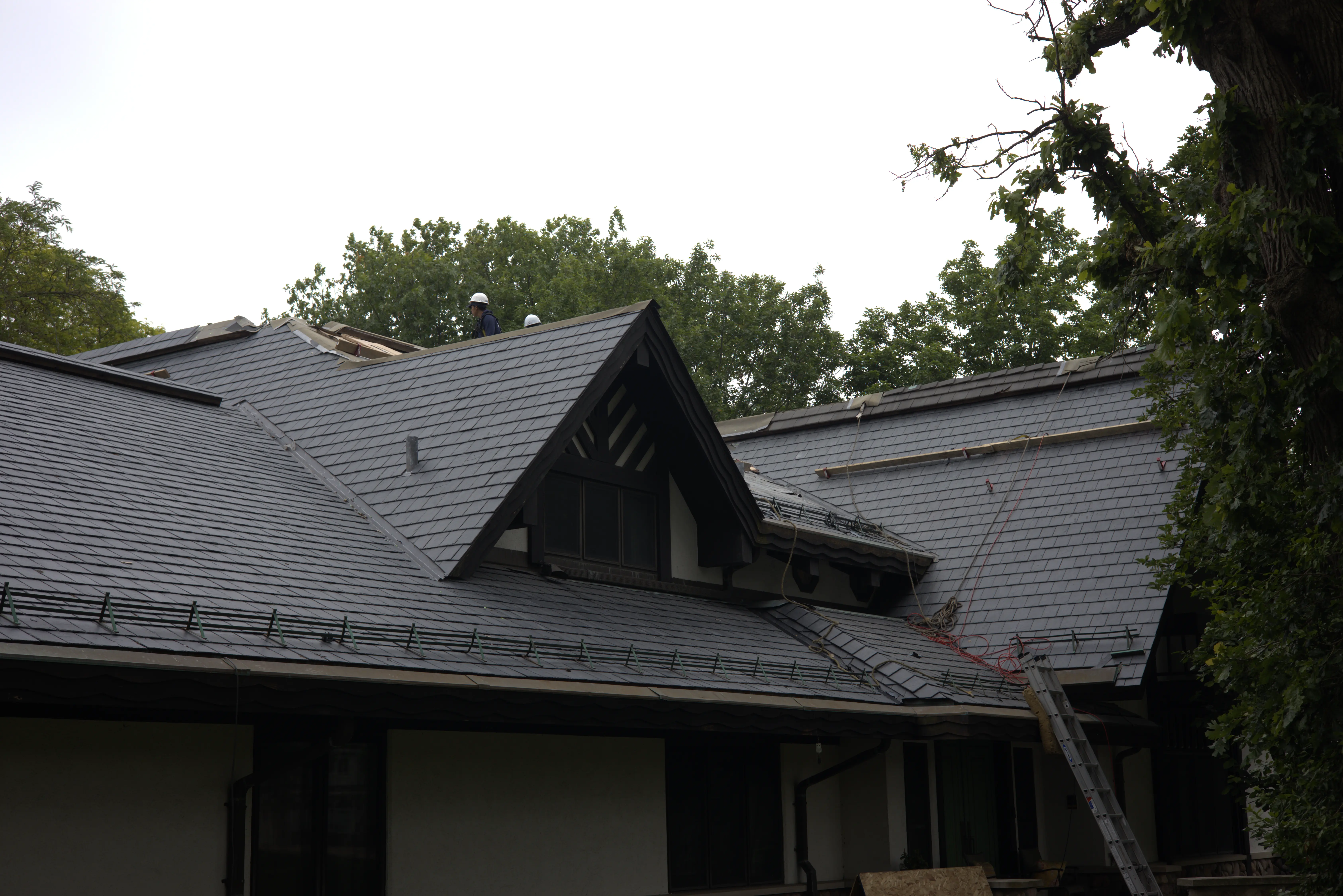
Real slate comes straight from stone quarries (mostly overseas in a country like Italy or Wales). Each tile is cut from solid rock into individual squares or rectangles and no two pieces look ever exactly alike. You'll see natural variations in the color, texture, thickness, and even slight irregularities along the edges but like a snowflake, no two the same..
Not to mention the tiles are really heavy, like a typical slate roof weighs between 800 and 1,500 pounds per square (1 Square = 100 sq ft.) If you know anything about the weight of a asphalt shingle roof you'll know this is significantly heavier and you'll most likely need proper framing to support that load which sometimes means structural reinforcement before installation even begins.
Natural slate is also very brittle. Drop a tile wrong during installation and it'll crack. Walk on the roof incorrectly after installation and you risk breaking tiles. Handling slate roofs requires care and experience which no every laborer has.
What Synthetic Slate Brings to the Table
Synthetic slate, aka composite slate, uses recycled rubber, plastic polymers, or a mix of both to create tiles that look like natural stone. Manufacturers shape and color the material to mimic slate's unique texture and appearance with some products doing better than others.
The big advantage is the weight. Synthetic tiles weigh roughly 400 pounds per square. That's about one third to one half what a natural slate roof would weighs so most homes can handle synthetic slate without any structural modifications. That alone saves thousands on a project without any needed structural supports.
Synthetic slate also resists impact better than real stone. Many products like Davinci, Brava Tile, Etc. carry a Class 4 impact rating (The highest available) with a Class 4 fire rating (The highest on the market). They won't crack if you step on them during maintenance, they handle hail better since they're basically plastic polymers, and if you need to cut a piece to fit around a vent or chimney you're working with a saw, not splitting stone by hand that we all know could break in any which way.
The Weight Question (and Why It Matters to Your Roof Replacement)
Now let's talk about what that weight difference actually means for your project.
If you're considering natural slate a roofing company and most likely an engineer will have to evaluate your home's structure first. Older homes built before the 1970s sometimes have the necessary framing already because slate was more common back then. On the other hand newer homes typically don't. Adding structural support means opening walls, reinforcing trusses or rafters, and potentially upgrading the foundation's load capacity in some areas.
That work adds $5,000 to $15,000 (or more) depending on your home's size and current structure but it's just not optional. Putting slate on a roof that can't support it causes all sorts of things from sagging, cracking, or worse collapse.
Synthetic slate skips this problem entirely. Install it like you would any premium shingle. The roof deck just needs to be solid and properly sheathed but otherwise you won't need to retrofit your home's bones to make it work.
Installation: What You're Really Paying For
Both materials install one tile at a time. Forget three foot shingle strips because when it comes to slate each piece goes up individually, which makes installation slower and more labor intensive than standard asphalt work.
Natural slate demands specialized skills. You're working with stone that breaks if you hit it wrong with a nail and you're cutting pieces (when necessary) using specific tools and techniques because if you break it wrong, you've wasted an entire slate tile. Also you're walking on a surface that can't handle careless movement. The learning curve is steep and not every crew knows how to do it right.
Expect natural slate installation to take two to four weeks for an average sized home (2,000 to 3,000 square feet). Weather delays stretch timelines, material delivery can take weeks or even months especially if tiles are coming from overseas quarries.
Synthetic slate installs faster. The tiles end up cutting easier, be handled rougher, and go up on more forgivingly. A skilled crew familiar with the product can finish an average roof in one to two weeks. Material availability is better too since most synthetic products ship from domestic manufacturers, unlike the natural stuff that comes all the way from europe. The tradeoff is a roof that'll last a good while especially when regularly maintaining your roof.
How Long Each Option Actually Lasts
Alright, let's talk lifespan. This is where natural slate earns its reputation.
A properly installed natural slate roof can lasts 75 to 100+ years. Some slate roofs hit 150 years with good maintenance. The unique part and what makes these last so long is that the stone itself doesn't degrade overtime, it doesn't rot, nor rust, nor break down from UV exposure. What fails eventually is the underlayment, the flashing, and sometimes the fasteners which can also have their lifespans extended if you switch to copper. If you replace those components every 40 to 60 years and the slate can keep going.
There's a reason you could salvage a slate roof after an old one was taken off.
Synthetic slate can last anywhere from 40 to 50 years on average. That's solid and it'll outlast asphalt shingles by a good margin. It's not a century level product because the synthetic materials do degrade over time. Things like UV exposure, temperature cycling, and weather wear them down. Some earlier synthetic products had issues with fading or curling after 15 to 20 years which you'll still see roofs like that around if you look. Modern versions perform better but they're still new enough that we don't have 50 years of real world data to confirm manufacturer claims but we'll take their word for it since it's still plastics & polymers.
Cost Breakdown: What a Roofing Company Will Charge
Here's where budgets get tested because natural slate can run anywhere from $15 to $30 per square foot installed and on a 2,000 square foot roof you may be looking at $30,000 to $60,000 or more. Not to mention premium slate that has thicker tiles, rare colors, or specialty patterns pushes costs even higher. Plus adding in structural reinforcement which you'll most likely need and you could hit the $75,000 to $100,000 on larger or more complex projects.
Synthetic slate costs about $14 to $20 per square foot installed so for that same 2,000 square foot roof so expect anywhere from $28,000 to $40,000. That's roughly half the price of natural slate and could sometimes less. You're still paying more than you would for asphalt shingles but you're 100% getting a premium look and longer lifespan without the extreme price tag.
Keep in mind these are ballpark figures your actual costs depend on roof pitch, complexity, accessibility, location, and which specific products you choose (Like Davinci Or Brava Tile). Steep roofs also cost more. Roofs with lots of valleys, dormers, or angles cost more. Remote locations where crews have to travel a lot more also cost more.
Warranty Coverage (What's Protected, What's Not)
Here's something that surprises people: natural slate typically has no material warranty because the stone itself doesn't come from a manufacturer, it comes from a quarry. There's no company backing a 50 year guarantee on a piece of rock that's been underground for millions of years.
What you do get is a workmanship warranty from the roofing company that installs it. Good contractors offer 10 to 25 years of coverage on their work that'll cover installation errors, flashing failures, and fastener issues. It doesn't cover broken tiles from falling tree branches or someone walking on the roof incorrectly.
Synthetic slate on the other hand does come with manufacturer warranty and most quality brands offer lifetime limited warranties (which usually means 40 to 50 years of coverage with specific terms). These warranties cover material defects and sometimes fading or discoloration but just make sure you read the fine print carefully. Many warranties are prorated meaning coverage decreases over time and they typically don't cover damage from installation errors, extreme weather events, or improper maintenance.
You'll also get a workmanship warranty from your roofing company where standard coverage runs 5 to 10 years though some contractors offer longer or shorter terms.
Durability: How Each Handles Weather and Impact
Natural slate handles fire extremely well and it won't burn, because it's a thin rock. That's a major advantage in fire prone areas. It also handles freeze thaw cycles better than most materials assuming it's properly installed with up to code ventilation and drainage. The stone itself is waterproof, but the underlayment and flashing need regular inspection since it's definitely not.
The downside of any hail prone areas that get a lot of impact damage is that hail can crack slate. Also if you live in a home with lots of trees close by, falling branches break tiles too. Or even simply someone walking on the roof with heavy boots in the wrong spot can shatter a tile and repairs aren't simple like asphalt shingles is. You can't just pull off a broken piece and slide in a new one like you would with synthetic. You need someone who knows how to remove and replace slate without damaging any surrounding tiles.
Synthetic slate also takes impacts better. Most products meet Class 4 impact ratings, which means they survive simulated hail strikes better than many other roofing materials or they flex slightly under stress rather than shattering so you can walk on them during maintenance without worrying about cracking tiles.
The trade off is fire resistance though. Synthetic products don't burn as easily as asphalt shingles but they're not fully fireproof like a stone shingle would like natural slate. Most carry Class A fire ratings (the highest), which means they meet strict fire safety standards. But in extreme wildfire conditions, stone still wins since it's still a rock.
Making the Right Choice for Your Home
So which one makes sense for your project? Start with your building's structure. If your home can't support natural slate without major reinforcement then synthetic becomes the practical choice unless you're committed to the investment.
Budget is next because if you're planning to stay in the home for decades and can afford natural slate then you're buying a roof that will likely outlast your ownership. If you're working with a tighter budget or plan to move within 10 to 20 years then a regular synthetic shingle delivers premium aesthetics at a more manageable price point too.
Think about maintenance too because natural slate requires periodic inspection like every 5 to 10 years at minimum and occasional repairs with some roofing companies offering monthly / yearly checkups at about $1000/yr to repair any cracked pieces of slate or make any repairs. Flashing around chimneys, skylights, and vents needs attention. Broken tiles need replacement. If you're comfortable with ongoing care and have access to skilled contractors, natural slate works well.
Synthetic slate needs less frequent attention so you could just inspect it every few years. Keep gutters clean. Watch for any loose or damaged tiles after major storms. It's more forgiving, but it won't last as long.
Planning Your Slate Roof Replacement Project
Once you've decided on natural or synthetic, start your project with three key steps.
First make sure you get 3 estimates from roofing companies experienced with your chosen material. Not every contractor knows slate work (natural or synthetic). Ask for references. Look at completed projects. Verify licenses and insurance. For natural slate especially, experience matters enormously.
Second, check your local building codes and permit requirements. Some historic districts require natural slate for authenticity. Some homeowner associations have specific rules about roofing materials. Some jurisdictions require engineering evaluations before installing natural slate. Handle the paperwork before ordering materials.
Third, plan your timeline carefully. Natural slate projects can take three to six months from start to finish when you factor in structural evaluation, permitting, material delivery, and installation. Synthetic slate moves faster but still requires proper planning. Don't wait until your current roof is actively failing to start exploring options.
Both natural slate and synthetic slate create beautiful, long-lasting roofs that increase your home's value and curb appeal. Understanding the real differences between them helps you make the right choice for your specific situation, budget, and goals. Choose the material that fits your home's structure, your financial plan, and your long-term vision for the property.