.webp)
What Is Drip Edge and Do I Need It?

Aaron Venegaz is the President and founder of Global Exterior Experts and has been in the construction / roofing industry for over 15+ years. He started the company back in 2010 and done everything from scheduling appointments to putting down roofs. He's also done everything from commercial roofing to residential roofing and has also worked with almost every single roofing material multiple times over the past 15 years.
The hidden costs of a roof replacement typically add 15–25% to your base estimate. These fees being things that weren't foreseen when we intially quoted your roof; common surprises include structural repairs ($1,500–$6,000), permit fees ($100–$1,200), disposal charges ($400–$800), and code-required ventilation upgrades ($300–$900). Illinois weather creates additional concerns like ice dam damage and the deterioration of the decking due to the Illinois weather that aren't visible until the tear off begins.
Understanding What You're Really Paying For
Here's the straight answer: hidden roof replacement costs usually add 15 to 25 percent to your initial estimate and weren't something the roofing company just didn't add to make the quote seem cheaper but is oftentimes something that went legitimately unnoticed. The difference between a $12,000 quote and a $15,000 final bill often comes down to issues nobody can see until the tear off begins.
Standard costs are simple though. You pay for the shingles, underlayment, labor, and tear off. Those numbers always should show up clearly on every roofing company's estimates. Hidden costs appear when we find rotted decking, discover your ventilation doesn't meet code (meaning more vents added, more holes cut, more time spent), or needing to upgrade flashing around chimneys that have settled over the years.
Most homeowners budget for the visible work but oftentimes the problems start when your 20 year old roof hides water damage, structural issues, or has an outdated system that can't support modern materials. Illinois weather makes this worse. Illinois temperature swings, snow packs on heavy, and ice dam patterns create damage that spreads beneath the surface where inspections from the ground miss it completely.
The Big Four: Costs That Catch Everyone
Alright, let's talk about the expenses that most often show up on nearly every roof replacement once work starts.
Structural repairs top the list as the most consistent thing we might have to repair. That means rotten decking or deteriorated fascia boards. Water finds its way through a missing shingles, failed flashing, or ice dam, then sits in your roof deck throughout the years of humid Illinois summers to rot the board. Each sheet of plywood replacement runs $150 to $200 installed. A typical project might need 10 to 30 sheets replaced if they've got damage which can add $700 to $3,000 fast.
Permit and inspection fees vary wildly by municipality. Some Illinois towns charge $150 for a standard replacement permit. Others want $800 plus separate inspection fees. Factor in another $200 to $400 if your project triggers additional structural inspections or code compliance reviews.
Disposal costs surprise people because they're heavier than expected. Asphalt shingles weigh 250 to 400 pounds per square (100 square feet = 1 square) so A 2,000-square-foot roof generates 5,000 to 8,000 pounds of material. Dumpster rental, hauling, and landfill fees typically run $400 to $800 and more from there if your old roof has multiple layers.
Ventilation upgrades become mandatory when your existing system falls short of current building codes. Older homes often lack a proper intake and exhaust balance so we'll need to install ridge vents, soffit vents, or additional attic ventilation adding $300 to $900 to bring everything up to spec.
When Ice Dams Reveal Bigger Problems
Here's the thing about Illinois winters too: ice dams aren't just surface issues. When melting snow refreezes at your roof edge it just backs water up under shingles. Then that water seeps into roof decking, insulation, and wall cavities where it sits until spring humidity prevents any proper drying.
By the time we pull off your old roof that cycle has often repeated for years. The decking then may show soft spots, dark staining, or complete deterioration around eaves and valleys. This can't be fixed with patch work it needs full replacement. The good news? Proper ice and water shield installation during replacement prevents future problems. The bad news? You're paying for damage you didn't know existed.
Northern Illinois sees this more than southern regions but anywhere that gets consistent snow and temperature fluctuations above and below freezing deals with the same pattern. Budget an extra $1,000 to $2,500 if your home has a history of ice dam formation. See this roof deck repair guide.
Code Compliance Surprises Nobody Mentions
Building codes update every few years. Your 1990s roof met standards then but it won't meet standards now.
Modern codes require specific ventilation ratios (typically 1 square foot of ventilation per 150 square feet of attic space) and they mandate proper fastener spacings for proper wind resistance. Codes also specify upgraded underlayment in vulnerable areas. Not to mention some municipalities now require drip edge installation even if your original roof didn't have it.
None of this is optional because inspectors check during the final walkthrough. If your roofing company doesn't bring these items up before starting work, you'll get a stop work order mid project or a failed inspection at the end. Either way, you're paying extra to make right what should've been done right the first time.
The costs aren't huge individually though because upgraded underlayment might adds $200 to $600. Proper drip edge can run anywhere from $300 to $700. Additional ventilation might be $400 to $900. But when you add three or four code required items that weren't in the original estimate, you're looking at $900 to $2,200 in unexpected charges which no one could have accounted for.
What Happens During Tear-Off
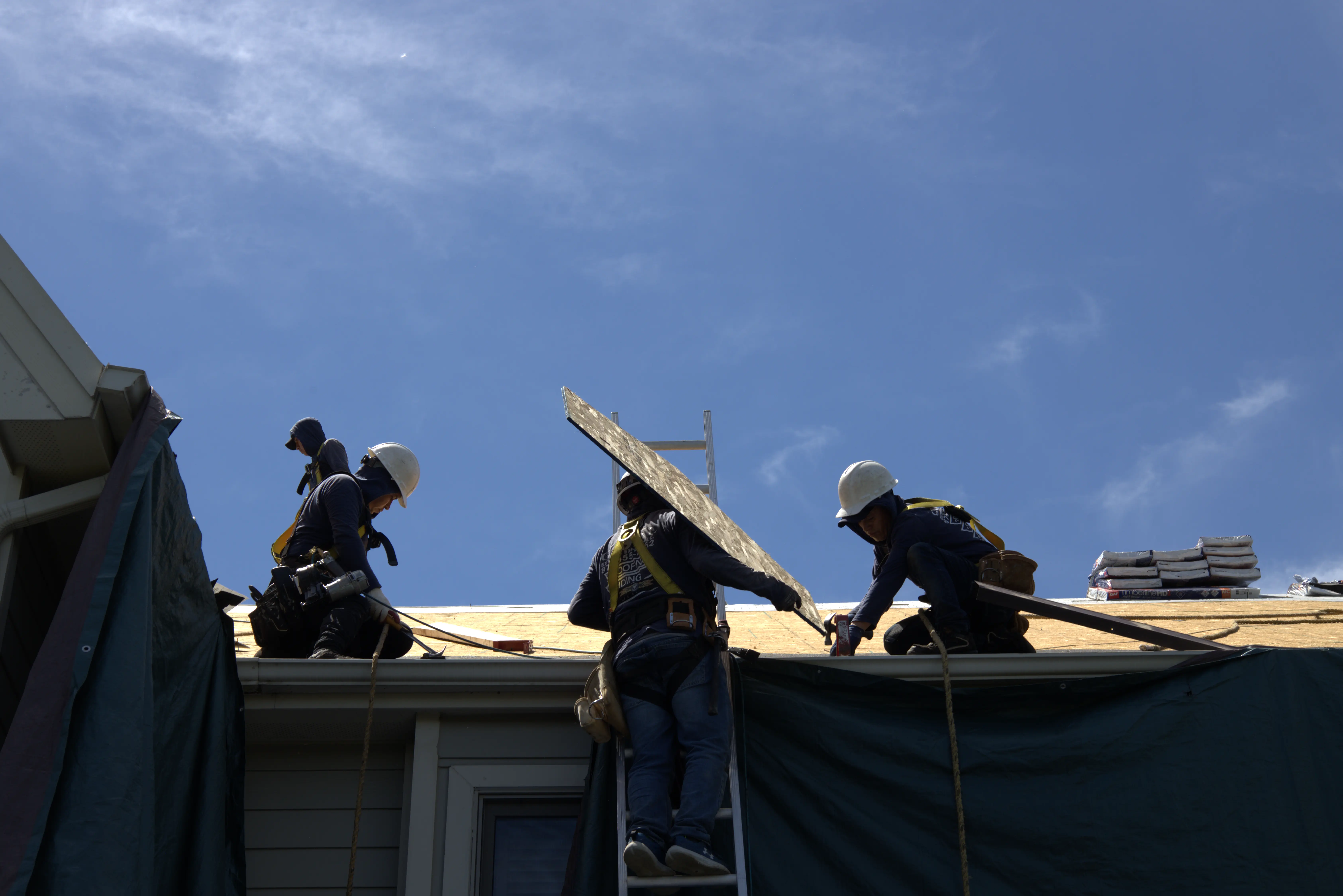
The tear-off process reveals problems that roof inspections from the ground simply can't catch.
We sometimes find carpenter ant damage in fascia boards. We discover missing or deteriorated flashing around chimneys and skylights. We see areas where previous repairs used the wrong materials or improper installation methods that need correction.
Illinois homes built before 1980 often have inadequate decking fasteners too and nails could have pulled loose through decades of thermal expansion and contraction. The decking itself might be fine, but it needs to be re-secured before new roofing goes on. That could be an extra couple hours of labor nobody planned for that could throw off the entire day.
Chimneys present their own issues. Mortar deteriorates, flashing corrodes, and the structure itself can settle or shift. If your chimney needs repointing or new flashing fabrication, add $600 to $1,500 to the project cost.
Material Disposal: Heavier Than It Looks
Here's something most people underestimate. A standard three tab asphalt shingle roof weighs about 250 pounds per square (100 square feet = 1 square) Architectural shingles weigh about 350 to 450 pounds per square and not to mention if your home has multiple layers (common in older Illinois properties), you're doubling or tripling that weight then.
Landfills charge by weight, transport charges applys, and dumpster rental adds to the total. The math works out to roughly $20 to $40 per square for disposal and sometimes more if special handling is required for materials like slate or tile.
Calculate it: a 2,500-square-foot roof (25 squares) generates a disposal costs between $500 to $1,000 before you've installed a single new shingle.
When Delaying Costs More Than Replacing
Small leaks also become big problems when you wait. A $400 repair avoided today could turn into $3,000 of water damaged decking, insulation, and drywall next year.
Illinois humidity accelerates this process too. Summer moisture combines with winter condensation to create ideal conditions for mold growth and wood rot. Temperature swings stress materials already weakened by water infiltration.
Insurance companies notice, too. Many providers reduce coverage amounts or increase premiums for roofs approaching 20 years old. Some exclude roof coverage entirely after 25 years unless you can document regular maintenance and repairs.
The longer you delay, the more hidden damage accumulates. That modest $10,000 replacement estimate becomes $14,000 or $16,000 when tear-off reveals years of deferred maintenance consequences.
Budget Planning That Actually Works
Add 20 percent to your base estimate right from the start. If your roofing company quotes $12,000, set aside $14,400. This buffer covers most unexpected findings without forcing you into rushed decisions or inferior solutions.
Get multiple detailed estimates. Compare line items, not just total prices. A quote $2,000 lower might exclude permit fees, disposal costs, or code-required upgrades that will appear on your final bill regardless.
Schedule a pre-replacement inspection if you're concerned about hidden damage. It costs $300 to $500, but gives you better information for planning. Inspectors can spot soft decking, water staining, or ventilation deficiencies before work begins.
Check your homeowners insurance policy. Storm damage, hail impact, and wind-related issues often qualify for coverage. Normal wear and tear doesn't. Document your roof's condition with photos and inspection reports to support future claims if needed.
Financing Options When Cash Falls Short
Most homeowners use some combination of savings, insurance payouts, and financing to cover roof replacement costs.
Home equity loans offer lower interest rates but use your home as collateral. Personal loans provide faster approval without risking your property. Some roofing companies offer payment plans through third-party financing partners.
Credit cards work for smaller gaps between available funds and total project cost. Compare interest rates and repayment terms carefully. A $3,000 financing charge at 18 percent APR costs significantly more over time than a 6 percent home equity loan for the same amount.
Plan ahead when possible. Starting research and estimates six months before you absolutely need a new roof gives you time to save, compare financing options, and make decisions without weather-related pressure.
Regional Factors That Matter in Illinois
Northern Illinois sees heavier snow loads, more frequent freeze-thaw cycles, and greater ice dam risk than southern regions. These factors increase the likelihood of hidden damage and the scope of repairs needed.
Chicagoland area permit fees run higher than downstate municipalities. Labor costs follow the same pattern. A roof replacement in the suburbs might cost 15 to 20 percent more than the same project in central or southern Illinois.
Local building codes vary significantly. Cook County requirements differ from DuPage County. Collar county inspectors enforce different standards than rural township officials. Your roofing company should know local code requirements before providing estimates.
Disposal facilities charge different rates depending on location. Urban landfills cost more than rural sites. Transport distance factors into total disposal expenses.
What This Means For Your Project
Hidden costs aren't really hidden. They're consequences of existing conditions, code requirements, and material realities that become apparent once work starts.
Proper planning reduces surprises. Detailed estimates that itemize every component help you understand where costs come from. Pre-replacement inspections identify likely problem areas. Communication with your roofing company about contingencies and potential issues sets realistic expectations.
Budget for 15 to 25 percent above your base estimate. Ask specific questions about permits, disposal, code compliance, and structural repair allowances. Understand what your insurance covers and what comes out of pocket.
Illinois weather creates roof replacement challenges that don't exist in milder climates. Our freeze-thaw cycles, ice dam patterns, and humidity levels accelerate deterioration and create hidden damage that only becomes visible during tear-off.
The goal isn't to avoid every unexpected cost. That's impossible. The goal is to plan intelligently so those costs don't derail your project or force compromise on quality and longevity.