.webp)
What Is Drip Edge and Do I Need It?

Aaron Venegaz is the President and founder of Global Exterior Experts and has been in the construction / roofing industry for over 15+ years. He started the company back in 2010 and done everything from scheduling appointments to putting down roofs. He's also done everything from commercial roofing to residential roofing and has also worked with almost every single roofing material multiple times over the past 15 years.
The short answer: A slate roof will outlast anything else you can put on a house, often 75 to 150 year lifespan, but it costs three to six times more than asphalt shingles and requires framing strong enough to carry the weight. If you plan to keep the property for decades and the structure can handle the load, slate is worth serious consideration. If you are looking for the best value on a 20 year timeline, it is not.
Here is the full picture, from the crew that has to carry it up the ladder.
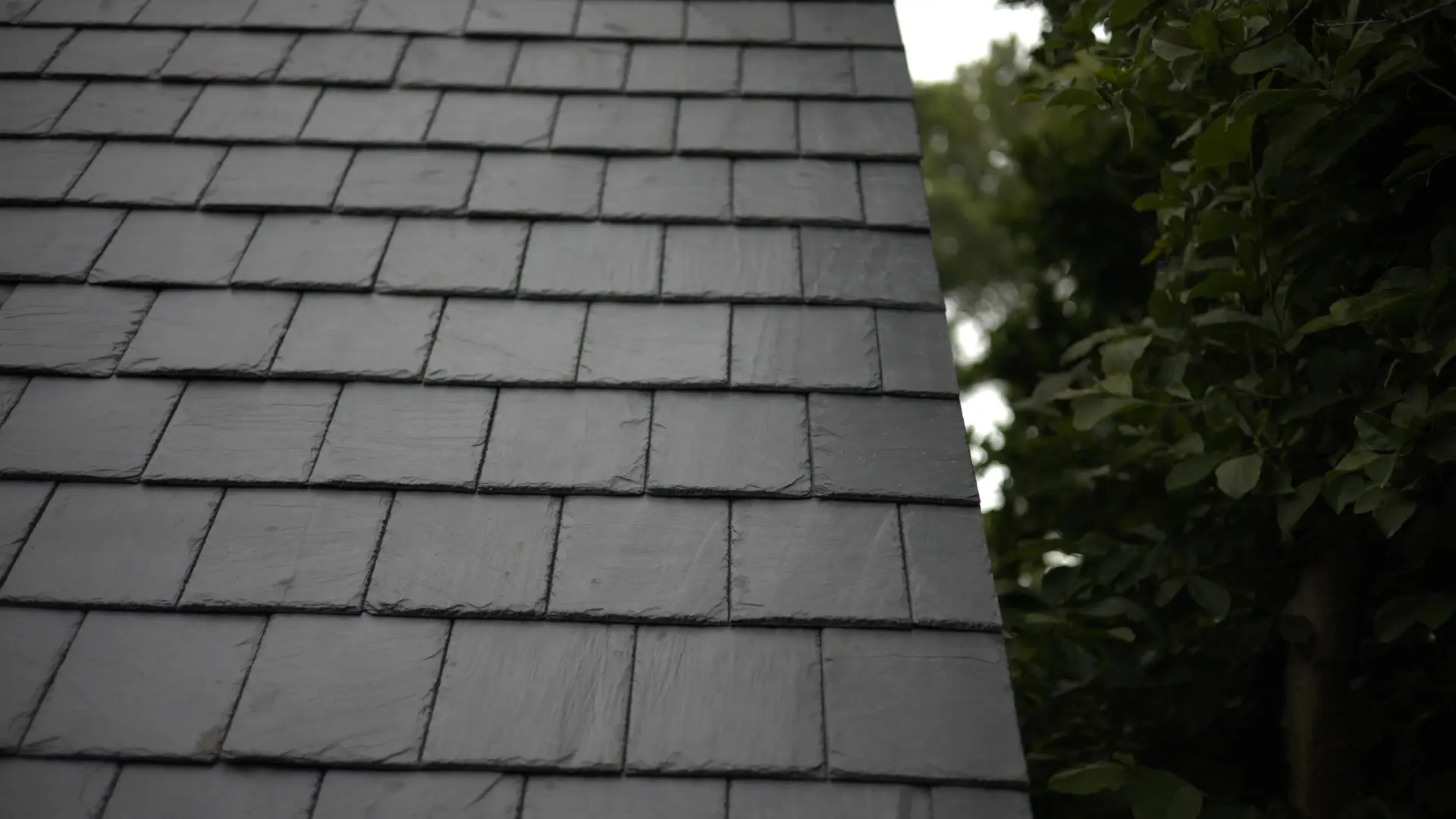
What Slate Roofing Actually Is
Slate is real stone. It gets quarried, split by hand or machine into thin tiles, then nailed to the roof deck one piece at a time. Nothing is manufactured, laminated, or coated.
There are two categories worth knowing:
- Natural slate: quarried stone, typically from Vermont, Pennsylvania, New York, Spain, or Wales
- Synthetic slate: engineered polymer or composite tiles built to mimic the look at a fraction of the weight
Both get called "slate" in sales conversations. They are not the same product, and the difference shows up in your budget and your framing plan.
The Pros of a Slate Roof
1. Lifespan nothing else touches. A properly installed natural slate roof lasts 75 to 150 years. Some hard slate from Vermont quarries pushes past 150. You are likely installing this roof once and never touching it again.
2. Fire resistance. Slate is Class A fire rated on its own, no treatment required. Stone does not burn. In wildfire-prone areas or on properties with wood-burning fireplaces, that matters.
3. It handles weather. Slate does not rot, does not host mold, and shrugs off freeze-thaw cycles that chew up lesser materials. Hail is the one exception, and we will get to that.
4. Resale and curb appeal. Slate reads as permanent. On historic homes, Tudors, Colonials, and higher-end properties, it adds real value in a way a builder-grade shingle never will.
5. Low maintenance. No sealing, no coating, no cleaning schedule. Clear the gutters, keep debris off the valleys, and check for slipped tiles after major storms. That is the routine.
6. Environmental angle. It is stone with no chemical off-gassing, and old slate gets salvaged and reinstalled all the time. Compare that to the millions of tons of asphalt shingles landfilled every year.
The Cons: Where Slate Gets Complicated
Of course, none of this comes free. Slate has real drawbacks, and skipping past them leads to expensive surprises.
Weight. This is the big one. Natural slate runs 800 to 1,500 pounds per square (a square is 100 square feet). Asphalt runs 200 to 350. That means a 30 square roof carries roughly 12 tons of stone instead of 4. Most homes framed after 1960 were never designed for that.
Cost. Material and labor both run high, and skilled slate installers are not on every corner.
Fragility underfoot. Slate is strong against weather and weak against point pressure. Walking on it wrong cracks tiles. Every future service call, chimney work, satellite install, gutter cleaning, becomes a risk to the roof.
Repair difficulty. Matching color and thickness on a 60 year old roof is genuinely hard. Quarries close. Batches vary. Sourcing replacement tiles can take weeks.
Hail. Large hail cracks slate. Insurance carriers know this, and in hail belt regions some carriers price slate coverage accordingly or exclude it.
Slate Roof Cost Ranges
Broad, realistic numbers for a full roof replacement:
- Natural slate installed: $15 to $30 per square foot, sometimes higher for imported or thick-cut stone
- Synthetic slate installed: $9 to $16 per square foot
- Asphalt architectural shingles, for comparison: $4.50 to $8 per square foot
- Structural reinforcement, if needed: $3,000 to $15,000 depending on span and access
- Tear-off and disposal of an existing roof: $1.50 to $4 per square foot
On a 2,500 square foot roof, natural slate commonly lands somewhere between $45,000 and $75,000. Steep pitches, complex valleys, dormers, and multi-story access all push the number up.
Timeline runs 2 to 5 weeks for most residential jobs, longer if material is on backorder. Quarry lead times of 6 to 12 weeks are normal, and imported stone can stretch further. Plan the project a season ahead, not a month.
.webp)
The Structural Question You Have to Answer First
Before you price anything, find out whether your house can hold it. A structural engineer's evaluation typically costs $400 to $900 and tells you what you actually need to know: rafter size, spacing, span, and whether the existing framing meets load requirements.
Skip this step and you get one of two outcomes. Either an inspector stops the job mid-tear-off, or you find out about deflection five years later when the ridge starts sagging. Neither is cheap to fix.
Older homes originally built with slate are usually fine. They were framed for it. Newer construction almost never is.
Natural Slate vs. Synthetic: Which Makes Sense
Alright, let's talk about the option most property owners end up choosing.
Synthetic slate weighs 200 to 400 pounds per square, which means no structural upgrade on most homes. It cuts with standard tools, installs faster, and resists impact better than stone. Good products carry 40 to 50 year warranties.
The tradeoffs: it is a manufactured product with a finite lifespan, and cheaper versions fade or curl. Color consistency from a distance is convincing. Up close, it is not stone.
Choose natural slate when the home is historic, the framing supports it, and you want a permanent roof. Choose synthetic when you want the look and lifespan is a 40 year question, not a 100 year one.
Permits, Code, and the Surprises Nobody Mentions
A few things that catch people off guard:
- Historic districts may require a specific slate size, color, or exposure. Approval can add 4 to 8 weeks.
- Load calculations get requested by many building departments before a permit is issued for natural slate.
- Ice barrier requirements in cold climates apply to slate too, and detailing it correctly at eaves and valleys takes experience.
- Flashing should be copper or stainless. Putting 30 year galvanized flashing under a 100 year roof defeats the purpose .
Maintenance and Repairs
Inspect twice a year and after any severe storm. What to look for:
- Slipped or missing tiles
- Cracked tiles, especially below chimneys and near foot traffic paths
- Rust or failure at flashing points
- Debris packing into valleys
Individual tile replacement runs $200 to $600 per visit for a handful of tiles. The nails and hooks holding slate typically fail before the stone does, so on a 90 year old roof, expect periodic re-securing rather than replacement.
Is Slate Right for Your Property?
Slate makes sense when you check most of these boxes:
- You plan to hold the property long term, or it is a legacy home
- The architecture supports the look
- The framing handles the load, or the reinforcement fits the budget
- You are not in a severe hail zone
- The upfront cost does not strain the rest of the project
If two or more of those fail, synthetic slate or a high-end architectural shingle will serve you better.
Your Next Steps
- Get a structural evaluation before pricing anything.
- Collect three detailed bids that break out tear-off, underlayment, flashing metal, and material origin.
- Confirm the roofing company has completed slate work specifically, and ask to see it.
- Check permit and historic district requirements early.
- Order material with lead time built in.
Slate is the longest-lasting roof you can buy, and it is also the least forgiving of a rushed decision. Handle the structural question first, get the detailing right, and it becomes the last roof replacement the property ever needs.