.webp)
What Is Drip Edge and Do I Need It?

Aaron Venegaz is the President and founder of Global Exterior Experts and has been in the construction / roofing industry for over 15+ years. He started the company back in 2010 and done everything from scheduling appointments to putting down roofs. He's also done everything from commercial roofing to residential roofing and has also worked with almost every single roofing material multiple times over the past 15 years.
Roof flashing is thin piece of metal installed at the seams and joints of your roof to push water away from the spots where leaks usually start and though being small and insignificant to some, it basically keeps your entire roof from failing 10 years early because the decking got soaked.
You will find it around chimneys, vents, skylights, and valleys, basically anywhere two surfaces meet.
Think of flashing as the frontline defense for any rain. It keeps water moving down and off your roof instead of letting it sneak inside.
Where Flashing Sits on Your Roof
Your roof is mainly a bunch of flat parts which do a good job on their own deflecting the water. The trouble starts at the edges and breaks where materials cannot seal tightly to the chimneys or walls. That is exactly where a roof company would need to install flashing.
Most commonly those area are:
- Around chimneys
- Where two slopes meet
- Where the roof meets a wall
- Around skylights and vents
- At the edges and eaves
Each spot gets a different piece, shaped for the job. (More on the types in a minute.)
Types of Roof Flashing
Here's the thing: flashing is not one single product. It comes in several shapes, and each one solves a specific problem.
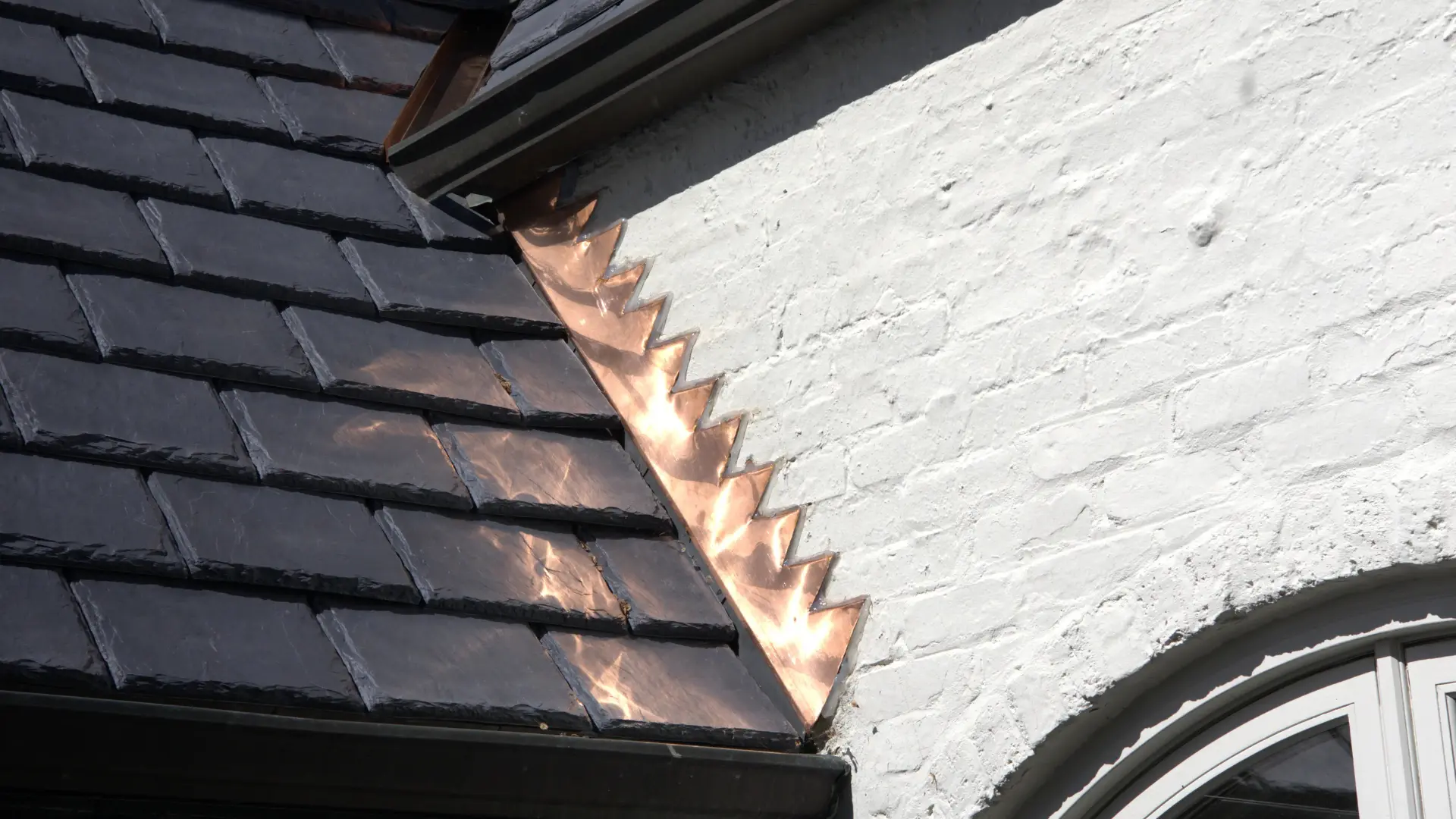
- Step flashing: Small bent pieces layered in with shingles where the roof meets a wall (Like the first image)
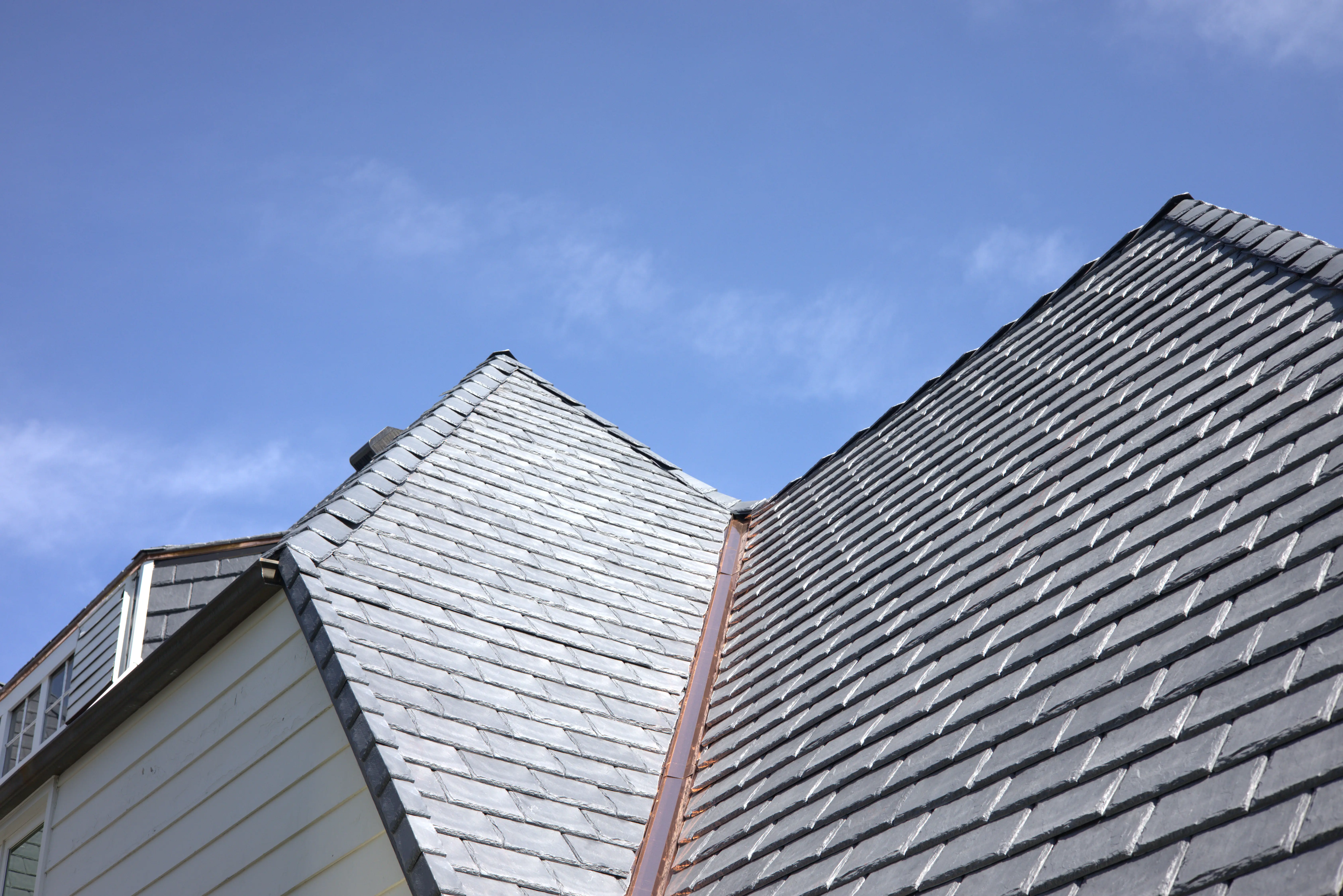
- Valley flashing: Long channels that carry heavy water flow down the valleys.
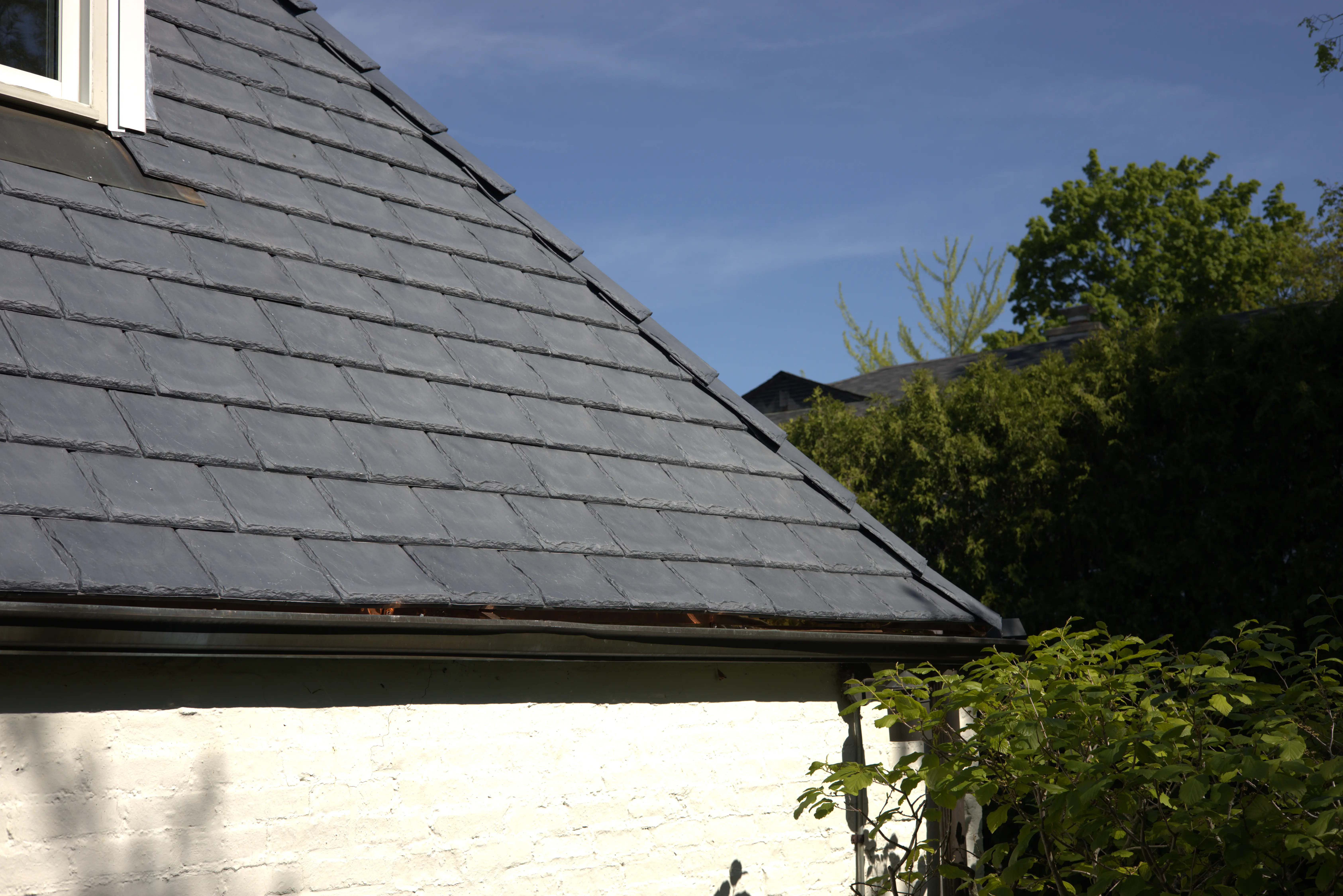
- Drip edge: Runs along the eaves and rakes to direct water into the gutter.
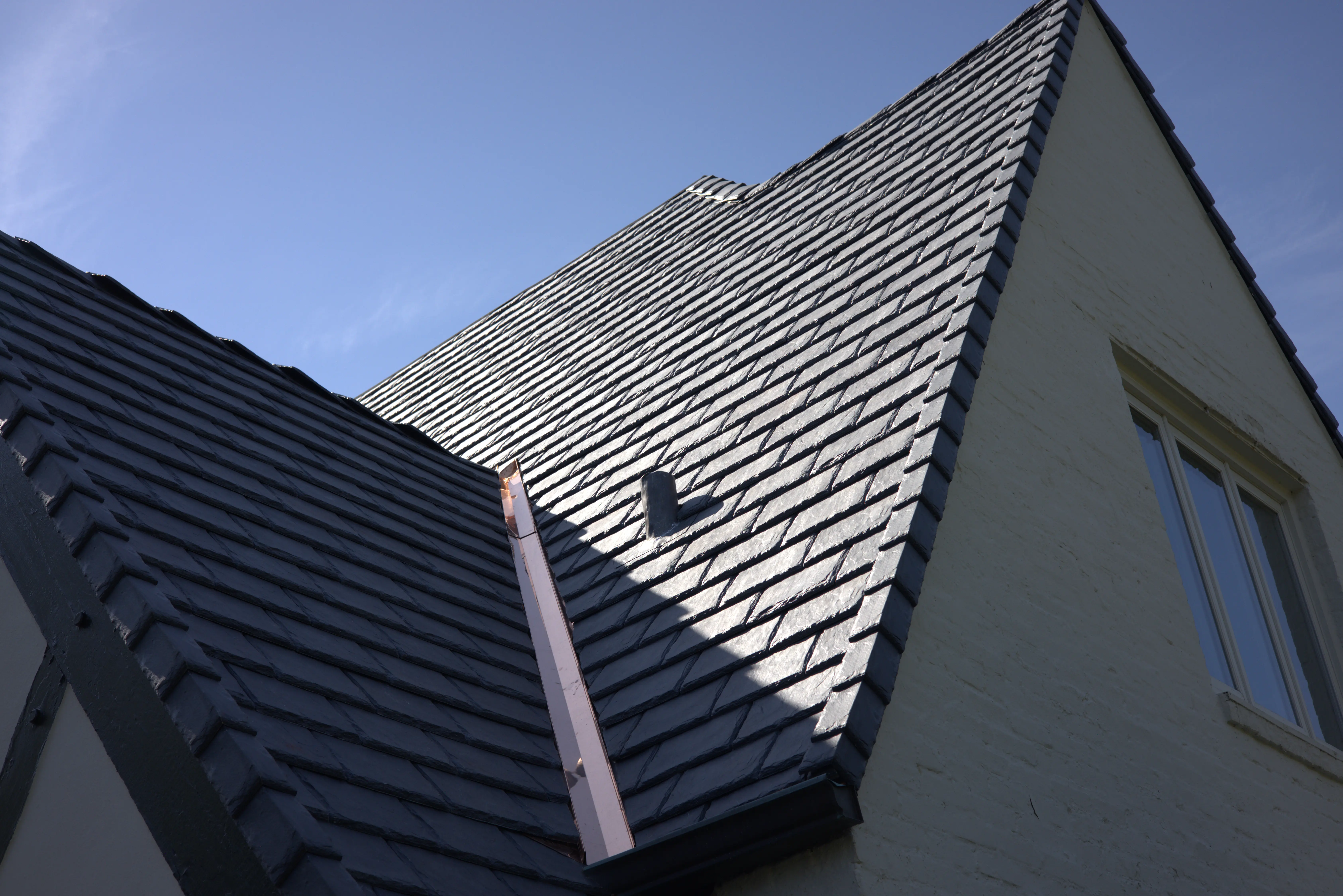
- Vent or pipe flashing: Collars that seal around plumbing pipes and exhaust vents.
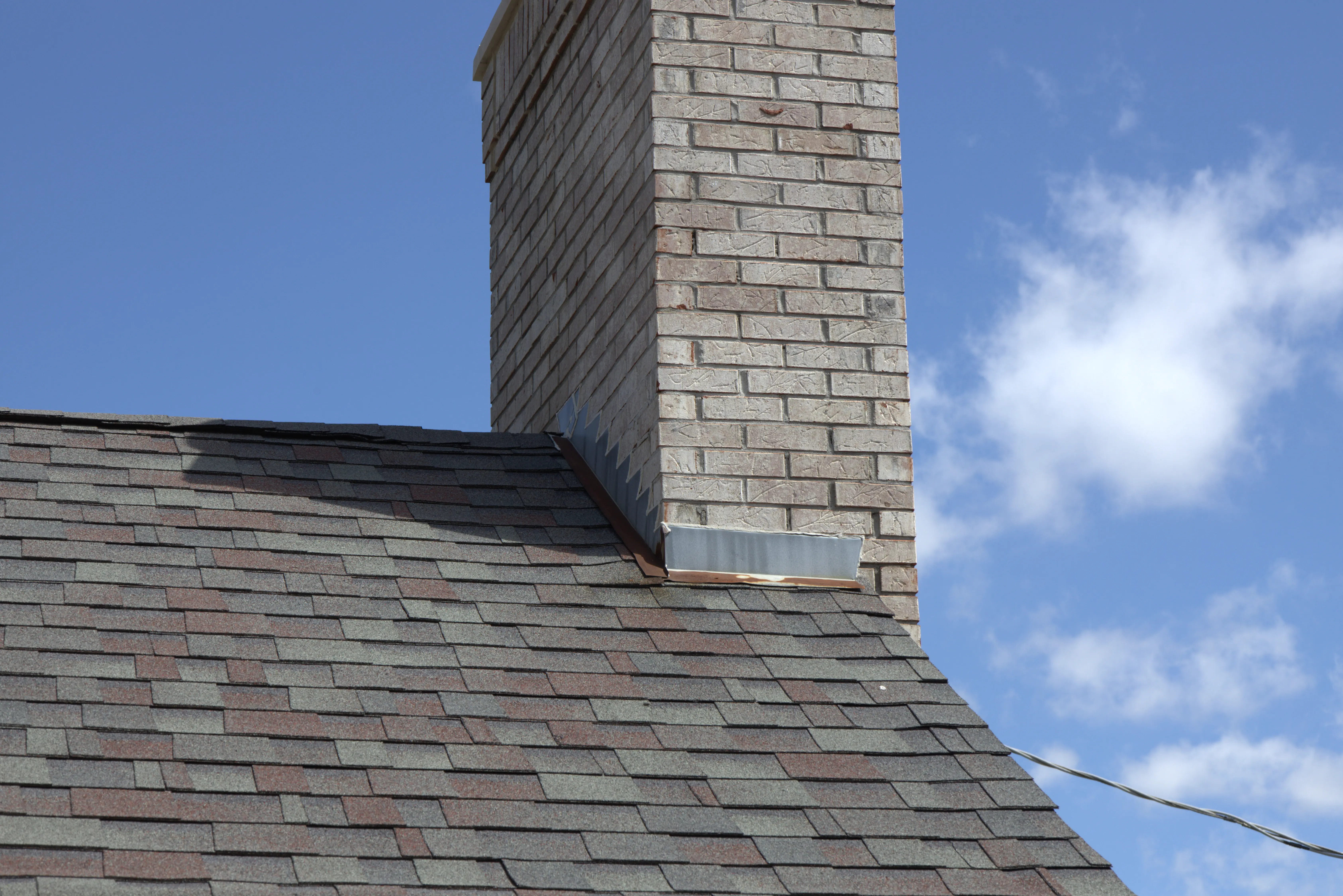
- Chimney flashing: Usually two parts, base flashing and counter flashing, that wrap the chimney.
When all of these work together, your roof sheds water the way it should. When one fails, you get a leak in the ceiling below.
What is flashing made of?
Most flashing is metal, because metal holds up to weather and lasts. The material we pick depends on your roof, your budget, and your local climate.
- Aluminum: Affordable and easy to shape and so the go-to for most homes.
- Galvanized steel: Strong and budget-friendly so also very common on roofs.
- Copper: Long-lasting and great-looking, but costs a bit more than the rest.
- Lead-coated copper: Used in special detailing and on some older buildings.
A quick note: never mix metals that react with each other. Aluminum touching copper, for example, can corrode over time so ensure you match materials on purpose, not by accident.
Signs Your Flashing Is Failing
You do not need to climb on the roof to spot trouble. Most warning signs show up inside your home or from the ground.
Things like:
- Water stains on ceilings or walls, especially near the chimney
- Rust streaks running down from roof joints
- Loose, lifted, or missing pieces of metal
- Dried-out caulk or tar around vents
- Damp spots in the attic after a storm
Catch these early and you often save yourself a much bigger repair because roof leaks are really no joke since a small drip can rot the framing quickly.
Why Flashing Matters More Than People Think
Of course none of this matters if water gets in.
Flashing protects the most vulnerable parts of your roof where the material just can't stop the water from coming in and a failed seal around a chimney can let water travel along the framing and show up in a room far from the actual leak making it nearly impossible to pin point where it's actually coming from. That is why a "mystery roof leak" so often turns out to be a flashing problem.
Good flashing also protects the value of your whole roof. You can have brand new shingles and still get leaks if the flashing is old or installed wrong which is why such a thin piece of metal needs to be installed properly every single time.
Do you fix the flashing or just replace the roof?
Let's talk about the big question: do you fix the flashing or replace the whole roof?
If your shingles are in good shape and only the flashing has failed a targeted repair will usually do the job. A roofer will just pull the affected pieces, install new flashing, and reseal the area.
On the other hand if your roof is near the end of its life, replacing flashing alone is a short-term patch which will anyways be replaced when you replace the roof. In that case, a full roof replacement is the smarter spend since fresh flashing anyways goes in as part of the job.
A simple rule of thumb:
- Newer roof with one isolated leak → just a spot repair is needed
- Old roof with multiple problems → plan for a roof replacement
Cost Ranges and Timelines for Flashing Work
Let's get practical. Prices vary by region, roof height, and material, but here are realistic ballparks to what flashing work may cost.
- Minor flashing repair: $150 to $500
- Chimney flashing replacement: $300 to $1,000
- Full valley or perimeter reflashing: $500 to $1,500
- Flashing during a Roof Replacement: usually rolled into the total roof price
In terms of time it takes to do; a small repair is often a half-day job, chimney work could take a full day, and if new metal has to be custom bent or special-ordered, expect a short wait, since material delays are common during busy storm seasons.
Permits, Codes, and Other Surprises
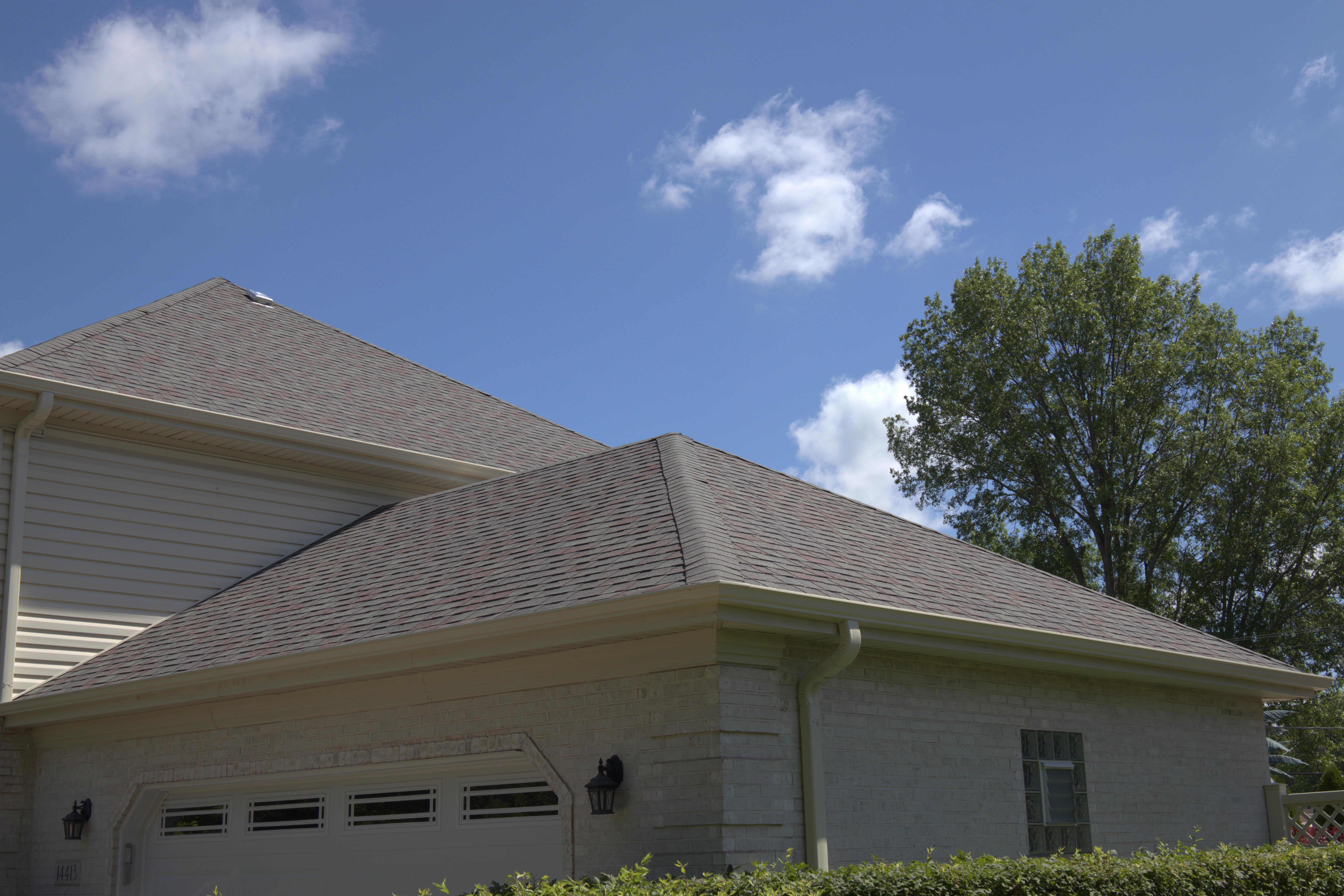
Here's a part people rarely expect: flashing work can trigger code requirements. Many areas now require drip edge on new roofs even if your old roof never had it. So a simple repair can quietly turn into a small upgrade just to meet current code so check what you currently have on so you understand what type of upgrade will really be needed.
A few things that catch property owners off guard:
- Permits may be required for larger flashing or roof jobs
- Local code may demand specific materials or installation methods
- Older homes sometimes hide layers of old flashing under the shingles
None of this is a reason to panic. It just helps to know going in, so the surprise does not land on your invoice.
How to Plan the Work and Hire Right
When you call a roofing company, ask targeted questions since the answers tell you a lot about the quality you will get.
Ask about:
- What type of flashing they will use and why
- Whether they replace the flashing or just reseal old metal
- If the quote includes permits and cleanup
- What warranty covers the work
A solid roofing company will not just smear caulk over the problem and say it's not going to leak. See caulk is just a patch, not a fix. Proper flashing is shaped, layered, and fastened so it sheds water on its own.
Get the quote in writing, confirm the timeline, and make sure the crew protects your landscaping and gutters while they work since this is sometimes overlooked but might destroy your garden.
The Bottom Line
Roof flashing is the metal that guards the seams of your roof and keeps water out of the places shingles cannot protect. It is small, but it does heavy work.
Here is what to do next:
- Look for stains, rust, or loose metal around chimneys and vents
- Decide on a repair or a full roof replacement based on your roof's age
- Budget a few hundred dollars for minor work or more for chimney or valley jobs
- Hire a roofing company that replaces flashing properly instead of caulking over it
Handle flashing early and you protect everything beneath it: your shingles, your framing, and your peace of mind during the next big storm.