.webp)

What Is a Roofing Square and How Is It Measured?

Aaron Venegaz is the President and founder of Global Exterior Experts and has been in the construction / roofing industry for over 15+ years. He started the company back in 2010 and done everything from scheduling appointments to putting down roofs. He's also done everything from commercial roofing to residential roofing and has also worked with almost every single roofing material multiple times over the past 15 years.
Short answer: yes. Roof decking and roof sheathing are two names for the exact same thing: the layer of wood panels or boards nailed across your rafters or trusses. Everything else on your roof, the underlayment, the ice and water shield, the shingles, all of it sits on top of that layer. Some crews say "decking." Some say "sheathing." An insurance adjuster might say "substrate." Same wood, different vocabulary.
So if a roofing company tells you the decking is bad and another one says the sheathing is rotted, they are not disagreeing. They are telling you the same thing with different words.
Now let's talk about what actually matters: what that layer does, when it fails, what it costs, and how to keep it from wrecking your budget in the middle of a roof replacement.
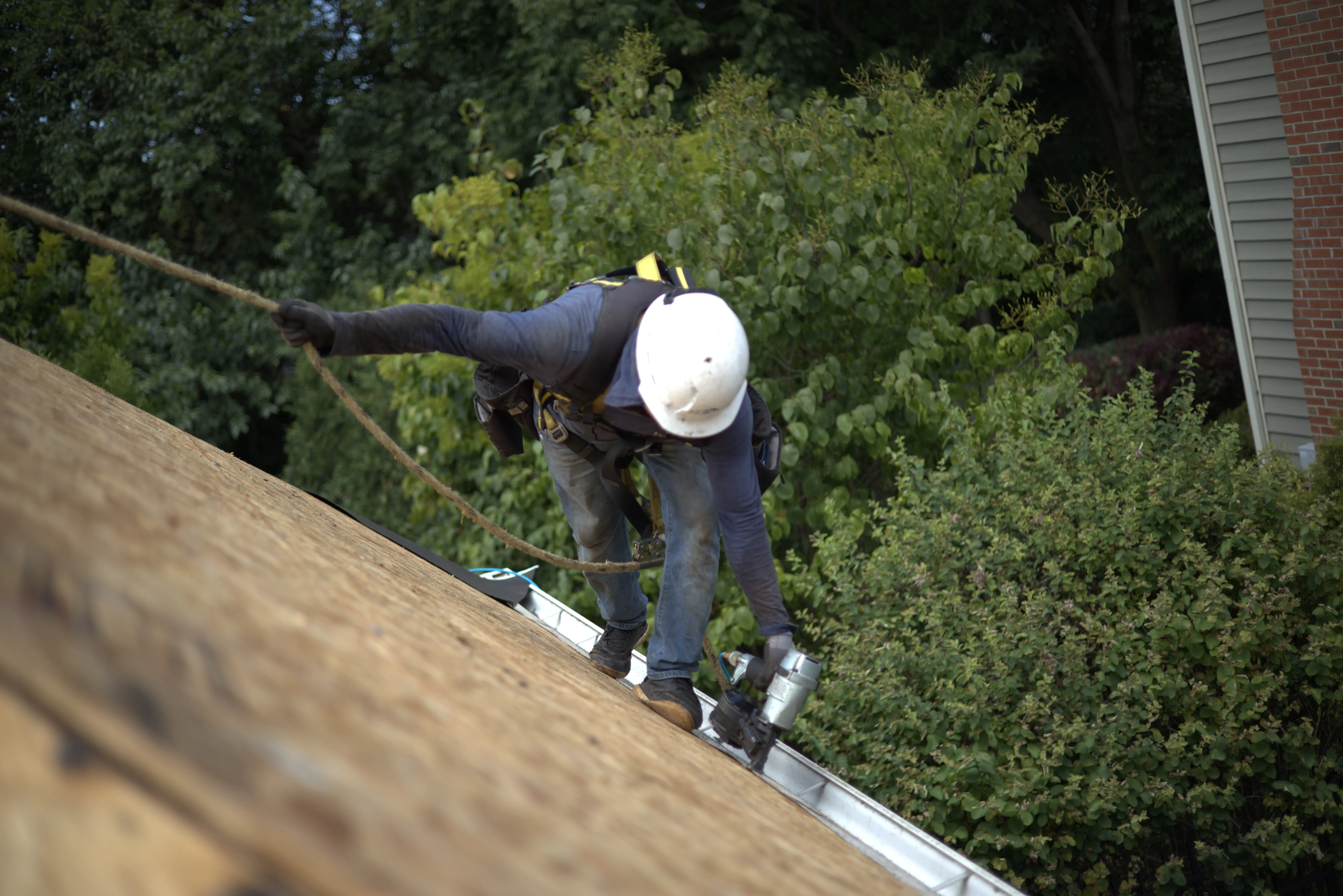
What does your decking / sheathing actually do?
Think of your roof in layers. The framing (rafters or trusses) is the skeleton. The decking is the skin stretched over it. Shingles are the jacket.
That middle layer does three jobs:
- Gives shingles something to grab. Nails need to bite into solid wood. Soft decking as you can imagine will not hold a nail, and a shingle that is not held down is a shingle that blows off.
- Ties the structure together. Decking braces the rafters against racking and helps the roof handle wind uplift and snow load.
- Creates a flat, continuous surface. Waves, dips, and gaps telegraph straight through to your shingles.
Skip the decking inspection and you are basically building on sand. It will look fine for a year or two, then start to fail in ways that are expensive to chase.
What are the main types of decking?
What you have up there really depends on when your house was built.
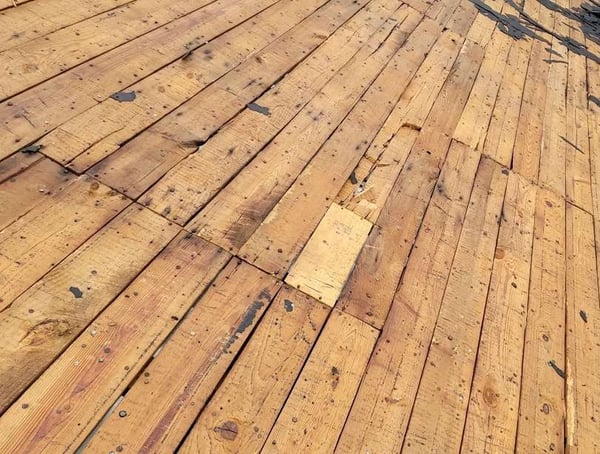
Plank decking (skip sheathing)
Older homes, usually pre-1960s. Long 1x6 or 1x8 boards laid across the rafters, sometimes with gaps between them. If you have a wood shake roof history, those gaps were intentional so the shakes could breathe.
Plank decking is not automatically bad; but asphalt shingles will need a solid surface, so gapped planks usually get overlaid with new sheets before shingles go on.

Plywood
Layers of wood veneer glued in alternating directions. Strong, stable, holds nails well, and handles moisture better than the alternative. Common thickness is 1/2 inch or 5/8 inch.
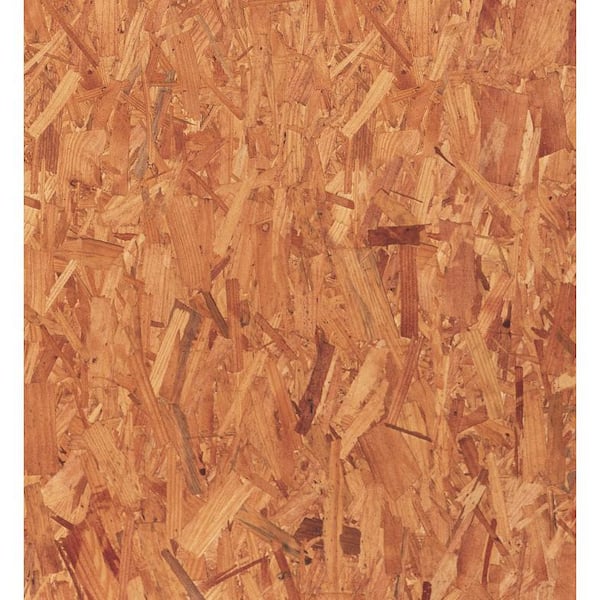
OSB (oriented strand board)
Compressed wood chips and resin. It is the most common decking material in newer construction because it costs less and comes in bigger sheets. The thing is OSB performs fine when it stays dry. When it gets wet and stays wet, it swells at the edges and turns to mush much much faster than plywood does.
Neither one is a mistake. They just fail differently.
When is roof decking going bad?
You usually cannot see the problem from the ground; but there are clues to when it's time to replace it.
- Sagging or wavy roof planes. Stand across the street and sight down the ridge. Ripples mean trouble underneath.
- Water stains on attic sheathing. Go into the attic with a flashlight during the day. Dark streaks, white chalky rings, or daylight coming through are all red flags.
- Springy spots underfoot. A roofer walking your roof can feel a soft deck through their boots. If they mention "spongy," listen.
- Shingles that will not stay put. Repeated blow-offs in the same area often mean the nails have nothing to hold onto.
- Nail pops. Nails backing out through shingles can mean the wood is moving or swelling.
Fun fact that is not actually fun: the worst decking damage almost always hides around chimneys, skylights, valleys, and wall intersections. Anywhere flashing exists, water has been trying to get in.
How much decking gets replaced during a roof replacement?
This is the part nobody enjoys, so let's be direct about it.
Nobody can give you an exact decking count before the old roof comes off. Not with a drone, not with an attic inspection, not with 20 years of experience. The old shingles and underlayment are covering the evidence. An attic inspection catches maybe half of what is up there, because insulation and finished ceilings block the view.
That is why a real proposal for a roof replacement includes a per-sheet decking allowance, spelled out in writing. It should say the price per sheet, and it should say that you only pay for what actually gets replaced. If a contract is silent on decking, that is not a bargain. That is a blank check waiting to be filled in.
What It Costs
Broad, realistic ranges (your market will move these):
- Replacing individual sheets during a roof replacement: roughly $70 to $150 per 4x8 sheet, installed. That covers material, labor, and disposal.
- Full re-deck on an average home: roughly $2.50 to $5.00 per square foot, which often lands somewhere between $3,000 and $10,000 depending on size, pitch, and access.
- Steep or complex roofs: expect the higher end. Anything over an 8/12 pitch takes longer and takes more people.
Most roof replacements need somewhere between zero and ten sheets. Some need the whole deck. Budgeting a cushion of a few hundred to a couple thousand dollars means a bad surprise stays an annoyance instead of a crisis.
Timeline: How Much Time Does It Add?
Swapping a handful of sheets adds a couple of hours. Nobody is going to lose a day over it.
A full re-deck typically adds one to two days to a standard roof replacement, and it changes the sequencing. The roof cannot be left open overnight, so the crew works in sections and dries in as they go.
Material delays are the wildcard. Sheet goods are usually easy to get, but 5/8 inch plywood in a busy season can take a day or two to source. If the crew shows up and finds 40 bad sheets on a Friday, that job is not finishing on Friday.
Code Surprises Worth Knowing About
Alright, let's talk about the stuff that catches people off guard.
- Minimum thickness rules. Many jurisdictions require a minimum deck thickness for the rafter spacing you have. If your 1960s house has 3/8 inch decking on 24 inch centers, patching may not be allowed. You may be required to sheet over the entire roof.
- Inspections mid-job. Some cities want to look at the bare deck before underlayment goes down. That means the job pauses until the inspector shows up.
- Ice barrier requirements. In cold climates, code often requires ice and water shield a certain distance up from the eave. That protection only works if the deck under it is solid.
- Permits. A roof replacement almost always needs one. A roofing company that suggests skipping the permit to save you money is telling you something important about how they work.
What to Ask Before You Sign
Keep it simple. Ask any roofing company these five things:
- What is your price per sheet for decking replacement?
- Do I pay for sheets you do not use? (The answer should be no.)
- Will you show me photos of every bad sheet before you replace it?
- What thickness and material will you install?
- Does your quote include the permit and the inspection?
Written answers. Not verbal ones.
How to Plan for It
- Get your attic looked at before you shop for bids, so you know if you are walking into a bigger problem.
- Ask for the decking allowance in writing on every quote you compare, or you are not comparing the same thing.
- Set aside a contingency of roughly 5 to 10 percent of the project cost.
- Do not chase the cheapest number. A low bid with no decking language is usually a low bid because the decking is not in it.
The Bottom Line
Roof decking and roof sheathing are the same layer under a different name, and it is the layer that decides whether your new roof lasts five years or thirty. You cannot see it, you cannot fully price it in advance, and you cannot skip it.
What to do next: get your attic inspected, ask every bidder for a written per-sheet decking price, and hold back a small contingency before the tear-off starts. Do those three things and the decking stops being a surprise. It becomes a line item.