.webp)
ACV vs. RCV Roof Coverage: What Homeowners Need to Know Before the Next Storm

Aaron Venegaz is the President and founder of Global Exterior Experts and has been in the construction / roofing industry for over 15+ years. He started the company back in 2010 and done everything from scheduling appointments to putting down roofs. He's also done everything from commercial roofing to residential roofing and has also worked with almost every single roofing material multiple times over the past 15 years.
Slate roofing delivers benefits that outlast basically every other material on the market. You're looking at a lifetime of 75 to 100 years, natural beauty that improves curb appeal, and fire resistance that can't be beaten. The upfront investment runs way higher than asphalt shingles or metal roofing but when you consider the lifespan it has (75 to 100yrs) most homeowners never need to replace their roof again.

1. Exceptional Durability That Outlasts Everything Else
Here's the thing about slate: it's basically long flat stones sitting on your roof. Not only that, it's a material that forms naturally over many many years of intense heat and pressure. That process then creates a roofing material that laughs at weather conditions that destroy other roofs.
Heavy storms? Slate handles it. Hurricane force winds struggle to damage properly installed slate tiles because of their weight and secure fastening. Now yes, they do shake and sift sometimes, but the hail that would shred asphalt shingles will barely makes a mark on slate. The only real problem that comes is from tree limbs or full blown trees falling which can crack a couple tiles but that's honestly true for any roofing material.
Most slate roofs last 75 to 100 years minimum. The roofing company that installed it probably won't be around by the time the roof needs a replacement, not to mention some European slate roofs have been protecting buildings for 300+ years.
When you work with a roofing company that can properly install slate you'll be installing the last roof your house will likely ever need.
2. Natural Beauty That Increases Property Value
Alright let's talk about the beauty that slate roofs have. Slate roofs look expensive because they are really expensive but that premium aesthetic does something important: it dramatically increases your home's curb appeal and resale value.
Natural slate also comes in colors you can't get anywhere else because they are literally rocks. Colors like deep charcoal gray, rich purple, weathered green, and earthy red all occur naturally in different quarries. Some homeowners even blend multiple slate colors together to make patterns that look like a spectacle.
The texture matters too; each tile has a unique surface created by the natural mineral formations it went through. When sunlight hits a slate roof you'll see the depth and variation that a material that was created could never replicate. Other roofing materials like Davinci & Brava Tile actually try to mimic the slate look and don't get us wrong, they make similar looking products that are cheaper than slate, lighter than slate, & will last 50 to 70 years so maybe a Synthetic Slate Product might be right for you.
3. Environmental Advantages You Can Feel Good About
Of course none of this comes without it's own environmental impact. Slate ranks among one of the most eco friendly roofing options available because the material is 100% natural stone that's mined and cut without chemical processing. Then compare that to asphalt shingles, which require petroleum and extensive manufacturing.
Not to mention slate's longevity keeps other roofing materials out of landfills. Think about it: if an asphalt roof lasts 20 to 25 years (And that's being generous), you're replacing it three or four times during the lifespan of one slate roof. That's a massive amount of waste eliminated if you had just switched to a slate roof which on the other hand might have to be replaced by your grandkids kids.
When slate finally does reach the end of its useful life (which could genuinely be long after you're gone), it's completely recyclable unless you break the tiles, but even then many old slate tiles get salvaged and reused on other buildings. The rest return to where it came from as the natural stone it was with zero harmful chemicals leaching into the soil.
4. Superior Fire Resistance and Home Safety
You just can't burn stone. Not fire resistant, fire proof.
This matters way more than most homeowners realize especially if you live in an area prone to wildfires or if nearby properties have fire risks or wood shakes still installed. A slate roof won't ignite from flying embers, won't contribute to the fire, and will be a barrier that helps protect your home's structure from any fire.
Many insurance companies recognize this benefit and offer lower premiums or discounts for homes with slate roofs. Now the exact discount amount varies by each location and insurer but it's 100% worth asking about when comparing roof replacement options because you never know how much you could get back over the course of a 100 year lifespan of a roof.
5. Energy Efficiency That Lowers Utility Bills
The density of slate also contributes to better temperature regulation inside your home. Stone naturally has thermal mass which means it absorbs heat slowly and releases it slowly. During summer this keeps your attic cooler and in winter helps keep the temperature more stable.
Proper ventilation matters here too and really it matters with any roofing material, but because of slate's natural properties you have an advantage. Many homeowners report noticeable decreases in cooling costs after upgrading to a slate roof. The exact dollar amount savings depend on your climate, insulation, and other factors, but improved energy efficiency ranks as a legitimate slate benefit to switch to it for.
6. Minimal Maintenance Requirements (With One Big Caveat)
Slate requires less maintenance than most roofing materials. No periodic sealing, no special cleaning solutions, no protective coatings. The material doesn't rot, doesn't attract moss as aggressively as other options, and doesn't curl or crack from UV exposure.
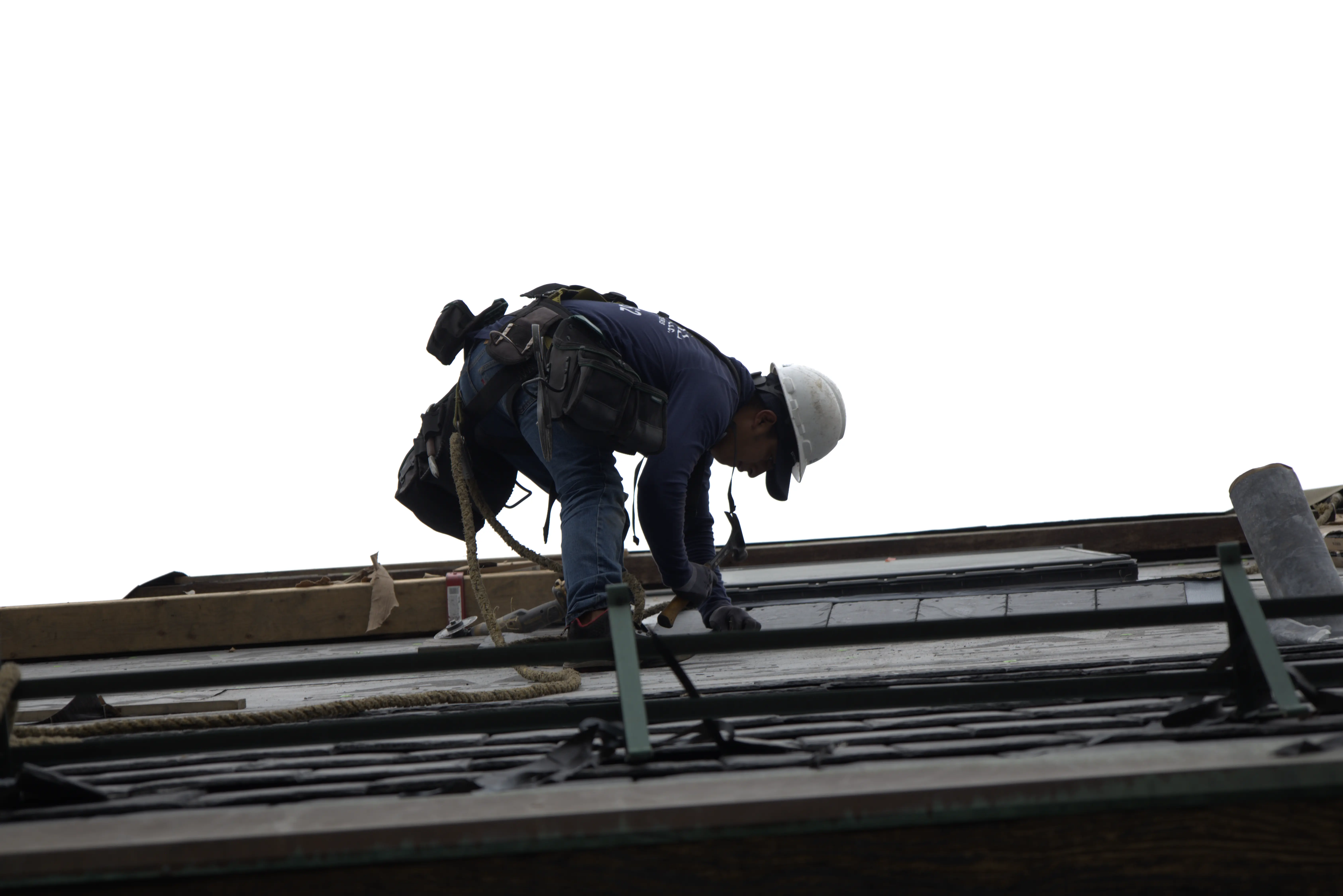
The caveat is that when repairs are needed, you can't just call any roofing company. Slate needs a specialized tradesmen that has the knowledge and experience. Walking on slate tiles without following a proper technique breaks them, removing and replacing damaged tiles requires specific tools and skills, and finding matching replacement tiles for repairs can take a lot of time and especially with older or discontinued slate colors.
Smart homeowners keep spare tiles from their original installation in storage that way when repairs are eventually needed, matching tiles are available immediately.
7. What You Need to Know About Costs
Let's address the elephant on the roof: slate is pretty expensive. For labor and materials just expect to pay $30,000 to $60,000 for a 2,000 square foot slate roof replacement. Some projects run even higher depending on the roofs complexity, slate quality, and regional labor rates.
Here's the math that matters: if asphalt shingles cost $10,000 and last 25 years you'll need to replace them 3 or 4 times during slate's lifespan. That's $30,000 - $40,000 in today's dollars and not to mention more when you count inflation. Slate costs more upfront but can actually save money over decades. It's like choosing to to by a durable car for 4x the price of a normal one that you know will last 300,000 miles vs buying a $10,000 Toyota 4 times over that is already at the end of it's lifespan.
8. Installation Timeline and Structural Requirements
Installing a slate roof takes time. Where an asphalt roof replacement might take two to five days, slate installation typically requires one to three weeks depending on your roof's size and complexity. Each tile installs individually and rushing through the process invites problems.
Here's something critical: not all homes can support slate's weight without modification. Slate roofing could weigh anywhere between 800 to 1,500 pounds per square (100 square feet), compared to 200 to 400 pounds for asphalt shingles. If your home wasn't built with slate in mind, having someone structurally reinforce the supports of the home might be necessary before installation begins.
A structural engineer should evaluate your home's framing before you commit to slate, though the product is the best in terms of lifespan, durability, & cost efficiency; this adds cost and complexity but it's a non negotiable. Skipping this step risks serious structural damage.
9. Finding the Right Roofing Company for Slate Installation
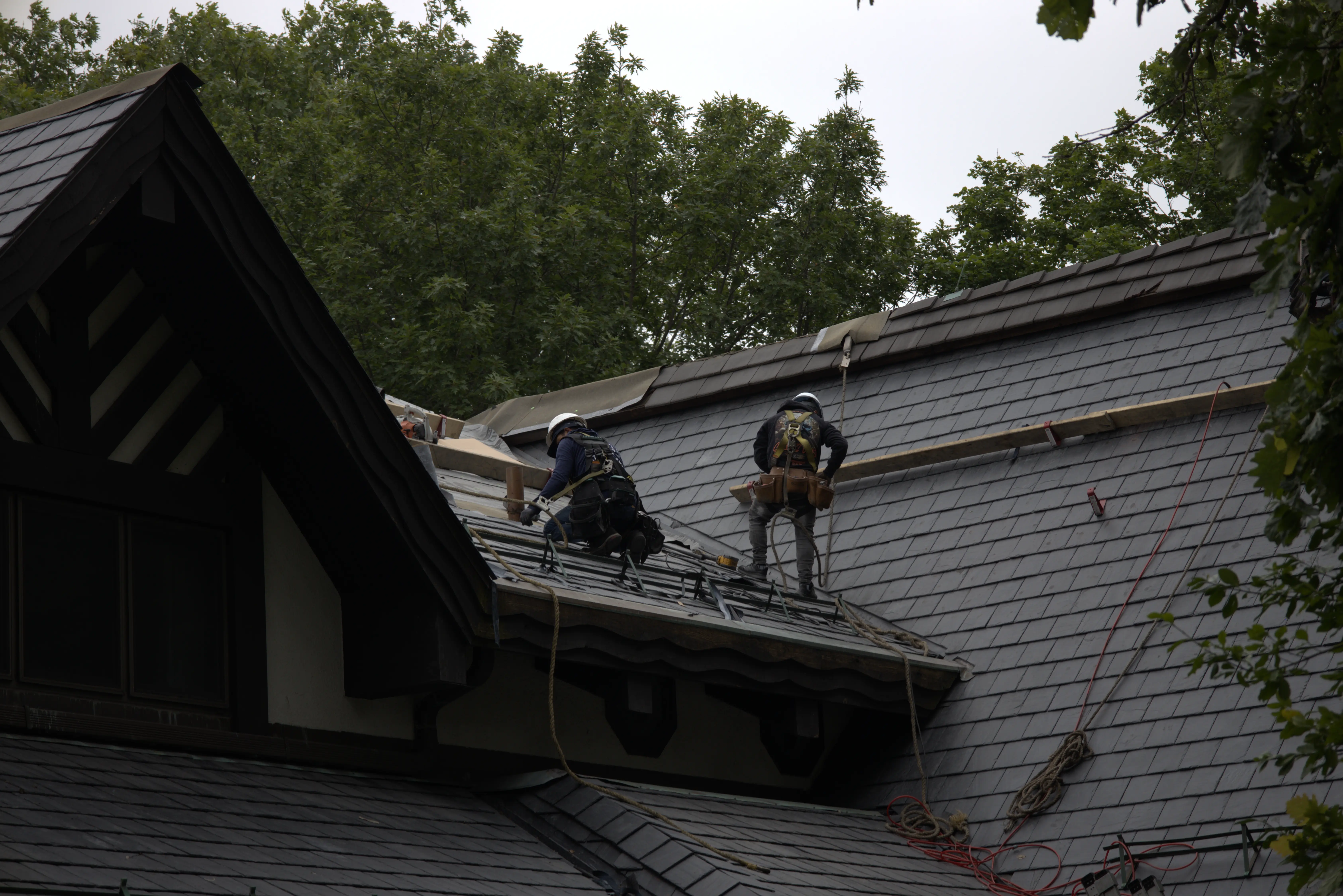
This deserves its own section because it's genuinely important. Not every roofing company works with slate or should be, you absolutely do not want a crew learning on your project especially when the roof is 5 to 6 figures.
Look for contractors with verifiable slate experience. Ask for photos of completed slate projects (not just promotional images). Request references from homeowners with slate roofs installed at least five years ago. Check if they're members of the National Slate Association or similar professional organizations.
Proper slate installation requires knowledge of specific techniques: proper nail placement, correct overlap patterns, appropriate fastener types, and careful flashing details. Mistakes during installation create problems that may not appear for years but will definitely cause headaches when they do.
Summary: Is Slate Right for Your Home?
Slate roofing offers benefits that no other material could match: 100 year lifespan, natural beauty, environmentally sound, complete fire resistance, and impressive durability. The high upfront cost and need for specialized installation are legitimate considerations but for homeowners who value quality and paying once for something that will last them a lifetime, slate makes all of the sense.
Not every home is a good candidate (structural issues, extremely complex roof designs, or budget constraints could remove slate as an option), but if you can make it work, you're investing in a roof that will likely outlast you (Seriously).
What to consider next: Get a professional evaluation of your home's structural capacity to support slate. Request a detailed quote from experienced slate roofing contractors. Compare the long term costs of slate against replacing your roof with other materials multiple times over the next 75 to 100 years. Before you make the decision, ask yourself whether you value paying more now to install the last roof your home will ever need.