.webp)
What Happens if My Roof Claim Gets Denied?

Aaron Venegaz is the President and founder of Global Exterior Experts and has been in the construction / roofing industry for over 15+ years. He started the company back in 2010 and done everything from scheduling appointments to putting down roofs. He's also done everything from commercial roofing to residential roofing and has also worked with almost every single roofing material multiple times over the past 15 years.
The most energy-efficient roofing materials are metal roofing, cool-roof asphalt shingles, and clay or concrete tile. Metal leads the pack in raw thermal performance. Cool-roof shingles offer a practical middle ground for most budgets. Clay and concrete tile work best in hot, dry climates. The right pick depends on your region, home type, and what you're trying to spend.
Let's work through each option so you can make an informed decision before your next roof replacement.
Why Your Roof Affects Your Energy Bill More Than You Think
Your roof is one of the largest surfaces exposed to direct sunlight on your entire home. On a summer day, a dark asphalt roof can reach surface temperatures of 150 to 185 degrees Fahrenheit. That heat doesn't just stay up there. It transfers into your attic, into your living space, and onto your air conditioner.
An energy-efficient roof slows that process down. The result is a cooler attic, less strain on your HVAC system, and lower monthly utility bills. Some homeowners see cooling cost reductions of 15 to 40 percent after switching materials, depending on climate and insulation.
The 3 Factors That Determine Roofing Energy Efficiency
Before picking a material, it helps to understand what makes a roof efficient in the first place. There are three measurements that matter:
- Solar Reflectance: How well the roof reflects sunlight away from the building instead of absorbing it.
- Thermal Emittance: How quickly the roof releases absorbed heat back into the atmosphere once the sun goes down.
- R-Value: The material's ability to resist heat transfer from outside into your attic and living space.
A good energy-efficient roof scores well in all three. Metal and tile excel in reflectance and emittance. Insulation systems handle R-value. When you combine the right material with proper attic ventilation and a quality underlayment, that's when you see real savings.
Metal Roofing: The Top Performer
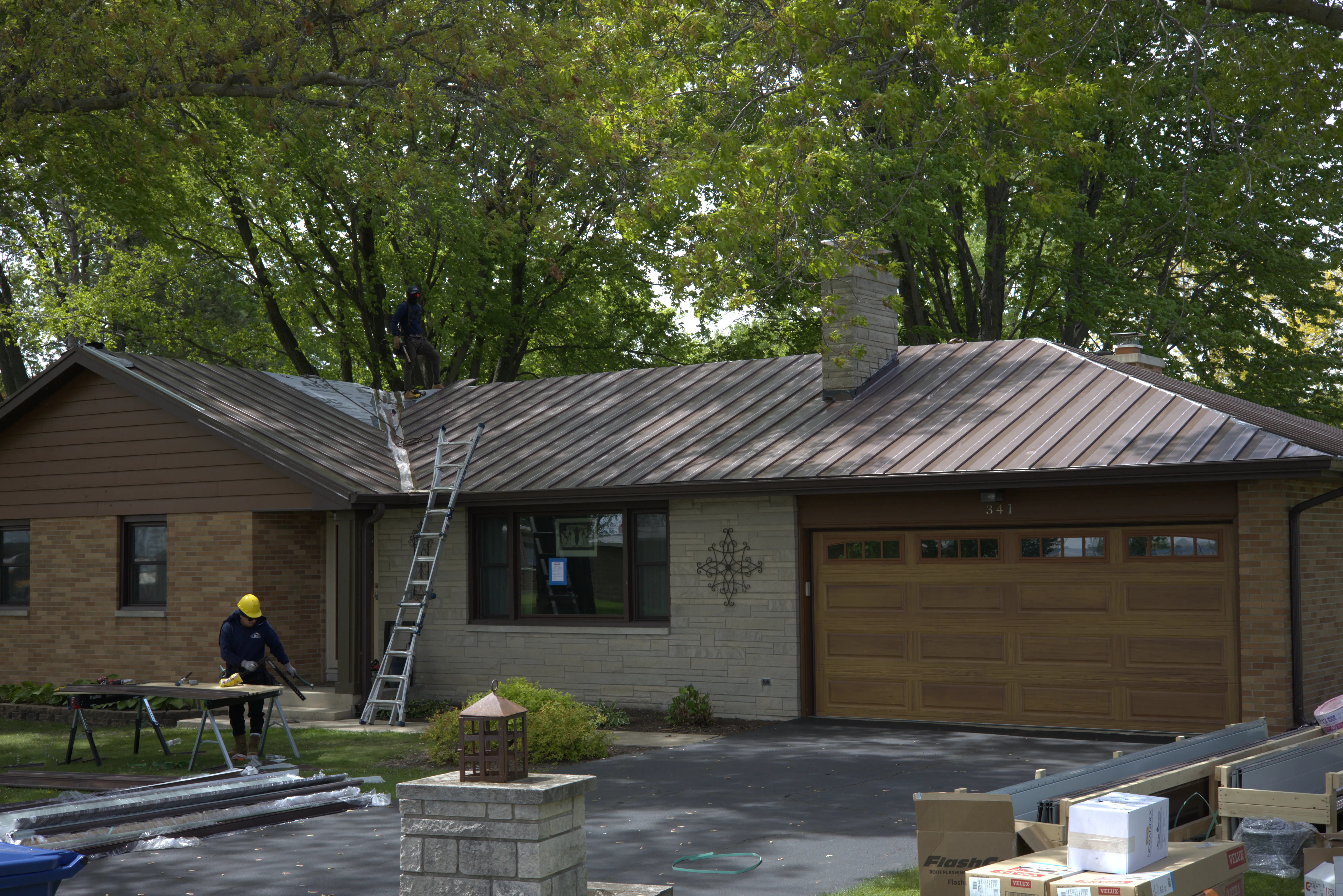
If energy efficiency is your primary goal, metal roofing is the material to consider. It reflects a high percentage of solar radiation, and because metal emits absorbed heat quickly, it cools down fast after the sun sets. Unlike asphalt, it doesn't hold onto that heat and radiate it into your attic overnight.
Metal roofing comes in several styles, including standing seam panels, metal shingles, and stone-coated steel. Standing seam is the most efficient because it's installed with an air gap between the panels and the roof deck, which adds a natural thermal break.
What to expect on cost: Metal roofing runs roughly $10,000 to $30,000 or more for a full residential replacement, depending on material type, roof complexity, and square footage. It lasts 40 to 70 years with minimal maintenance.
One thing worth knowing: local permit requirements for metal roofing can vary. Some municipalities require additional wind-load calculations or specific fastening systems. Always verify with your local building department before signing a contract.
Cool-Roof Asphalt Shingles: The Practical Middle Ground
Here's the thing, not everyone is ready to make the jump to metal. For most homeowners, cool-roof asphalt shingles are the most realistic upgrade.
Standard asphalt shingles absorb heat. Cool-roof versions are different. They're manufactured with reflective granules embedded in the surface, which redirect a portion of solar energy rather than soaking it in. They carry an ENERGY STAR rating, which means they've been tested for solar reflectance.
They look identical to standard shingles. They install the same way. And the cost difference between a standard shingle and an ENERGY STAR-rated option is often marginal.
What to expect on cost: A full asphalt shingle replacement typically runs $8,000 to $18,000 depending on roof size and complexity. Lifespan is 20 to 30 years for architectural shingles.
Cool-roof shingles perform best in warm or hot climates. In colder regions, like the Midwest, you want to think carefully about whether high reflectance actually works against you in winter months by limiting passive solar heat gain.
Clay and Concrete Tile: Naturally Efficient
Clay and concrete tile have been used for centuries, particularly in Mediterranean and Southwestern climates, for a good reason. The curved profile of tile creates a natural air channel underneath the surface, reducing direct heat transfer to the roof deck.
Clay tile, in particular, has high thermal mass. It absorbs heat slowly during the day and releases it gradually, which can help stabilize interior temperatures in regions with hot days and cool nights. Concrete tile works similarly and is typically less expensive.
What to expect on cost: Tile roofing ranges from $15,000 to $35,000 or more for a full replacement. Both materials have a potential lifespan of 50 years or longer. The tradeoff is weight: your home may need a structural assessment before installation, which adds time and cost to the project.
Synthetic Roofing: An Option Worth Knowing
Synthetic or composite roofing materials, made from rubber, plastic, or a blend of recycled materials, are gaining traction. Some products are designed to mimic slate or wood shake while offering improved reflectance over traditional asphalt.
Quality varies significantly by manufacturer, so this category requires careful vetting. Look for products with documented ENERGY STAR ratings and realistic warranty terms, not just marketing claims about sustainability.
What to expect on cost: Synthetic materials typically fall between $12,000 and $25,000 for a full replacement. Lifespans range from 30 to 50 years, depending on product quality.
Roof Color: A Factor That Gets Overlooked
Alright, let's talk about something that surprises a lot of people. Color has a major impact on energy performance, regardless of material.
Lighter colors reflect more sunlight. Darker colors absorb it. This is true for asphalt, metal, tile, and synthetic materials alike. A light gray or tan metal roof will outperform a dark charcoal metal roof on energy efficiency, all else being equal.
If you live somewhere with brutal summers and mild winters, lean lighter. If you're in a mixed or colder climate, a medium tone often strikes the right balance. It's a small decision that has a real effect on your monthly bills.
Don't Underestimate What's Under the Shingles
The roofing material itself is only part of the equation. What sits below it matters just as much.
- Attic ventilation: Without proper airflow, even the best reflective roof will still trap heat in your attic. Ridge vents, soffit vents, and proper airflow channels are non-negotiable.
- Underlayment: A reflective or radiant barrier underlayment adds another layer of thermal protection between your roof deck and your living space.
- Attic insulation: R-38 to R-60 is the recommended range for most U.S. climates, per the Department of Energy. If your attic insulation is thin or uneven, upgrading your roof material alone won't deliver the savings you're expecting.
Think of it as a system, not just a surface.
What Should You Actually Do Next?
Before you schedule a roof replacement, work through these steps:
- Confirm your current attic insulation levels. If they're low, address that first. It's the most cost-effective efficiency upgrade.
- Get a roof inspection. If your current roof has 5 to 10 years of life left, a replacement may not be urgent. If it's at end of life, plan ahead and choose your material intentionally.
- Pull local energy utility rebates. Many Illinois utilities and municipalities offer rebates for ENERGY STAR-rated roofing products. That money is worth chasing.
- Ask for product data sheets, not just sales pitches. Reflectance ratings, emittance ratings, and warranty terms should all be documented.
The Short Version
The most energy-efficient roofing materials are metal, cool-roof asphalt shingles, and clay or concrete tile. Metal leads in raw performance. Cool-roof shingles are the practical upgrade for most budgets. Tile is a strong long-term investment in the right climate.
Color, ventilation, underlayment, and attic insulation all amplify the performance of whatever material you choose. A roofing company that only talks about shingles without addressing those factors isn't giving you the full picture.
Get your attic assessed, research available rebates in your area, and make your material decision based on your climate and long-term plans, not just upfront cost.

.png)