.webp)
What Is Drip Edge and Do I Need It?

Aaron Venegaz is the President and founder of Global Exterior Experts and has been in the construction / roofing industry for over 15+ years. He started the company back in 2010 and done everything from scheduling appointments to putting down roofs. He's also done everything from commercial roofing to residential roofing and has also worked with almost every single roofing material multiple times over the past 15 years.
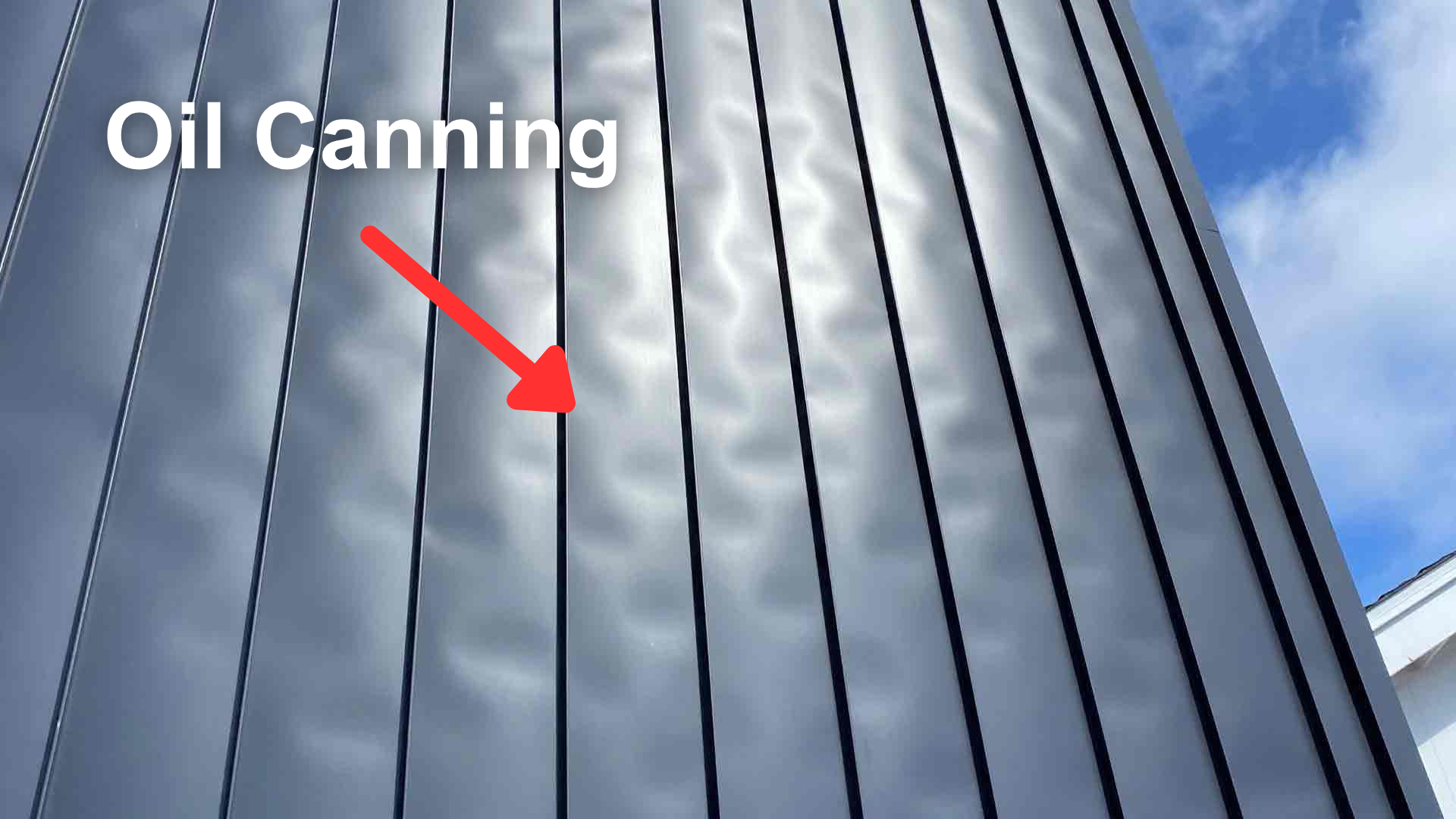
Oil canning is the visible waviness, or "buckling," you see in the flat areas of a metal roof panel. It shows up as gentle ripples, dents, or a rolling distortion across the pan of the panel, usually most noticeable in bright sun or at a low viewing angle. It is a cosmetic condition, not a structural failure, and it is considered an inherent characteristic of light-gauge metal roofing products. That said, it can be minimized, and in some cases corrected.
Here's the short version: oil canning happens because metal moves. It expands, contracts, and holds stress from the moment it comes off the coil. Understanding where that stress comes from is the key to reducing it.
Why do metal panels ripple in the first place?
Metal roofing starts life as a coil. That coil gets slit, formed, transported, and fastened to a roof deck, and every one of those steps can introduce stress into the panel.
The most common causes:
- Coil stress from the mill. Uneven tension during rolling can leave "full center" or wavy edges baked into the metal before it ever hits your roof.
- Thermal expansion and contraction. A dark standing seam roof can swing 100 degrees or more between a January morning and a July afternoon. That metal has to go somewhere.
- An uneven roof deck. This is the big one. Metal telegraphs every hump, sag, and high nail underneath it.
- Overdriven or misplaced fasteners. Clips that are set too tight prevent the panel from floating the way it was designed to.
- Handling during transport and install. Long panels are surprisingly easy to twist or dent while carrying them up a ladder.
- Panel width and gauge. Wider, thinner panels ripple more. It's simple physics.
Of course, none of these act alone. Oil canning is usually two or three of these stacking on top of each other.
Is Oil Canning a structural Problem?
No. A rippled panel is not a leaking panel, and it does not shorten the life of the roof. Manufacturers explicitly exclude oil canning from warranty coverage precisely because it does not affect performance.
What it does affect is your opinion of the roof every time you pull into the driveway. That matters, and it is a fair thing to care about.
The exception worth flagging: if waviness appears suddenly on a roof that looked flat for years, that can point to deck movement, framing problems, or fasteners pulling out. That is not oil canning. That is a repair, and it should be inspected.
Where You'll Actually Notice It
Oil canning is a lighting condition as much as a metal condition. Three things make it jump out:
- Low-slope roofs that you view nearly edge-on from the ground.
- Dark, glossy colors. Charcoal, black, and dark bronze in a smooth gloss finish act like a mirror.
- Broad, flat panel pans with no texture to break up the reflection.
Flip those around and you have your prevention strategy.
Reducing Oil Canning Before Installation
This is where the money is well spent. Once panels are on the roof, your options narrow fast.
Choose the Panel Design Carefully
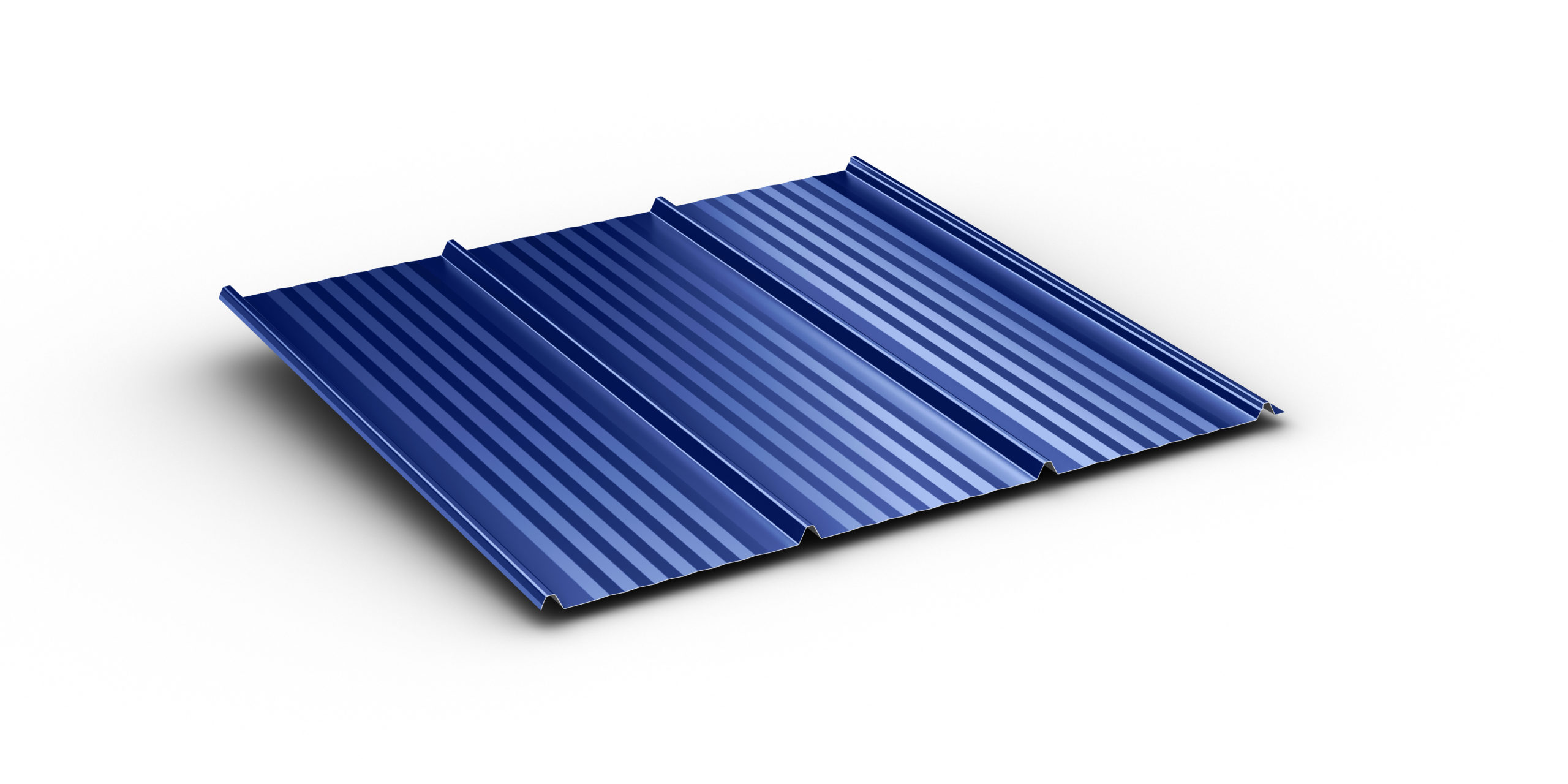
- Striated panels. Light linear grooves rolled into the flat area. These are the single most effective and lowest-cost defense.

- Pencil ribs or minor ribs. Small raised lines that stiffen the pan.
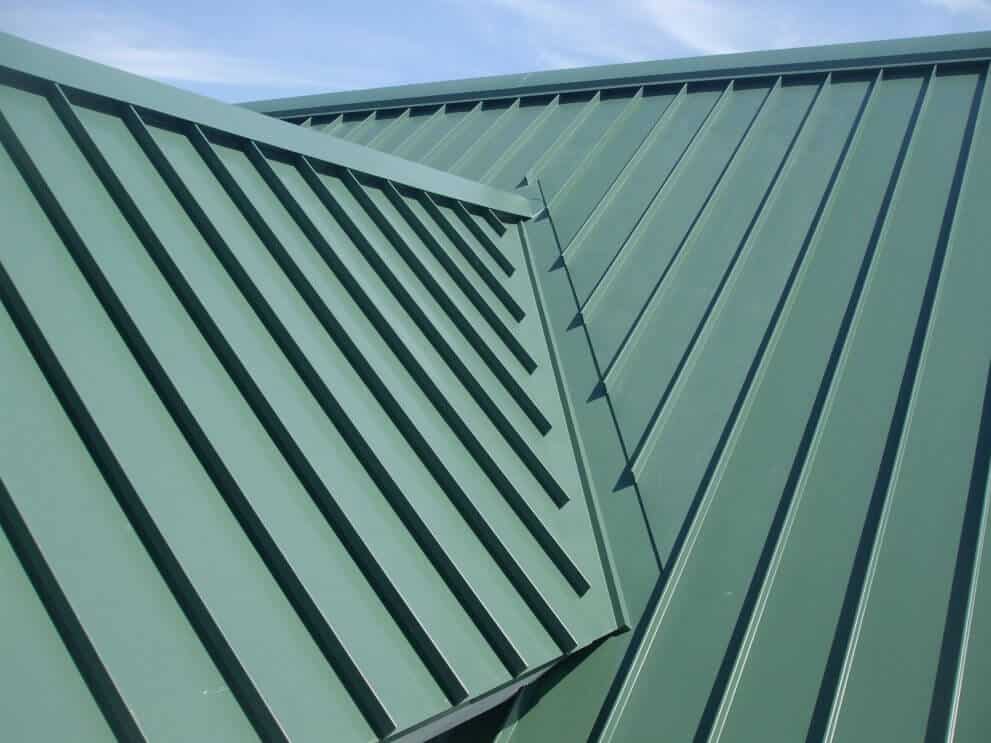
- Narrower panels. Going from a 18 inch pan to a 12 or 16 inch pan noticeably reduces waviness.

- Heavier gauge. 24 gauge steel resists distortion far better than 26 gauge. Aluminum, being softer, tends to show more.
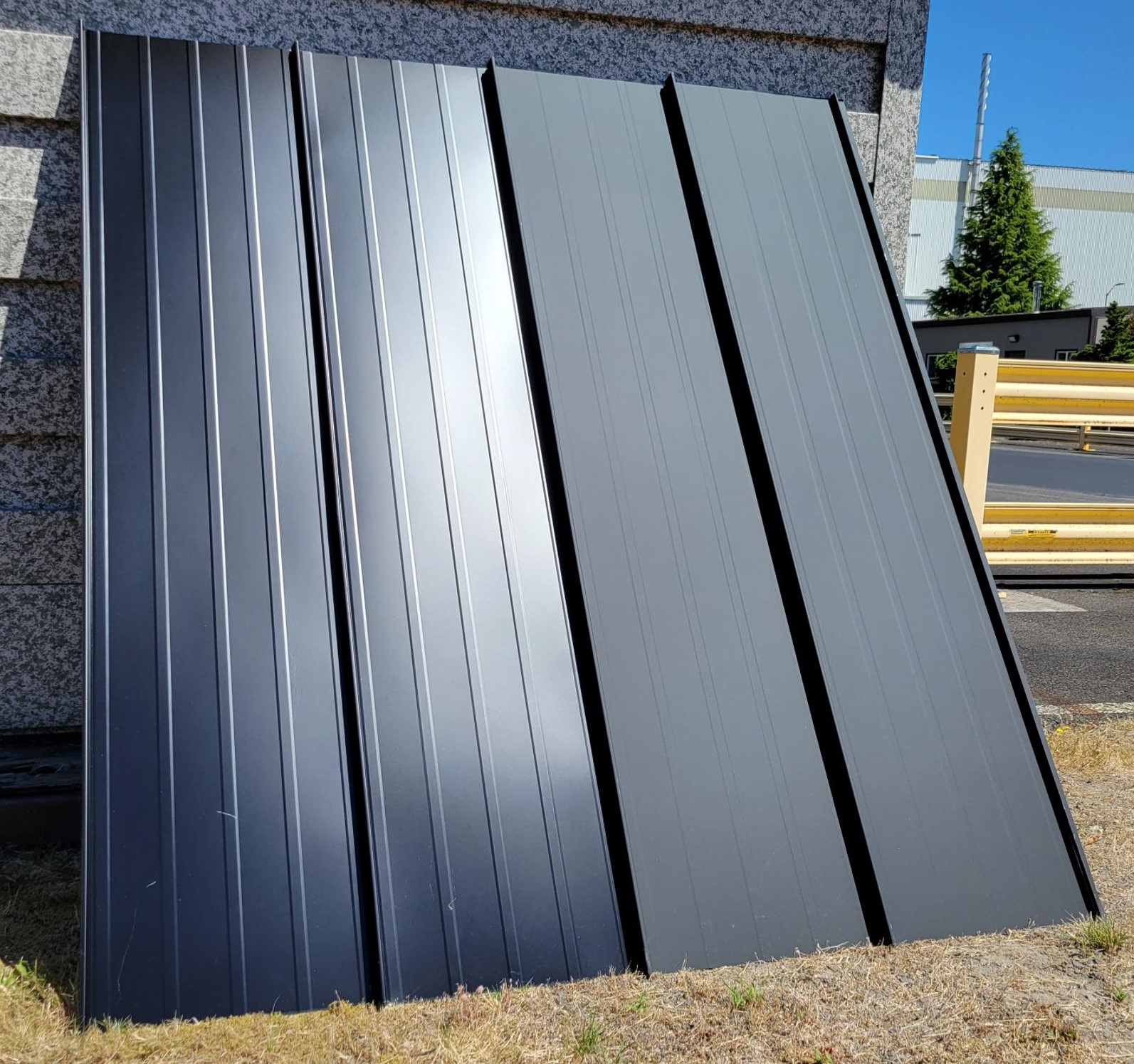
- Matte or low-gloss finishes. A matte charcoal will hide ripples a gloss charcoal puts on display.
Prep the Substrate
A metal roof is only as flat as what it sits on. That means replacing soft or cupped decking, resetting proud fasteners, and running a string line to catch framing that has settled. On a re-roof, this step often uncovers rot that nobody budgeted for. It's better to find it now.
Install It Correctly
- Use floating clips on standing seam so panels can expand and contract.
- Do not overtighten fasteners.
- Store and carry panels flat and supported.
- Use a proper underlayment with a slip sheet where the manufacturer calls for it.
Fixing Oil Canning on a Roof That's Already Installed
Alright, let's talk about the roof you already have. Honest answer: full correction usually means replacing panels. But there are middle-ground options.
Backer rod or insulating tape. A foam backer rod installed under the pan can provide light support and reduce visible flutter. This works best on shorter runs and is not a cure-all.
Re-fastening or resetting clips. If overdriven fasteners are the cause, releasing and correcting them can relax the panel.
Deck correction plus panel replacement. The real fix. Pull the affected panels, flatten the substrate, and install striated replacements.
Doing nothing. Worth saying out loud. Many owners stop noticing within a few months, and the roof performs exactly as designed. If the waviness is mild and the roof is sound, patience is a legitimate option.
What It Costs and How Long It Takes
Broad ranges, because region, pitch, and access all move the number:
- Individual panel replacement: roughly $600 to $1,500 per panel installed, including labor and access.
- Backer rod remediation: roughly $300 to $900 for a limited area.
- Deck repair: roughly $3 to $8 per square foot for sheathing replacement.
- Full standing seam metal roofing replacement: roughly $12 to $25 per square foot installed, which lands most homes between $20,000 and $45,000.
- Striations or ribs on new panels: often little to no upcharge. Ask.
Timelines are the part people underestimate. Panel replacement on a section runs one to two days. A full metal roof runs three to seven days for a typical home. Material lead times are the wild card: two to six weeks is common, and custom colors, custom gauges, or specialty finishes can stretch to eight or twelve weeks. Order early.
Code, Permits, and Other Surprises
A few things that catch owners off guard:
- Many jurisdictions limit you to two roofing layers, so a metal-over-shingle install may not be permitted where you are.
- Ice barrier requirements in cold climates can add underlayment cost you didn't plan for.
- Wind uplift ratings may dictate clip spacing and fastener type, which affects both cost and panel behavior.
- HOA color and profile approvals can take weeks. Start that paperwork before you order material.
Permitting delays are rarely the headline, but they are frequently the reason a job slides two weeks. Who would've thought a color swatch could hold up a roof?
Questions to Ask Before You Sign
Ask any roofing company you're considering:
- Will you use striated or ribbed panels, and what does that add?
- What gauge and panel width are you quoting?
- How will you address deck flatness before panels go on?
- What does your contract say about oil canning?
- What is the current lead time on my color and profile?
If the answers are vague, keep looking.
The Bottom Line
Oil canning is a cosmetic waviness in metal roofing panels caused by stress in the metal, movement from temperature swings, and imperfections in the deck below. It does not leak, it does not weaken the roof, and it is not covered by warranty. It can be reduced significantly with striated panels, heavier gauge, narrower widths, matte finishes, and careful deck prep.
Your next step is straightforward: get the panel profile, gauge, and deck preparation spelled out in writing before you sign anything. That single page of detail does more to prevent oil canning than any product on the market.