Why Are My Shingles Curling or Cupping?

Aaron Venegaz is the President and founder of Global Exterior Experts and has been in the construction / roofing industry for over 15+ years. He started the company back in 2010 and done everything from scheduling appointments to putting down roofs. He's also done everything from commercial roofing to residential roofing and has also worked with almost every single roofing material multiple times over the past 15 years.
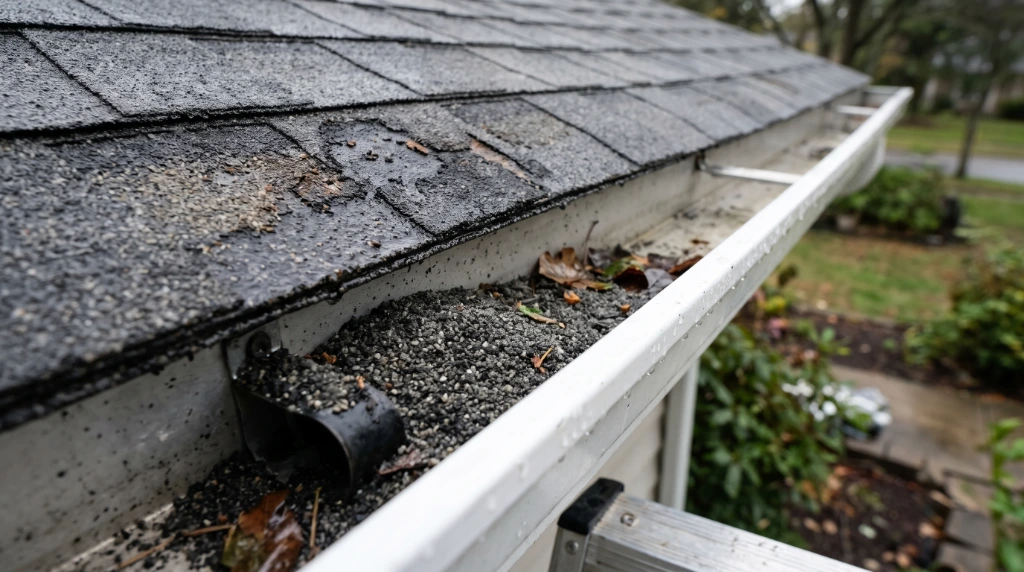
Granules end up in your gutters because rain washes them off your asphalt shingles. A small amount is normal, especially on a new roof or an older roof after a heavy storm. A large amount, or granules that keep showing up month after month, means your shingles are wearing out or have been damaged.
So the granules themselves are not the problem. How many you see, how often, and how old your roof is: that is what tells you whether to relax or call a roofing contractor.
What Shingle Granules Actually Do
Those gritty bits that look like coarse sand are crushed stone and minerals. They are pressed into the asphalt on every shingle at the factory. They give your roof its color, but looks are the least important job they have.
Granules do three things for your roof:
- Block the sun. UV rays dry out bare asphalt and make it brittle. Granules act like sunscreen.
- Add fire resistance. That mineral layer helps your roof hold up against sparks and embers.
- Take the beating. Rain, hail, and wind hit the granules first, not the asphalt underneath.
Once a shingle loses enough granules, the asphalt is exposed. From there it cracks, curls, and starts letting water through much faster.
Normal Shedding vs. a Real Problem
Here's the thing: every asphalt roof loses granules. The question is whether yours is losing them at a normal pace.
When it is normal
New shingles come from the factory with extra granules on the surface. Those loose ones wash off during the first several rains, and it can look like a lot. It should slow down within the first year.
A roof in the middle of its life also sheds a little after hard rain or a windy storm. A thin, even layer of grit when you clean the gutters in spring and fall is nothing to lose sleep over.
When it is a problem
Pay attention if you see any of these:
- Piles of granules, not just a light dusting
- Granules washing out of the downspouts after almost every rain
- A sudden jump right after a hail or wind storm
- Heavy loss on a roof that is 15 years old or more
- Heavy loss on a newer roof that keeps going past the first year
There is no magic number of cups or handfuls (we wish there were). What matters is the trend. More each season means the shingles are losing their grip.
6 Reasons Granules Come Loose
The same grit in the gutter can come from very different causes. Your roof's age and what has happened to it lately usually point to the right one.
1. A new roof settling in. Extra factory granules rinse off in the first few storms. This is the one cause you can ignore.
2. Age and sun. Years of heat and UV dry out the asphalt that holds granules in place. Most architectural shingles last 20 to 30 years, and shedding picks up in the last third of that span.
3. Hail and wind. Hail knocks granules loose and can bruise the shingle underneath. The damage is easy to miss from the ground, which is why a pile of granules after a storm deserves a closer look.
4. Foot traffic. Every trip across the roof scuffs granules off, especially on a hot day when the asphalt is soft. Satellite installers, holiday light crews, and solar techs all leave a trail.
5. Branches and debris. A limb rubbing on shingles works like sandpaper. You will usually see one worn strip right under the tree.
6. Poor attic ventilation or a bad batch. A hot attic cooks shingles from below and can cause blistering, which pops granules off early. Less often, the shingles had a bonding defect from day one.
One more worth a mention: pressure washing. It strips granules fast and can cause trouble with your shingle warranty. If you have moss or stains, use a low-pressure roof cleaning treatment.
Warning Signs You Can Spot From the Ground
You do not need to climb up there. In fact, please don't: a worn roof is slick, and walking on it knocks off more granules. A pair of binoculars and a walk around the house will tell you plenty.
Look for:
- Dark or shiny bald patches where the asphalt shows through
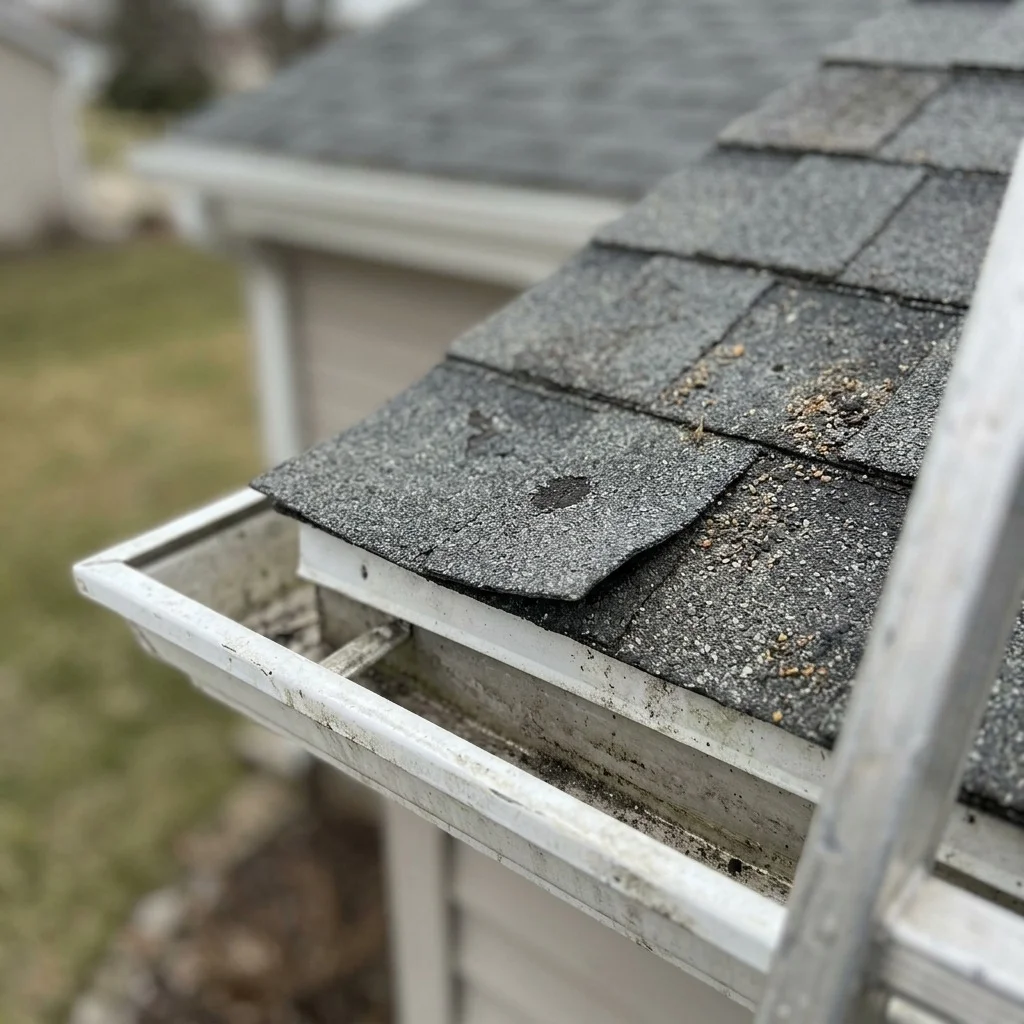
- Shingles that are curling, cracked, or missing
- Blotchy color, or one slope that looks more faded than the rest
- Granules piled up on the driveway or patio under the downspouts
- Water stains on ceilings or damp spots in the attic
One sign alone is a reason to keep watching. Two or more together mean it is time for an inspection.
What to Do Next: A 5-Step Plan
Alright, let's talk about what to actually do when you find granules.
- Clean the gutters and take photos. Scoop the granules out and snap a few pictures first. A clean gutter gives you a starting point, so you can see how fast new granules build up.
- Write down your roof's age. Check your closing papers or the permit history with your city or county. If you can't find it, a roofing contractor can estimate it during an inspection.
- Think back on recent weather and roof work. Hail, high wind, a fallen limb, or a crew on the roof all change what the granules mean.
- Check again after the next two or three storms. Light grit again? Normal. Another heavy layer? That is your answer.
- Book a roof inspection if anything looks off. Do this right away after a hail storm, on a roof past 15 years, or any time you see bald spots or leaks.
While you wait, trim back any branches touching the roof and keep everyone off it. Skip the roof coatings and sealers sold as a fix for granule loss, too. You can't glue granules back on (who would've thought?), and coatings can cause problems with your warranty.
Repair or Roof Replacement? How to Tell
Granule loss alone does not mean you need a new roof. The fix depends on how much of the roof is affected and how much life the rest of it has left.
A repair usually makes sense when:
- The damage is in one spot, like under a branch or around a few hail hits
- The roof is under 12 to 15 years old
- The surrounding shingles are still flexible and lying flat
A roof replacement usually makes sense when:
- Bald spots show up on more than one slope
- Shingles are curling, cracking, or breaking when handled
- The roof is 20 years old or more
- You have had repeat leaks in different areas
There is a gray zone in the middle, and that is where an honest inspection earns its keep. Old shingles often crack when new ones are tied into them, so a "small repair" on a worn roof can turn into money spent twice. On the other hand, replacing a 10-year-old roof over one scuffed section is overkill.
One detail people miss: color match. New shingles next to sun-faded ones will stand out, and older colors get discontinued. If the patch faces the street, ask to see a sample against your roof before you agree to the work.
What It Costs
Of course, none of this comes free. These are broad national ranges for asphalt shingle roofs. Your number depends on your area, roof size, pitch, and how easy the roof is to reach.
- Roof inspection: free to about $400. Many inspections tied to an estimate are free. A written report for a home sale or insurance file usually has a fee.
- Gutter cleaning: about $120 to $300 for most homes.
- Tree trimming near the roof: about $300 to $1,500, depending on the tree.
- Small shingle repair: about $300 to $1,500 for a handful of shingles or one small area.
- Larger repair or one roof section: about $1,500 to $5,000.
- Full roof replacement: about $9,000 to $25,000 for most homes, or roughly $4.50 to $9 per square foot. Steep, cut-up, or very large roofs run higher.
Plan for one wild card on a replacement: the wood decking under the shingles. Nobody can see it until the old roof comes off. Rotted sheets get replaced at a per-sheet price, often $70 to $150 each, so ask for that price in writing before the job starts.
Timelines, Permits, and a Few Surprises
The work itself is fast. The waiting around it is what catches people off guard.
- Inspection: 30 to 60 minutes on site.
- Repair: a few hours to one day.
- Roof replacement: one to three days for most homes.
- Getting on the schedule: one to four weeks in a normal season. After a big hail storm, expect several weeks or more.
- Permit: same day in some towns, one to two weeks in others.
Most towns require a permit for a full roof replacement, and some require one for larger repairs. Your roofing contractor should pull it, not you. If a bid says "no permit needed," call your building department and check.
A few things can change the plan once the job starts:
- Extra layers. Most building codes allow no more than two layers of shingles. If a past owner roofed over the old one, everything has to come off, and tear-off and dump fees go up.
- Code upgrades. A new roof has to meet today's code, not the code from 25 years ago. That can mean adding drip edge, ice and water barrier at the eaves, or more attic vents.
- Material delays. After a regional storm, popular shingle colors sell out. Being flexible on color can save you weeks.
If your roof is getting close to the end, start planning in the off-season. Late fall and early spring usually have shorter wait times than the weeks after storm season.
Will Insurance or a Warranty Cover It?
Short version: it depends on the cause.
Homeowners insurance generally covers sudden damage, like hail or wind. It does not cover a roof that wore out from age. Policies also set a deadline to file after a storm, often one to two years, so don't sit on storm damage. Check your policy for the exact window.
Shingle warranties cover manufacturing defects, not normal weathering. Keep your install contract, shingle brand and color, and install date in one folder. Without that paperwork, a warranty claim is hard to prove.
The Bottom Line
Granules in your gutters come from your shingles, and a little is normal. New roofs shed extra for the first year. Older roofs shed a bit after storms. Heavy, sudden, or steady loss is the roof telling you something has changed.
Here is what to consider next:
- Roof under 10 years old, light grit: clean the gutters and check again next season.
- Any age, heavy loss after a storm: get an inspection soon and ask about storm damage.
- Roof 15 years or older with bald spots or curling: get an inspection and start budgeting for a roof replacement.
- Any leak or ceiling stain: call a roofing contractor now. Water damage grows faster than roof damage.
A 30-minute inspection gives you a clear answer: keep watching, repair one area, or plan the replacement on your schedule. That beats finding out from a stain on the ceiling.