What Are Starter Shingles and Why Are They Important?

Aaron Venegaz is the President and founder of Global Exterior Experts and has been in the construction / roofing industry for over 15+ years. He started the company back in 2010 and done everything from scheduling appointments to putting down roofs. He's also done everything from commercial roofing to residential roofing and has also worked with almost every single roofing material multiple times over the past 15 years.
A ridge cap shingle is a small, pre-bent shingle that seals the peak and hips of a roof where two slopes meet. It blocks wind-driven rain, resists uplift, and gives the roofline a finished look. Factory caps outlast cut 3-tabs and protect your warranty. Here's what they cost, when to repair them, and what to specify on your next roof replacement.
1. What Ridge Caps Actually Do for Your Roof
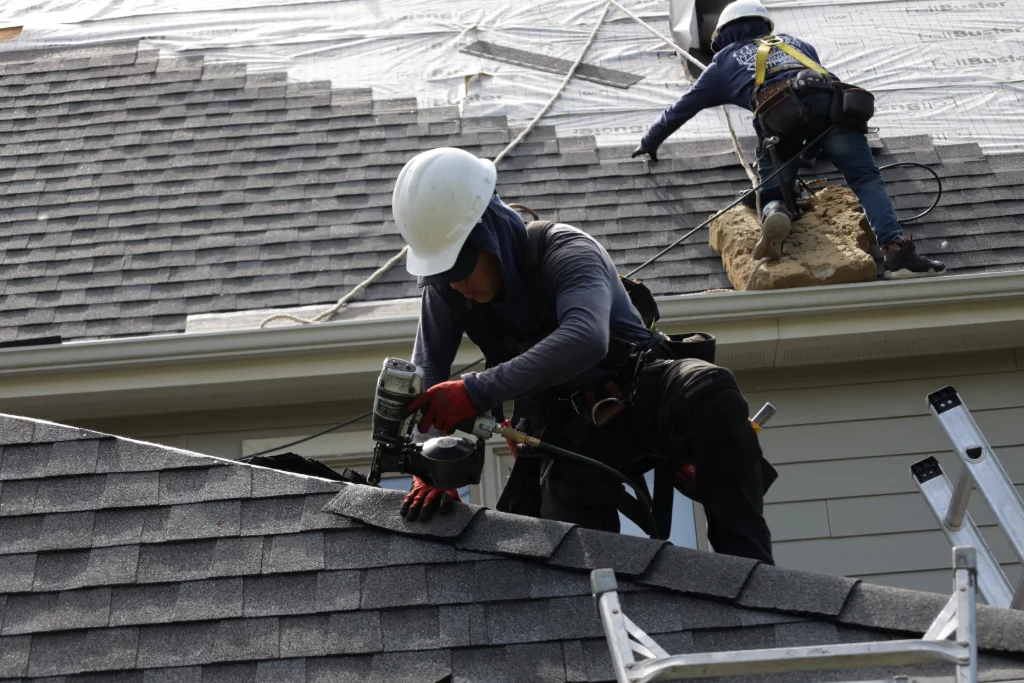
Here's the thing: the ridge takes more abuse than any other part of the roof. Wind speeds up as it climbs the slope and hits the peak hardest. Rain gets driven sideways into that seam instead of running off it.
A properly installed ridge cap handles four jobs at once:
- Sheds water away from the open seam at the peak
- Resists wind uplift with nails plus a factory sealant strip
- Covers the gap in the roof deck where the two sides meet
- Finishes the look of the roof so the lines read sharp from the street
When a cap fails, water finds the gap in the sheathing underneath and heads straight for the attic. A lot of "mystery" ceiling stains near the center of a house trace back to a cracked or missing ridge cap.
2. The Three Types of Ridge Cap Shingles
Alright, let's talk about what's on the market. Most ridge caps fall into one of three groups.
Standard hip and ridge caps
These are single-layer caps made from regular asphalt shingle stock, pre-cut and pre-bent at the factory. They match the field shingles well and seal fine in most climates. This is the baseline on a mid-range roof replacement.
High-profile (dimensional) ridge caps
These are thicker, often two layers laminated together, and they stand taller on the ridge. They pair with architectural shingles and give the roofline a bold shadow line. They also hold up better in hail and high wind because there's more material and a heavier sealant.
Impact-resistant ridge caps
Some caps carry a Class 3 or Class 4 impact rating, often with a rubberized (SBS-modified) asphalt that flexes instead of cracking. If you live in hail country, this is the one to ask about. Some insurers offer a premium discount when the whole roof, caps included, carries a Class 4 rating.
3. Factory Ridge Caps vs. Cut-Up 3-Tab Shingles
For decades, the ridge was finished by cutting a 3-tab shingle into three pieces and bending them over the peak. Some crews still do it to save a few dollars a bundle. We don't, and here's why.
- A cut 3-tab is thin and flat, so it cracks when bent over a steep ridge, especially in cold weather
- The sealant dots are in the wrong spot for a cap, so wind gets under the edges
- The color rarely matches an architectural field shingle, so the ridge looks faded from day one
- Manufacturer warranties on architectural roofs often require a matching factory cap
That last point matters. If you're paying for a 30-year or lifetime shingle, finishing it with cut 3-tabs can void part of the coverage. Who would've thought a $60 shortcut could cost you a warranty?
4. How Ridge Caps Work With Ridge Vents
On most modern roofs the ridge cap isn't sitting on bare decking. It's sitting on a ridge vent, a low plastic or mesh strip over a slot cut in the peak that lets hot attic air escape.
The cap covers the vent so rain can't get in while air still gets out. That means the cap has to be nailed through the vent into the deck with longer nails, usually 2.5 inches or more. Short nails are a common install error here, and they show up as caps that lift in the first big wind.
If your attic runs hot in summer or you see frost on the underside of the roof deck in winter, ask about adding a ridge vent during your next roof replacement. The caps get replaced anyway, so it's the cheapest moment to do it.
5. Signs Your Ridge Caps Are Failing
You can spot most ridge cap problems from the ground with a pair of binoculars. Look for:
- Caps that are cracked straight across the bend
- Lifted or curled edges along the peak
- Missing pieces, often after a storm
- Exposed nail heads where the sealant has let go
- Heavy granule loss that leaves the ridge looking darker than the field
- Daylight visible at the peak from inside the attic
Caps fail before field shingles do. They're bent, they face the wind, and they bake in direct sun all day. A roof that's 12 to 15 years old can have perfectly good field shingles and a ridge that's ready for repair.
6. What Ridge Caps Cost and How Long the Work Takes
Of course, none of this comes free. Here's a realistic picture, with the usual caution that your region and roof pitch move the numbers.
Material
Standard caps run about $50 to $90 per bundle, and a bundle covers roughly 20 to 33 linear feet. High-profile and impact-rated caps cost more, often $90 to $150 per bundle. A typical single-family home has 40 to 80 feet of ridge, plus hips.
Repair
Replacing a handful of damaged caps usually lands between $250 and $700 installed. A full ridge replacement on an otherwise healthy roof typically runs $700 to $1,800 depending on length, pitch, and whether a vent is involved. Most ridge repairs are done in two to four hours.
As part of a roof replacement
On a full roof replacement, the caps are a small line item, often $300 to $1,200 of the total. Upgrading from standard to high-profile caps usually adds a few hundred dollars. Spread over a 25-year roof, that's one of the better value upgrades you can make.
7. Ridge Caps During a Roof Replacement: What to Check
A roof replacement is the one time you get to choose your ridge caps instead of inheriting them. Three things belong in your contract before anyone sets a ladder.
First, the exact cap product by name. "Hip and ridge" on a quote is not specific enough. You want the manufacturer and the line, and it should match the field shingle brand so the warranty stays whole.
Second, the nail spec. Caps over a ridge vent need longer nails, and most building codes call for corrosion-resistant fasteners. Some inspectors will flag short nails on a final inspection, and that's a return trip nobody enjoys.
Third, the lead time. Standard caps are stocked everywhere. Impact-rated or specialty-color caps can be a two to three week special order, and a crew that didn't check will sometimes finish the ridge with whatever the supply house had on the truck. Ask the question up front.
8. Planning Advice and Next Steps
If your roof is more than a decade old, put the ridge on your inspection list every spring and after any storm with winds over 50 mph. Here's a simple plan:
- Walk the property with binoculars and check every ridge and hip line
- Check the attic for daylight or water staining along the peak
- If you find damage, get a written repair quote that names the cap product
- If the field shingles are also worn, price the repair against a full roof replacement
- For a replacement, decide between standard, high-profile, and impact-rated caps before you sign
One more planning note. If you're filing a storm claim, ridge caps are often the first thing an adjuster photographs. Document them before any temporary repair so the record is clean.
Summary: Small Shingle, Big Job
A ridge cap shingle covers and seals the peak and hips of your roof, the spots that take the most wind and water. Factory-made caps outperform cut 3-tabs, protect your warranty, and finish the roofline properly. They wear out before the rest of the roof, so they deserve a look every year.
What to consider next:
- How old your current roof is and whether a ridge repair buys you a few more years
- Whether you're in a hail or high-wind area where impact-rated caps make sense
- Whether your next roof replacement should include a ridge vent under the caps
- Getting the cap product named in writing on any quote you sign
When you're ready, a roofing company that specifies the cap product up front, nails it to code, and matches it to the field shingle is doing the job right. That's the standard to hold any quote to.