.webp)
What Happens if My Roof Claim Gets Denied?

Aaron Venegaz is the President and founder of Global Exterior Experts and has been in the construction / roofing industry for over 15+ years. He started the company back in 2010 and done everything from scheduling appointments to putting down roofs. He's also done everything from commercial roofing to residential roofing and has also worked with almost every single roofing material multiple times over the past 15 years.
If you're weighing slate against clay tile for your next roof replacement, here's the short answer: both are premium, long-lasting materials. But they serve different homes, different budgets, and different climates. The right choice comes down to your roof structure, your budget, and what you actually want from the next 50 to 100 years of protection.
This guide breaks it all down so you can walk into a conversation with your roofing company already knowing what questions to ask.
What Each Material Actually Is
Let's get the basics straight before comparing anything.
Slate is natural stone. It's quarried, split into flat tiles, and installed directly on your roof. Each piece is unique. Natural slate is dense, hard, and almost completely impervious to water. It's been used on roofs for centuries for a reason.
Clay tile is fired earth. Clay is shaped into tiles (flat, curved, or S-profile), then kiln-fired at high temperatures to create a hard, weather-resistant surface. Clay tile has been used across Mediterranean, Spanish Colonial, and modern architectural styles for just as long.
One thing worth knowing: some manufacturers produce clay tiles designed to mimic the look of slate. So if you like the slate aesthetic but want clay's advantages, that option exists (more on that below).
Section 1: Weight and Your Roof Structure
Here's the thing most homeowners don't think about until they're deep into a project: both slate and clay are heavy.
Natural slate typically weighs between 800 and 1,500 pounds per square, depending on thickness. Clay tile runs somewhat lighter, usually 600 to 1,000 pounds per square, but it varies by profile.
For comparison, standard asphalt shingles weigh around 250 to 400 pounds per square.
What does this mean for you?
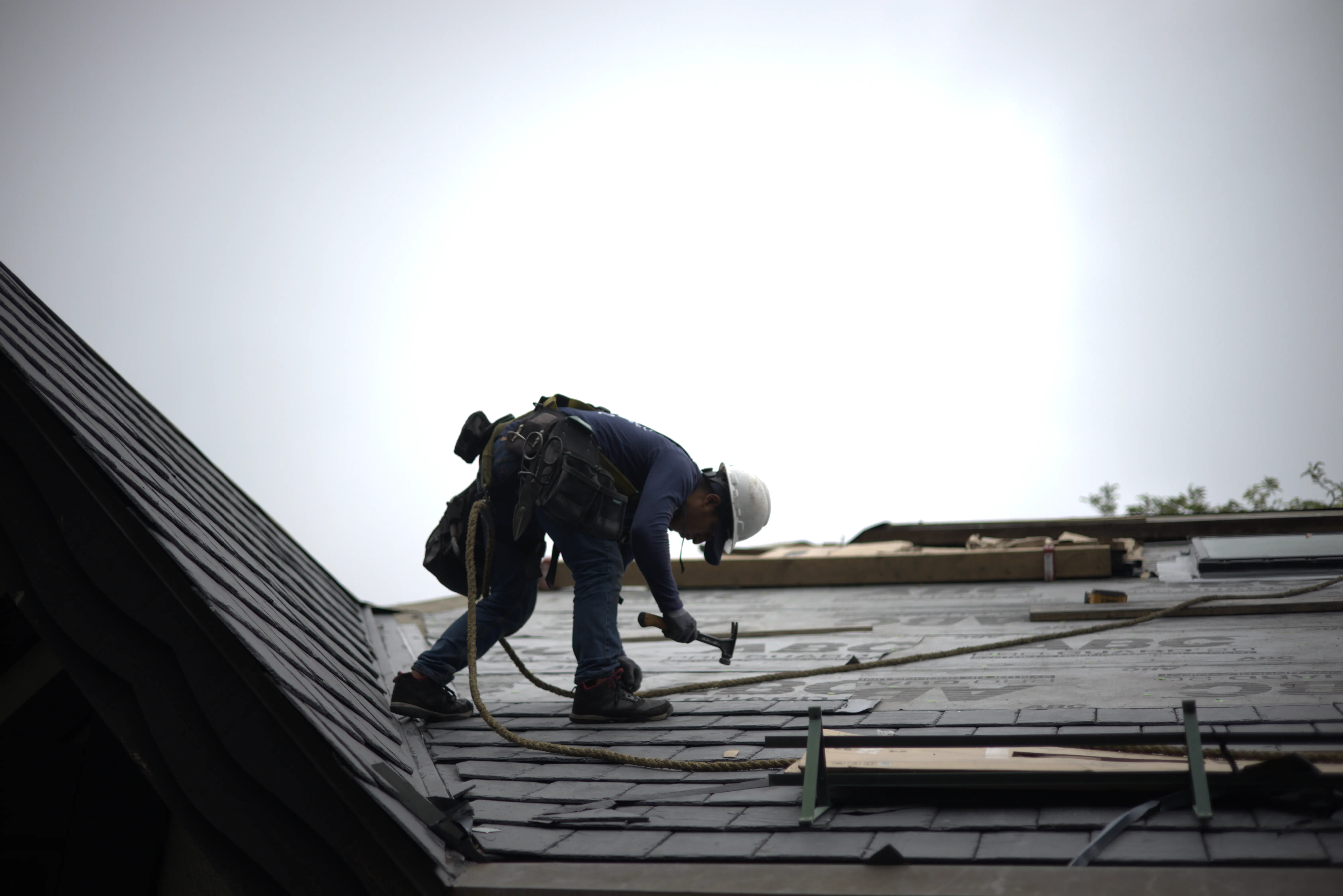
- Your roof structure may need reinforcement before installation
- A structural engineer assessment is often required, especially on older homes
- The reinforcement work adds cost and a few days to the overall timeline
- Skipping this step creates long-term risk, so don't let any roofing contractor skip it
Clay tile generally puts less stress on framing than thick natural slate, which gives it a slight practical edge on homes not originally designed for heavy roofing.
Section 2: Cost Comparison
Slate and clay tile are both premium investments, and you should go in with realistic numbers.
Natural slate roof replacement:
- Materials: $15 to $30+ per square foot installed
- Full roof: $25,000 to $75,000 or more for an average-sized home
- Soft slate (lower-grade) tends to be on the lower end; hard slate runs higher
Clay tile roof replacement:
- Materials: $10 to $20 per square foot installed
- Full roof: $15,000 to $50,000 for an average-sized home
- Spanish or curved profiles can push costs up; flat profiles typically run lower
Both cost two to three times more than a standard asphalt shingle roof. But both also outlast asphalt by decades, which changes the math when you look at long-term cost per year of service.
One more cost factor: specialty labor. Both materials require trained installers. A crew that only knows asphalt shouldn't be putting either of these on your home. Make sure the roofing company you hire has verifiable experience with your chosen material.
Section 3: Lifespan and Durability
Alright, let's talk about longevity, because this is where both materials really earn their price tag.
Natural slate is arguably the most durable roofing material in existence. Hard slate roofs (from regions like Vermont or Pennsylvania) can last 150 years or more. Even soft slate typically carries a 75 to 125-year lifespan. Buildings with original slate roofs from the 1800s are still standing today. Who would've thought a rock split into thin tiles would outlast the houses underneath it?
Clay tile has a proven lifespan of 50 to 100 years when properly installed and maintained. Tile roofs from the early 20th century are still intact across the American Southwest. That's a strong performance record by any standard.
Both materials are:
- Fire resistant (Class A rated)
- Resistant to rot and insect damage
- Capable of handling heavy wind when properly fastened
- Non-conductive (relevant for lightning protection)
The one vulnerability of both materials: impact damage. Slate can crack if walked on improperly or struck by a large hailstone. Clay tile can fracture under the same conditions. In hail-prone areas, this is worth factoring into your decision, and worth discussing with your roofing company before you commit.
Section 4: Maintenance and Repairs
Both are low-maintenance compared to asphalt. But "low maintenance" is not the same as "zero maintenance."
Slate repairs require sourcing matching tiles, which can be tricky. Older slate roofs may use materials from quarries that have since closed or shifted production. A skilled slate roofer can often source close matches, but it takes effort and occasionally adds cost. Clay tile repairs are generally more straightforward because modern manufacturers still produce the most common profiles and colors.
Flashings, underlayment, and ridge caps on both types of roofs still need periodic inspection. The tiles themselves may outlast everything around them, which means you may replace flashing two or three times before the tiles themselves ever fail.
Schedule a professional inspection every 5 to 10 years, and after any major storm. Catching one cracked tile early costs far less than dealing with water damage inside your home.
Section 5: Climate Considerations
Geography matters here. Illinois homeowners, in particular, deal with freeze-thaw cycles, ice dams, heavy snow loads, and occasional hail. Here's how each material holds up:
Slate in cold climates: Hard slate handles freeze-thaw cycles well. Soft slate can absorb some moisture and may degrade faster with repeated freezing. Always ask your roofing company to specify the slate grade and origin before agreeing to a quote.
Clay tile in cold climates: Standard clay tile can be susceptible to cracking in harsh freeze-thaw conditions if moisture gets into the tile body. Premium frost-resistant clay tiles are specifically engineered for cold climates and are the only type you should consider in the Midwest. Confirm with your supplier that tiles carry a freeze-thaw rating.
In warmer climates, clay tile dominates because of its thermal mass and airflow properties. In colder northern climates, high-quality slate or frost-rated clay are both viable, but the product selection matters more.
Section 6: Aesthetics and Curb Appeal
This one is straightforward. Both materials are visually distinctive and add serious curb appeal. But they suit different styles.
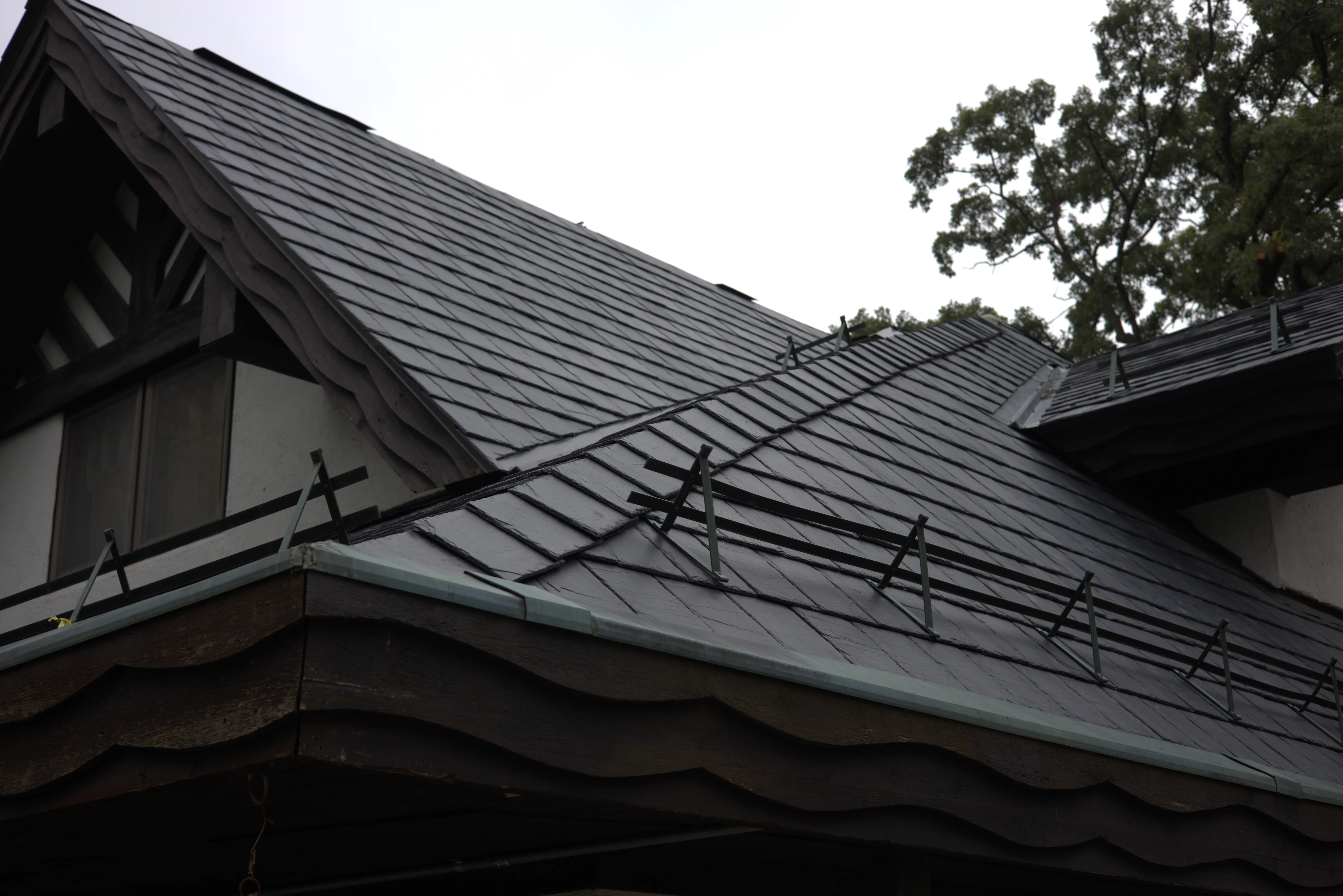
Slate works best on:
- Traditional and colonial architecture
- Historic or period homes
- Steep-pitch roofs where the texture and natural variation show well
Clay tile suits:
- Mediterranean, Spanish, and Southwestern styles
- Modern architectural designs
- Homes where a uniform color and profile are preferred
If you love the slate look but prefer clay's practical benefits, flat slate-profile clay tiles bridge the gap nicely. They're widely available, easier to source for repairs, and perform well in most climates.
Section 7: Which One Is Right for Your Home?
Here's a quick decision framework to help you think it through.
Choose slate if:
- Your home has the structural capacity, or you're willing to reinforce it
- You want the longest possible lifespan (75 to 150 years)
- Your home has a traditional or historic architectural style
- You're in a climate where high-grade hard slate performs well
Choose clay tile if:
- Your budget is more flexible on material but tight on labor or structural work
- You prefer a wider range of colors and profiles
- Your architectural style suits tile
- You want frost-rated tiles designed for Midwest winters
Consider neither if:
- Your budget is under $15,000 for a full replacement
- Your framing is in poor condition and full reinforcement isn't in the plan
- You need the project done in under two to three weeks (material lead times can stretch this out)
Planning Steps Before You Commit
Before calling a roofing company for a final quote, take these steps:
- Get a structural assessment. Have your framing inspected to understand what load it can currently carry.
- Request material samples. See the actual tiles, not just photos. Color and texture vary by manufacturer.
- Confirm installer experience. Ask for photos of completed slate or tile projects, and check references.
- Check permit requirements. Many municipalities require permits for tile or slate installation. Factor in two to four weeks for permit processing in busy seasons.
- Ask about material lead times. Premium slate and specialty tile can take four to eight weeks to arrive. Plan your project timeline accordingly.
Summary: The Bottom Line
Slate and clay tile are both worthy investments for homeowners who want a roof that lasts. Slate wins on lifespan and natural character. Clay tile wins on flexibility, repairability, and upfront cost. For cold climates like Illinois, frost-rated materials and proper structural prep are non-negotiable regardless of which you choose.
The most important next step is getting a detailed, itemized quote from a qualified roofing company that has real experience with the material you're considering. Ask for the grade, origin, and frost rating of any material before you sign anything. That single conversation will tell you a lot about whether you're working with someone who knows their craft.

.png)