.webp)

How Often Should I Have My Roof Inspected?

Aaron Venegaz is the President and founder of Global Exterior Experts and has been in the construction / roofing industry for over 15+ years. He started the company back in 2010 and done everything from scheduling appointments to putting down roofs. He's also done everything from commercial roofing to residential roofing and has also worked with almost every single roofing material multiple times over the past 15 years.
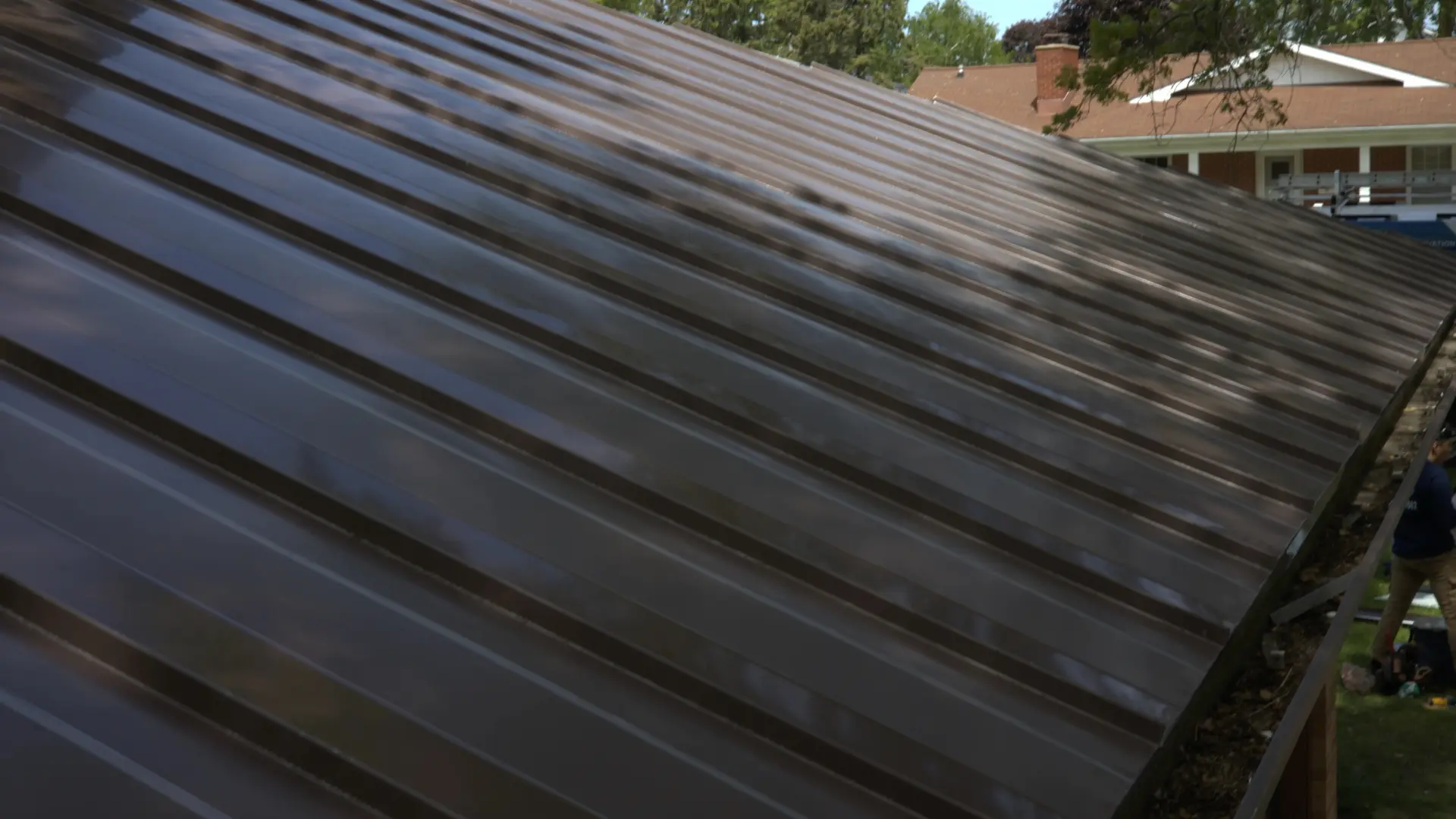
Here's the direct answer: gauge is the measurement of how thick a metal roofing panel is. And here's the part that trips everyone up: the numbers run backward. A lower gauge number means thicker metal. So 24 gauge steel is thicker and stronger than 26 gauge, and 29 gauge is the thinnest panel you'll commonly see.
Why does this matter for your roof replacement? Because gauge affects strength, dent resistance, lifespan, and price. Pick the wrong one and you either overpay for thickness you don't need, or you end up with a flimsy roof that oil-cans in the sun and dents in the first hailstorm.
The Gauge Scale, Explained Simply
Think of gauge like sandpaper grit, just in reverse. The scale most metal roofing uses runs from 22 (thick) to 29 (thin). Actual steel thickness looks like this:
- 22 gauge: about 0.030 inches, heavy-duty, mostly commercial
- 24 gauge: about 0.024 inches, the premium residential standard
- 26 gauge: about 0.019 inches, the most common residential choice
- 29 gauge: about 0.014 inches, budget panels, common on barns and sheds
Those differences look tiny on paper. On a roof, they're the difference between a panel that shrugs off hail and one that looks like a golf ball after one storm.
Why Gauge Numbers Run Backward
Quick history, because people ask. Gauge comes from old wire manufacturing. The number referred to how many times the metal was drawn through a die to thin it out. More passes meant a higher number and thinner metal. The roofing industry inherited the system and never let it go.
The practical takeaway: when comparing quotes, always confirm the actual gauge in writing. A quote that just says "metal roof" without naming the gauge is hiding the most important spec on the page.
24 Gauge: The Premium Standard
Alright, let's talk about the workhorse of high-end residential metal roofing. If you're installing a standing seam roof, you're almost certainly getting 24 gauge. It's stiff enough to span sections cleanly, handles foot traffic from future service work, and resists oil canning.
24 gauge also pairs with PVDF paint finishes, the top-tier coating that holds color for decades. Expect installed costs of roughly $10 to $16 per square foot for standing seam in 24 gauge, depending on roof complexity and region.
Choose 24 gauge if you get heavy snow, high winds, or hail, or if you simply want the longest-lasting option.
26 Gauge: The Value Sweet Spot
Here's the thing: for most homes with solid plywood decking underneath, 26 gauge is a genuinely good roof, not a compromise. The wood deck carries the structural load, so the panel doesn't have to do all the work on its own.
26 gauge costs roughly 20 to 30 percent less than 24 gauge on the material side. On a typical roof replacement, that might save $1,000 to $1,500 total. It's a fair trade in mild climates. In hail country, spend up.
29 Gauge: Know What You're Buying
29 gauge has a place, and that place is usually a pole barn. It's the thinnest common panel, and the savings over 26 gauge are small, often just $500 to $1,000 on a whole roof.
For that small savings you accept:
- Easier denting from hail and falling branches
- Lower wind uplift ratings
- More expansion and contraction noise
- A shorter realistic service life on a home
If a bid comes in suspiciously cheap, check the gauge line first. 29 gauge panels priced like 26 gauge work is one of the oldest tricks in the book.
Gauge and Your Climate
Your weather should drive this decision more than anything else. A quick guide:
- Heavy hail regions: 24 gauge, no debate
- High wind and coastal zones: 24 gauge for uplift ratings
- Heavy snow loads: 24 gauge, or 26 with proper deck support
- Mild, dry climates: 26 gauge performs well for decades
One insider note: some municipalities and HOAs now specify minimum gauge in their codes, especially in hail-prone counties. Some insurance carriers also offer premium discounts for impact-rated panels, which are usually thicker gauges. Check both before you order, because material swaps after permitting can add weeks.
What Gauge Costs, Realistically
Broad numbers for a full roof replacement on an average home:
- 29 gauge exposed fastener: $7 to $10 per square foot installed
- 26 gauge exposed fastener: $8 to $12 per square foot installed
- 24 gauge standing seam: $10 to $16 per square foot installed
Timelines matter too. Stock colors in 26 gauge often ship within days. Custom colors in 24 gauge PVDF can take 3 to 8 weeks to arrive, and specialty profiles longer than that. Order early. Panel lead times, not labor, are the most common delay on metal projects.
Gauge Isn't Everything: Two Specs That Matter Just as Much
Of course, thickness alone doesn't make a great roof. Two other specs deserve equal attention.
First, the substrate coating. Galvalume-coated steel (an aluminum-zinc blend) resists corrosion far better than basic galvanized. Second, the paint system. PVDF finishes keep their color for 30-plus years, while cheaper SMP paint fades sooner, especially in dark colors.
A thick panel with a cheap coating can fail before a thinner panel with premium protection. Judge the whole system, not just one number.
How to Verify Gauge on a Quote
Trust, but verify. Before you sign anything:
- Ask for the gauge in writing on the contract, not just verbally
- Request the manufacturer spec sheet for the exact panel
- Confirm whether the gauge listed is nominal or minimum thickness (some cheap panels measure thin)
- Ask for the paint system and substrate coating by name
A reputable roofing company will hand over all of this without hesitation. Hesitation is your answer.
The Bottom Line
Metal roof gauge measures panel thickness, and lower numbers mean thicker, stronger metal. For most homes, the real decision is between 24 gauge (premium strength, best for harsh weather and standing seam) and 26 gauge (excellent value over solid decking in milder climates). 29 gauge belongs on outbuildings, not your house.
Your next steps: check your local code and insurance requirements, decide how much weather abuse your roof takes each year, and get written quotes that name the exact gauge, coating, and paint system. Then compare apples to apples. A qualified roofing company should walk you through load ratings and warranty differences for your specific roof replacement, and put every spec on paper before a single panel gets ordered.