
What Is Ice and Water Shield and Where Does It Go on Your Roof?

Aaron Venegaz is the President and founder of Global Exterior Experts and has been in the construction / roofing industry for over 15+ years. He started the company back in 2010 and done everything from scheduling appointments to putting down roofs. He's also done everything from commercial roofing to residential roofing and has also worked with almost every single roofing material multiple times over the past 15 years.
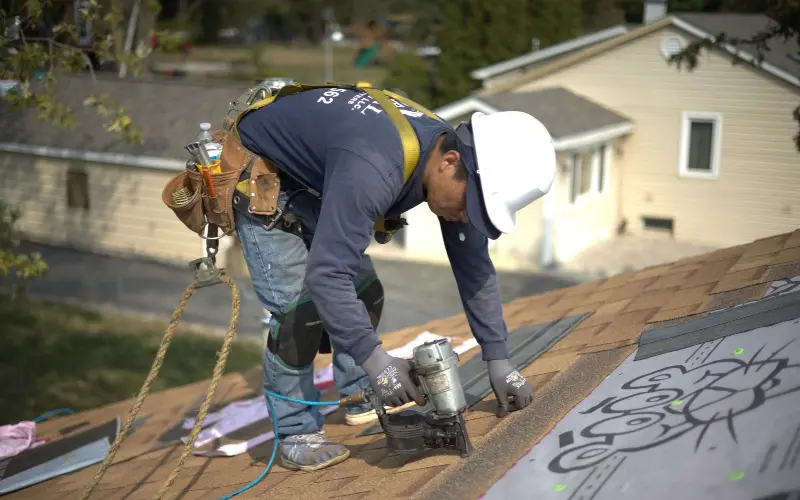
Roofing underlayment is a water-resistant layer installed directly on your roof deck, under the shingles, metal, or tile. It is your roof's backup barrier. When wind pushes rain under a shingle, or a shingle blows off, the underlayment keeps water away from the wood deck and out of your home.
Shingles get all the attention. Underlayment does a lot of the quiet work. As your roofing company, we treat it as one of the biggest decisions in any roof replacement, because once the shingles go on, you won't see it again for 20 years or more.
1. What Underlayment Actually Does
Here's the thing: shingles shed water, but they are not a sealed surface. They overlap, and water can find its way under them, especially in strong wind.
Underlayment handles what the shingles miss. It does five main jobs:
- Blocks wind-driven rain that sneaks under shingles
- Protects the roof deck from rot, mold, and soft spots
- Covers the deck during the job, so a surprise storm mid-install doesn't soak your attic
- Helps your roof system meet fire ratings and local building code
- Gives shingles a smooth, flat surface so they lay right and look clean
2. Where It Sits in Your Roof
Quick picture, from the attic up:
- Rafters or trusses (the frame)
- Roof deck (plywood or OSB sheets)
- Underlayment, plus ice and water shield in key spots
- Shingles, metal, or tile
Think of it as a raincoat under your jacket. Not glamorous, but you'd notice fast if it were missing.
3. The Three Main Types of Roofing Underlayment
Alright, let's talk about what's actually out there. There are three main types, and each one has a job it does best.
Felt Underlayment
Felt is paper or fiberglass soaked in asphalt. You may hear it called tar paper. It comes in two common weights, #15 and #30, with #30 being thicker.
Felt is cheap and familiar. The downside is that it tears more easily, wrinkles when it gets wet, and breaks down fast if it sits exposed to sun and rain.
Synthetic Underlayment
Synthetic underlayment is made from woven plastics like polypropylene. Today it is the standard choice under most asphalt shingle roofs.
It is stronger, lighter, and less slippery for the crew. It also holds up better if weather delays the shingles for a few days or even weeks. It costs more than felt, but not by much on a typical home.
Ice and Water Shield
This is a rubberized membrane with a sticky back that bonds to the deck. Its big advantage is that it seals around nails, so water can't follow the nail hole down.
We install it where water collects or backs up:
- Along the eaves, where ice dams form
- In valleys, where two roof slopes meet
- Around chimneys, skylights, vents, and walls
In storm-prone areas, some homeowners cover the whole deck with it for maximum protection.
4. Why Underlayment Matters More Than You'd Think
Shingles rarely fail all at once. A few lift in a windstorm. A nail backs out. An ice dam pushes meltwater uphill under the edge of the roof.
With solid underlayment, those small failures stay small. Without it, they turn into stained ceilings, wet insulation, and rotted decking. Replacing a few soft sheets of deck is minor. Replacing a whole slope is a very different bill.
Then there's the warranty. Many shingle manufacturers require approved underlayment for their full system warranty. Use the wrong product, or skip it, and your coverage can shrink. Who would've thought a layer nobody sees could decide what your warranty covers?
5. How to Choose the Right Underlayment for Your Home
The right underlayment depends on four things: your climate, your roof pitch, your roof covering, and how long you plan to stay in the home. Here's how we match them up:
- Cold, snowy climates: Synthetic over the main roof, with ice and water shield at the eaves, valleys, and around anything that pokes through the roof.
- Hot, humid climates: Synthetic, since it won't soak up moisture. Ask for a high-temperature rating under dark shingles.
- High-wind or coastal areas: Synthetic with tighter nailing, or a full-deck self-adhered membrane.
- Low-slope sections (about 2:12 to 4:12): Two layers of underlayment or a full membrane. Low slopes drain slowly, so water sits longer.
- Metal or tile roofs: A high-temperature underlayment approved by the roof manufacturer. Metal gets hot, and some products can't handle it.
One more detail people miss: attic ventilation. Many synthetics don't let moisture pass through, so your attic needs to vent properly. If you plan to spray foam the underside of the roof later, tell us now. That changes which underlayment makes sense.
6. What Roofing Underlayment Costs
Of course, none of this comes free. The good news is that underlayment is a small slice of the total job. Roofers price by the "square," which is 100 square feet of roof.
Broad material ranges per square:
- Felt: roughly $10 to $25
- Synthetic: roughly $12 to $35
- Ice and water shield: roughly $40 to $100
On a typical home of 20 to 30 squares, synthetic underlayment for the whole roof runs a few hundred dollars to about $1,000 in material. Adding ice and water shield at the eaves and valleys usually adds $400 to $1,500. Covering the entire deck in membrane can add $1,500 to $4,000 or more.
For context, a full asphalt shingle roof replacement on an average home often lands between $10,000 and $25,000, depending on size, pitch, and region. Labor for underlayment is built into that price.
The cost that surprises people is decking. Once the old roof comes off, any rotted sheets must be replaced, often at $80 to $150 per sheet. Make sure your quote lists that price up front.
7. How Long Installation Takes
Underlayment goes down the same day as tear-off, usually within a few hours. We remove the old roof, fix the deck, and dry it in before the shingles go on.
Most full roof replacements on an average home take 1 to 3 days. Large, steep, or complex roofs can take 3 to 5. Rain and high wind add days, since we won't open a roof into bad weather.
The bigger delays usually happen before work starts. Permits can take anywhere from same-day to 2 or 3 weeks, depending on your town. Specialty underlayments and certain shingle colors can take 1 to 3 weeks to arrive during busy seasons.
8. Code Surprises and Red Flags in a Quote
This is the part that catches people off guard. Building codes set rules for underlayment, and some towns check the work mid-job.
A few common code surprises:
- Ice barrier rules: In many cold areas, code requires ice barrier from the roof edge to at least 24 inches inside the outside wall line.
- Mid-roof inspections: Some towns want to see the ice and water shield before shingles cover it. That can pause the job for a day.
- Layover limits: Putting new shingles over old means no new underlayment at all. Many codes cap a roof at two layers.
When you compare quotes from any roofing company, watch for these red flags:
- Underlayment isn't listed at all
- "Felt" is listed with no weight or brand
- No ice and water shield in a cold climate
- No price for deck repair
- "You don't need a permit" (most towns require one for a roof replacement)
9. Planning Your Roof Replacement: Next Steps
You don't need to become a roofing expert. You just need to ask the right questions before you sign.
- Check your attic first. Look for water stains, damp insulation, or daylight through the boards. Take photos.
- Ask what goes under the shingles. Get the underlayment brand and product name in writing.
- Ask where the ice and water shield goes. Eaves, valleys, and penetrations at a minimum in cold climates.
- Get the deck repair price per sheet. This keeps surprise charges off your final bill.
- Confirm who pulls the permit. Your roofing company should handle it.
- Ask about the warranty. Find out which products are required to qualify.
- Book early. Spring and fall fill up fast, and material lead times stretch in peak season.
The Bottom Line on Roofing Underlayment
Roofing underlayment is the layer between your roof deck and your shingles that stops water when the shingles can't. It protects your deck, supports your warranty, and keeps small roof problems from becoming big interior repairs.
Here's what to remember:
- Felt is the budget option and works for short-term plans
- Synthetic is today's standard for most shingle roofs
- Ice and water shield belongs at eaves, valleys, and penetrations, especially in cold climates
- Underlayment adds only a small share to the cost of a roof replacement
What should you consider next? If your roof is 15 to 20 years old, or you've spotted attic stains or missing shingles, schedule an inspection. Then ask your roofing company to walk you through exactly what goes under your new roof, product by product, before any work begins.