.webp)
What Is Depreciation on a Roofing Insurance Claim?

Aaron Venegaz is the President and founder of Global Exterior Experts and has been in the construction / roofing industry for over 15+ years. He started the company back in 2010 and done everything from scheduling appointments to putting down roofs. He's also done everything from commercial roofing to residential roofing and has also worked with almost every single roofing material multiple times over the past 15 years.
A roof ridge vent is a long, low-profile vent that runs along the very peak of your roof. Its job is simple: let hot, damp air escape from your attic so cooler, fresh air can flow in from below. That steady airflow keeps your attic cooler in summer, drier in winter, and helps your entire roof last longer.
If you have ever climbed into your attic on a hot afternoon and felt like you walked into an oven, you already understand the problem a ridge vent solves. As a roofing company, this is one of the first things we look at when we inspect a roof, because poor airflow quietly shortens the life of everything above it.
How a Ridge Vent Actually Works
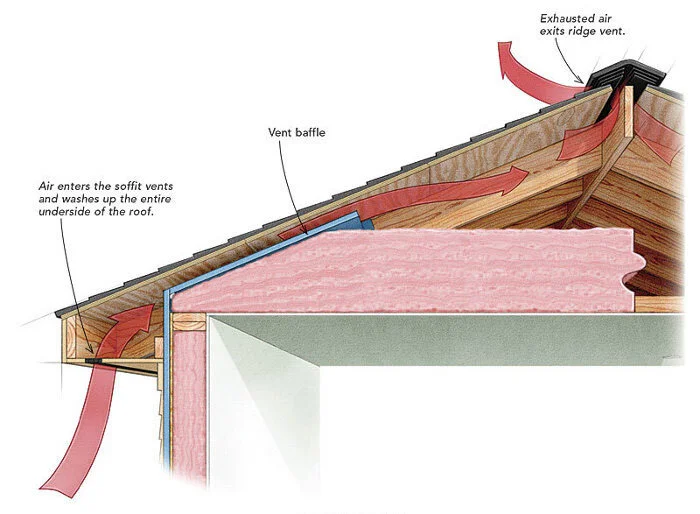
Here's the thing: your attic needs to breathe and it breathes best when air moves in a loop.
Cool air enters low, usually through soffit vents tucked under the edge of your roof. That air warms up, rises, and pushes out through the ridge vent at the top. No fans. No moving parts. Just heat doing what heat naturally does.
For this loop to work, you need a balanced system though. A ridge vent without enough intake down low is like a chimney with the bottom sealed shut. Air has nowhere to come from so almost nothing leaves.
What Happens Without Good Ventilation
If you skip proper airflow and the stuff on your roof will age faster and turn your 25 year roof into a 15 year one without you noticing. Trapped heat and moisture deteriorate your roof from the inside out.
Common problems include:
- Shingles that curl, crack, or wear out years early
- Ice dams in winter that push water up under your shingles
- Mold and mildew growing on attic wood and insulation
- Higher cooling bills because your house holds the heat
- A shingle warranty that may not hold up if ventilation was never correct
That last point surprises people. Many manufacturers require proper attic ventilation to honor their warranty and if you don't have it . . . just like I mentioned earlier, your 25 year roof becomes a 15 year long roof with no warranty if something was made wrong.
Signs Your Attic Isn't Venting Right
You don't need fancy tools to spot trouble. A few clues tell the story.
- The attic feels brutally hot, even in the evening
- Frost or water droplets on the nails or underside of the roof in winter
- A musty, damp smell up top
- Snow melts in uneven patches across your roof
- Energy bills creep up every summer with no clear reason
If two or three of these sound familiar, your roof is asking for help.
Ridge Vents vs. Other Vent Types
Ridge vents are not the only option, but they tend to do the job cleanly. Here is how they stack up against the common alternatives.
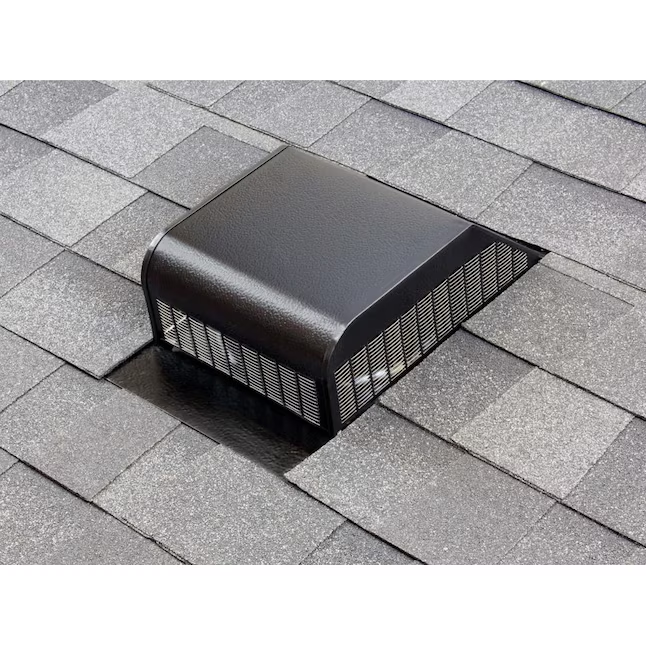
- Box vents: Small, boxy vents placed near the peak. They work, but you need several, and they vent only the area right around them.
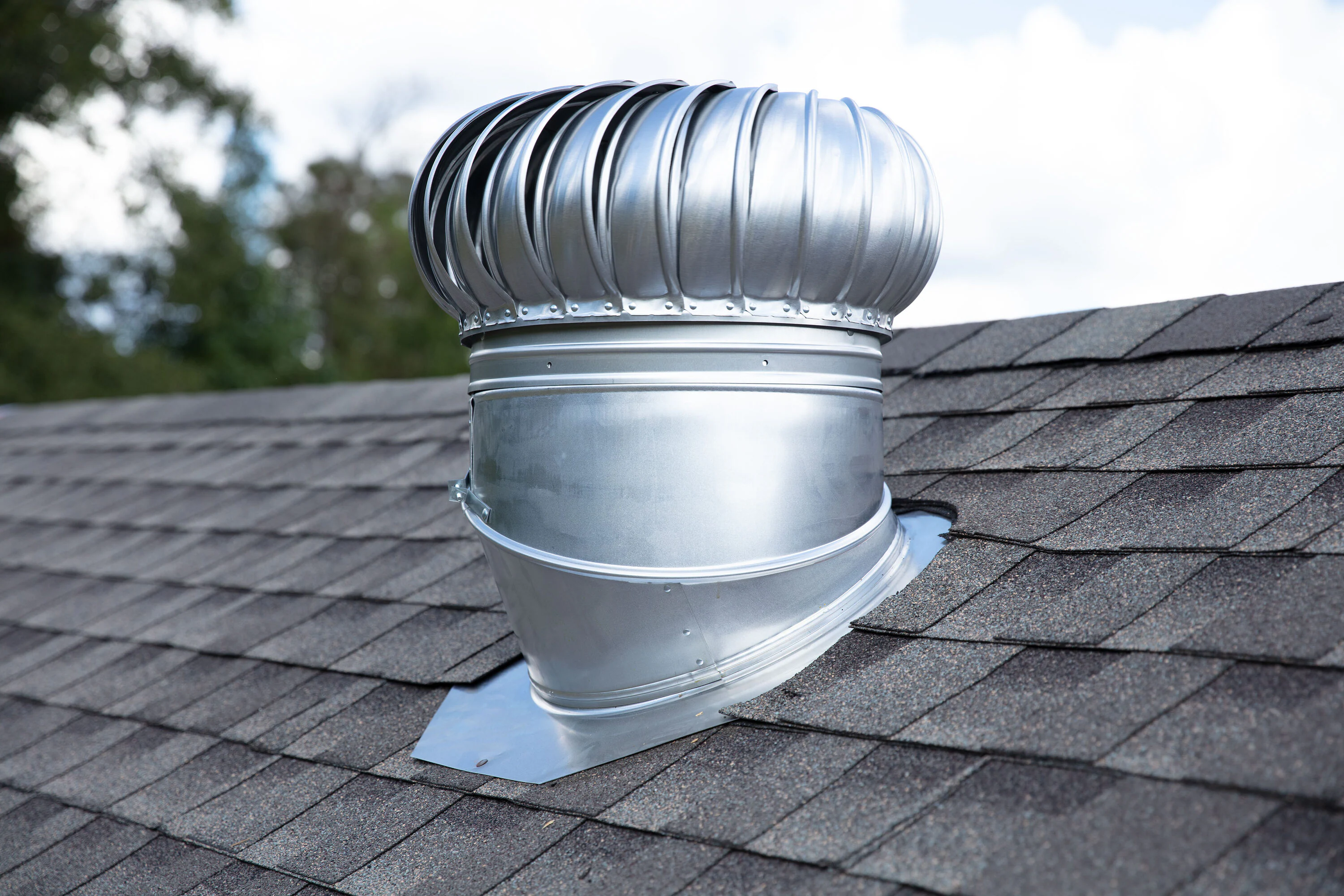
- Turbine vents: The spinning metal kind. They move air when the wind blows, but they can rattle and rust over time.
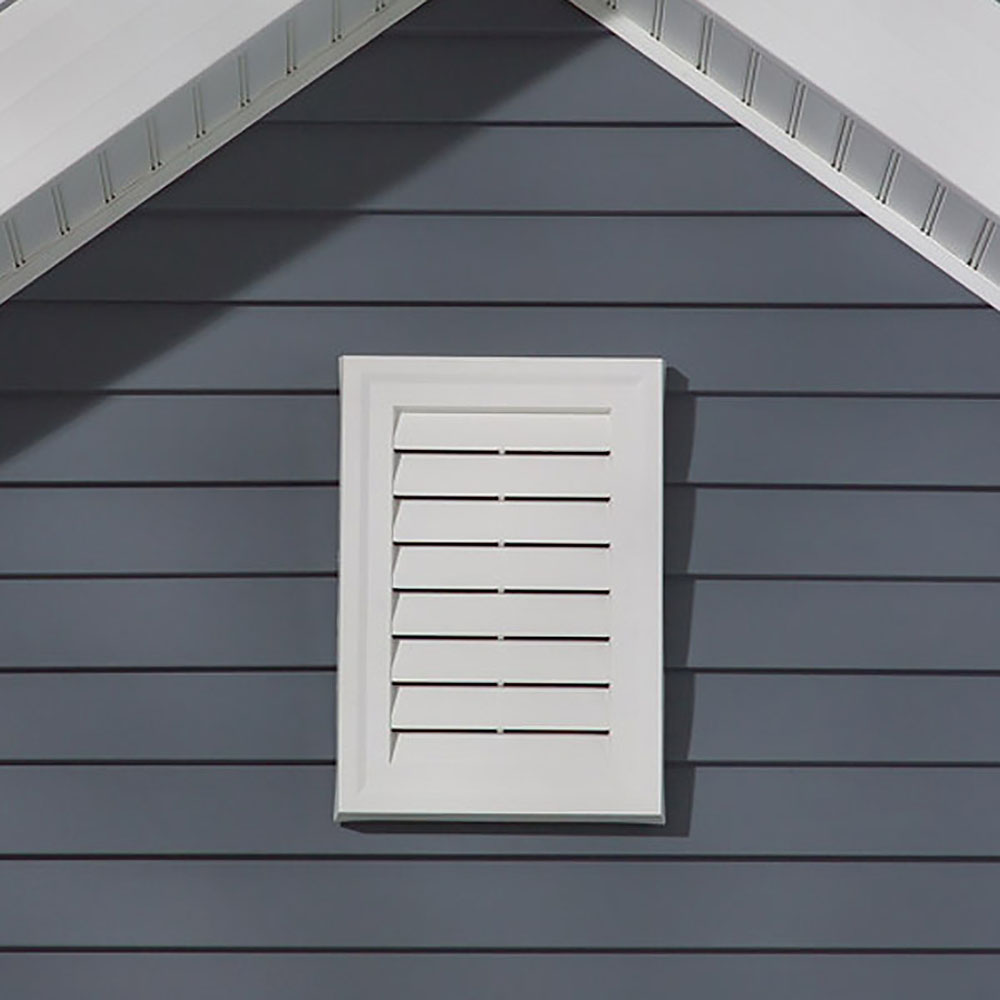
- Gable vents: Set into the side walls of the attic. Helpful, though airflow can be hit or miss depending on wind direction.
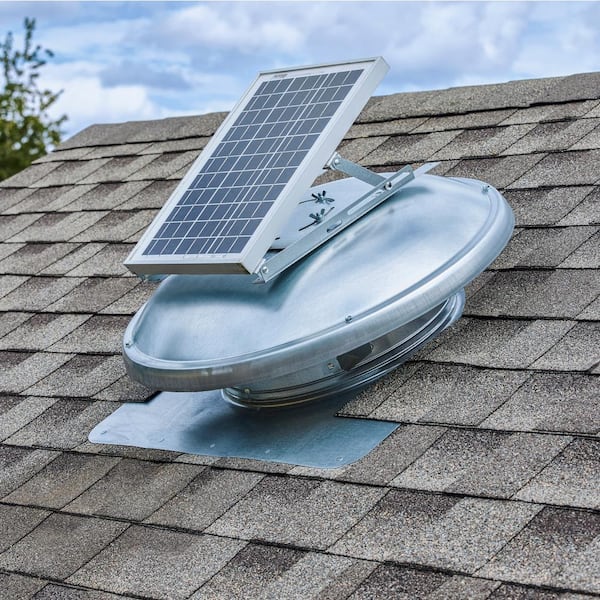
- Powered fans: Electric vents that push air out. They use power, can fail, and sometimes pull conditioned air from your living space.
A ridge vent runs the full length of the peak, so it pulls heat evenly across the whole attic. It also stays hidden, which keeps the roofline clean.
Types of Ridge Vents
Not all ridge vents are built the same. The right one depends on your roof, your climate, and your budget.
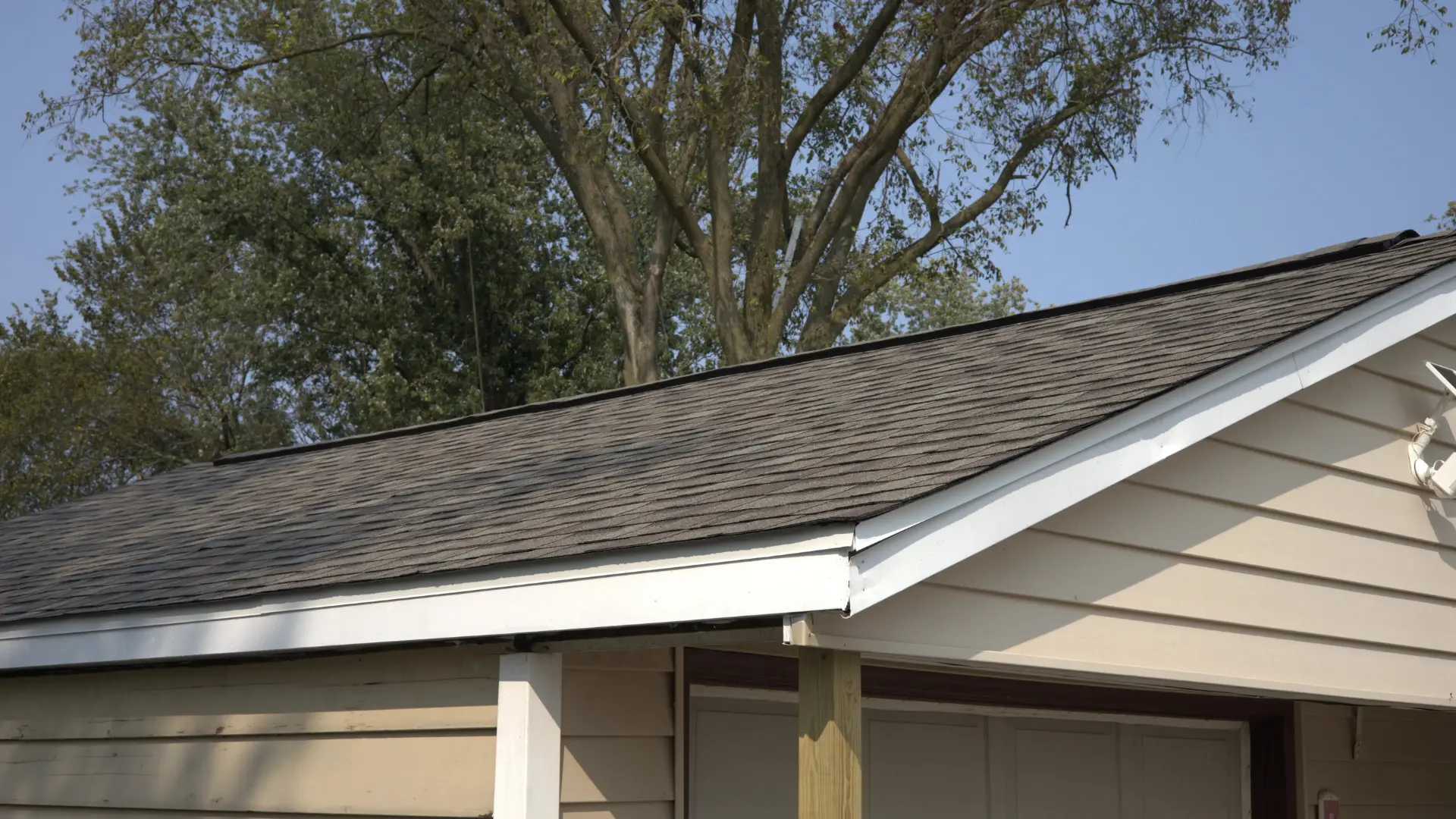
Shingle-Over Ridge Vents
These are the most common choice. A vent strip goes over the peak, then matching shingles cap it. From the ground, you can barely tell it's there.
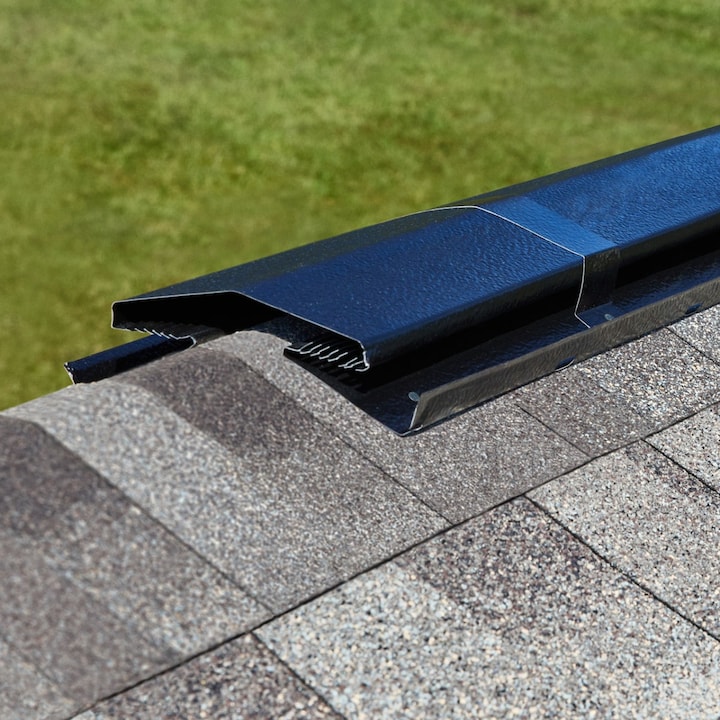
Aluminum Ridge Vents
A metal version that holds up well and resists weather. You'll see these more often on metal roofs or in areas with heavy wind.

Rolled or Mesh Ridge Vents
A flexible roll that bends to fit curved or uneven ridgelines. Handy on older homes where the roof peak isn't perfectly straight.
What a Ridge Vent Costs
Of course, none of this comes free. Pricing greatly swings based on roof size, pitch, and how easy your peak is to reach.
As a rough guide:
- Materials run about $2 to $4 per linear foot
- Installed on an existing roof, expect somewhere around $300 to $650 for an average home
- Added during a full Roof Replacement, plan for roughly $400 to $800 since the crew is already up there
Steeper roofs, multiple peaks, or hard-to-reach ridgelines push the number up. A clear estimate from a roofing company should spell out materials, labor, and any intake work your attic also needs.
How Long Installation Takes
This is the good news. Installed on its own, a ridge vent usually takes a few hours to a single day for most homes.
Cutting the ridge slot, setting the vent, and capping it with shingles moves quickly for an experienced crew and most typically just add it during a Roof Replacement and it simply becomes one step in the larger job, with no extra day tacked on.
The Best Time to Install: During a Roof Replacement
As mentioned before the smartest moment to add or upgrade a ridge vent is during a full roof replacement.
The crews are there and the shingles are already off. It's simple for the crew can open the ridge, check your soffit intake, and fix the whole airflow loop at once. Trying to retrofit ventilation later costs more and disturbs a roof that's otherwise fine.
If a replacement is already on your radar, treat ventilation as part of the plan, not an afterthought. Roof condensation is no joke.
Permits, Code, and Surprises to Plan For
Here is where projects sometimes slow down. Many areas require a permit for roofing work, and inspectors do check ventilation.
A few things worth knowing:
- Most codes follow a balance rule, often around 1 square foot of vent for every 300 square feet of attic floor, split between intake and exhaust.
- Inspectors may flag a roof that has exhaust vents but not enough intake down low.
- Material delays happen, especially on specialty colors or metal components, so order early.
- Older homes sometimes hide blocked or painted-over soffit vents, which only show up once work begins.
None of these are deal-breakers. They're just easier to handle when you plan for them up front instead of mid-project.
Mistakes That Undo the Benefit
A ridge vent only works when the rest of the system supports it. These slip-ups quietly cancel out the gains.
- Installing a ridge vent without enough soffit intake
- Mixing exhaust types (a ridge vent plus powered fans can short-circuit airflow)
- Leaving soffit vents clogged with insulation or paint
- Cutting the ridge slot too narrow, or too wide near the ends
A careful crew checks the whole picture, not just the peak.
The Bottom Line
A roof ridge vent pulls hot, moist air out of your attic and lets cool air in, which protects your shingles, your wood, and your wallet. It runs along the peak, works without power, and pairs best with solid soffit intake below.
Here's what to consider next:
- Take a look in your attic for heat, moisture, or musty smells
- Check whether you have working soffit vents, not just exhaust up top
- If a Roof Replacement is coming, bundle ventilation into that work
- Get a written estimate that covers intake and exhaust together
Good ventilation is one of the cheapest upgrades that quietly extends the life of an entire roof. Handle it right, and you may not think about your attic again for years.