.webp)
What Happens if My Roof Claim Gets Denied?

Aaron Venegaz is the President and founder of Global Exterior Experts and has been in the construction / roofing industry for over 15+ years. He started the company back in 2010 and done everything from scheduling appointments to putting down roofs. He's also done everything from commercial roofing to residential roofing and has also worked with almost every single roofing material multiple times over the past 15 years.
When you hire a roofing company for an insurance claim, pick one that is licensed, locally based, and used to working directly with adjusters. The right company will document storm damage clearly, explain your scope of work in plain English, and back the job with a written warranty. Get everything in writing and never pay a "discounted" deductible. Also ensure you compare the full scope of work not just the bottom-line price since an unreliable 100,000 mile car may be cheaper today but if it needs maintenance every 2 weeks how much cheaper was it really.
Below is everything you should check before you sign anything, plus realistic costs and timelines so you know what you are walking into.
First, Understand What the Claim Actually Covers
Here's the thing: your insurance policy pays to restore your roof to its pre-storm condition, not to upgrade it. So the goal is to get a fair, fully documented claim, not the cheapest patch job while you pocket the rest of the money.
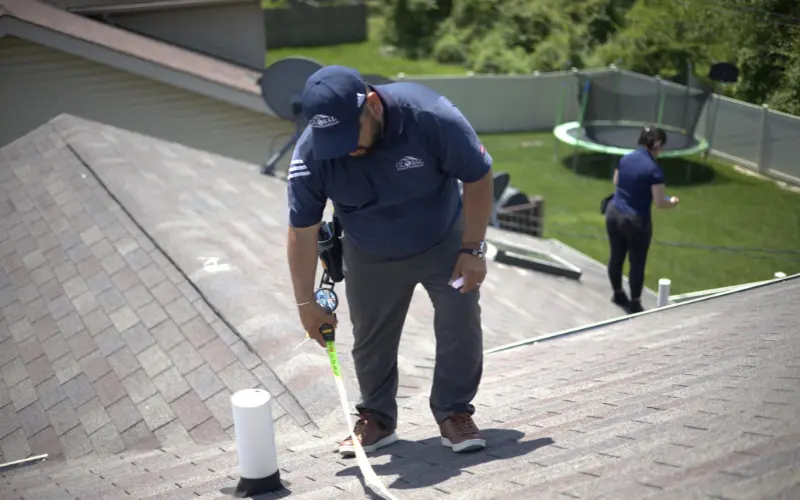
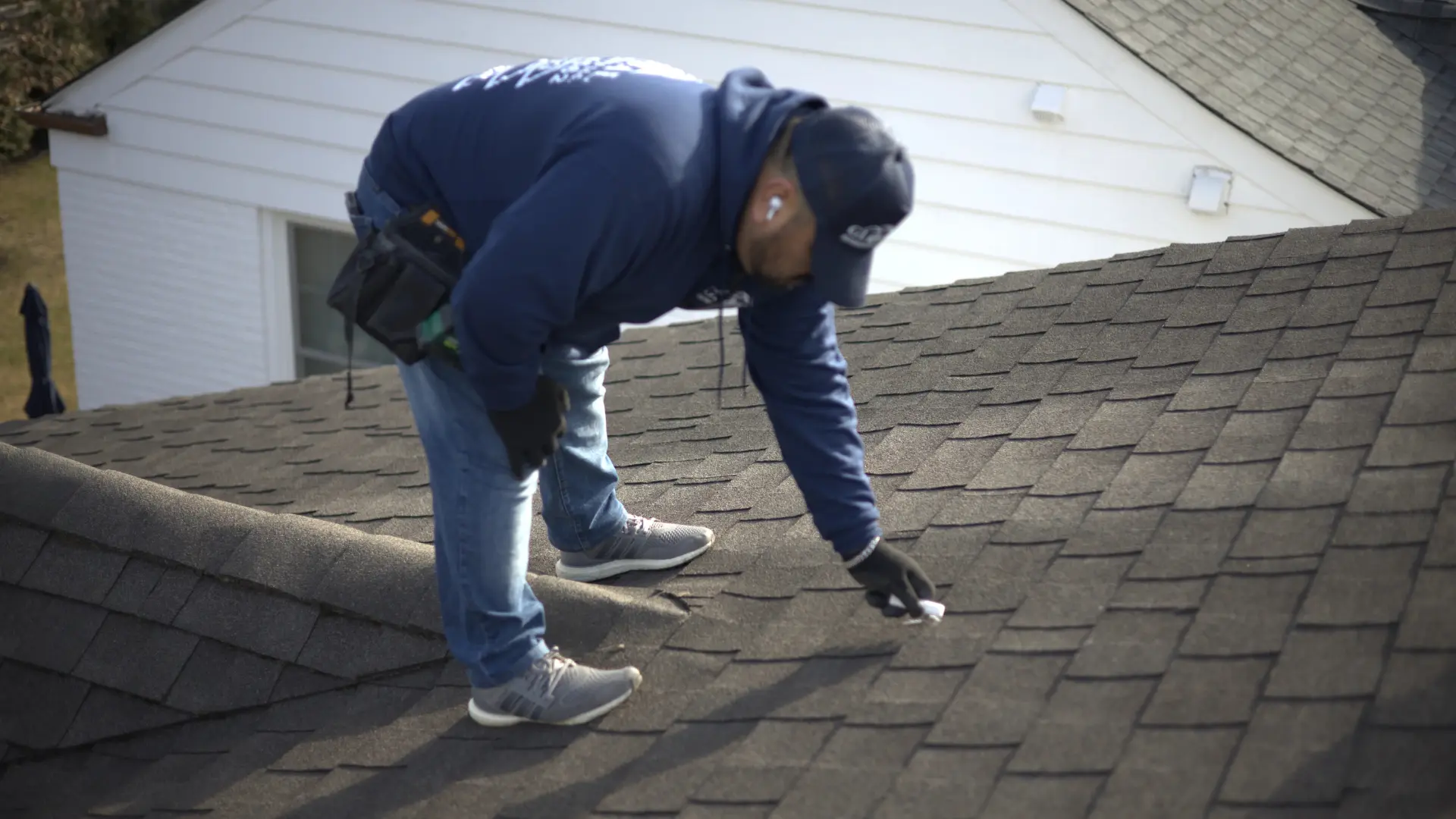
A roofing company that knows claims will walk your roof, photograph the damage, and match it to the line items your adjuster uses as well as fight to ensure all line items are included inside of the claim payout. That paperwork is what gets your claim approved at the right amount. If a company shrugs at documentation that is your first red flag this might not be a good fit.
Tip 1: Choose a Local, Established Roofing Company
After a big storm out-of-town crews show up fast to just pick up as much work as they possibly can. Some are great while most vanish the moment the check clears.
A local roofing company has a physical address, a real phone line, and a reputation it cannot afford to burn stealing a couple checks. You want someone you can still reach next spring if a shingle lifts before it should've.
Look for these basics to ensure a company is legitimately in your area:
- A business address you can actually visit
- Reviews that span more than a few months
- A track record in your county, not just your state
- Knowledge of your local permit office and inspectors
Local matters more than people think because building codes and permit rules change from one town to the next and putting on a roof that's not up to code doesn't save money, it causes you mounds of headaches for no reason.
Tip 2: Verify Licensing and Insurance Before Anything Else
Alright, let's talk about the boring stuff that protects you most. Before any work starts, confirm the company carries:
- A valid contractor's license for your state or city
- General liability insurance
- Workers' compensation coverage
Ask for a valid physical certificate not just a promise that it's there. If a worker gets hurt on your property and the company has no workers' comp, that liability can land on you. (Who would've thought a roof could become a legal problem? It can.)
A reputable roofing company hands these documents over without flinching. Hesitation here tells you a lot.
Tip 3: Get the Inspection and Estimate in Writing
A handshake means nothing once a claim is in motion. You want a written inspection report and a detailed estimate that lists materials, labor, tear-off, disposal, and any code-required upgrades.
This matters for a simple reason. Insurance companies pay against documented scope, if the estimate is vague, your payout will be too.
Check for these line items since they are often missed:
- Underlayment and drip edge
- Flashing around chimneys and vents
- Ridge vent or proper attic ventilation
- Code upgrades (more on that surprise below)
A clear scope protects you during the claim and again later if a dispute pops up.
Tip 4: Never Accept a "We'll Cover Your Deductible" Offer
This one is non-negotiable. If a roofing company offers to "eat" your deductible or "waive" it, walk away now.
Your deductible is your legal responsibility under the policy and them just "paying" it for you (or hiding it inside an inflated estimate) is insurance fraud in most states, and you can be dragged into it. A company willing to break that rule will usually break others along the road.
Honest pricing means you pay your deductible and the insurer pays the rest. No magic, no gimmicks, no "discounted deductibles".
Tip 5: Read Before You Sign, Especially Assignment of Benefits
Some contracts can give away more than you realize. Be careful with two documents in particular.
Assignment of Benefits (AOB): This hands your insurance rights over to the company letting them deal directly with the insurer. It can be convenient but it also means you lose some control over the claim. So ensure you read this twice.
"Contingency" agreements: Some say you owe the company money even if you later choose someone else. Just know what you are committing to.
A trustworthy roofing company explains every line and lets you take the contract home to review. Pressure to sign on the spot is a warning sign, not a great deal.
Tip 6: Compare Scope, Not Just Price
Two estimates can be thousands apart and both look "complete" at a glance. The difference is almost always in the line items in terms of the materials and their quality.
Cheaper is not the win if the low bid skips tear-off, uses thinner shingles, or leaves out ventilation.
Bring the estimates together and compare:
- Shingle brand, type, and warranty class
- Full tear-off versus a layover
- Ventilation and flashing work
- Cleanup, dumpster, and nail sweep
- Permit fees
A fair price on a complete roof replacement beats a bargain on a half job every time.
Tip 7: Confirm Warranties, Permits, and Cleanup
A real roof replacement comes with two warranties: one from the manufacturer on materials, and one from the company on workmanship. Get both in writing and ensure you ask how long each lasts.
Permits matter more than homeowners expect because skipping them can stall a future home sale or void your warranty. A proper roofing company pulls the permit, schedules the inspection, and handles all of the paperwork needed.
And do not forget the mess. Tear-offs produce a shocking amount of debris and stray nails so confirm that they'll do a magnetic nail sweeps and full cleanup as part of the deal.
What Roof Replacement Costs and How Long It Takes
Let's set expectations. These are broad ranges, not quotes, since pricing swings with material, pitch, and region.
- Asphalt shingle roof replacement: roughly $7,000 to $18,000 for an average home
- Metal roofing: often $15,000 to $35,000 or more
- Steeper or larger roofs: add cost for safety, labor, and access
On timing, most single-family roof replacements wrap in one to three days of actual work. But the full process from claim approval to material delivery to the final inspection, can run two to six weeks.
A quick insider note: material delays are real, and certain shingle colors or metal panels can be on backorder for weeks. Code upgrades surprise people too. If your area adopted new code since your last roof, the new install may legally require extra decking, ice-and-water shield, or ventilation that your old roof never had. Good news: many policies help cover those code-driven costs if your estimate lists them.
Putting It All Together
Hiring the right roofing company for an insurance claim comes down to a few habits. Choose local and licensed. Get the damage documented. Read every contract. Pay your own deductible. Compare full scope, and lock in warranties and permits before work starts.
Your Next Steps
- Pull a copy of your insurance policy and find your deductible and coverage limits.
- Schedule a roof inspection and request a written, itemized estimate.
- Verify the company's license, liability, and workers' comp.
- Compare at least two detailed estimates by scope, not price.
- Confirm permits, warranties, and cleanup in writing before you sign.
Do those five things, and you put yourself in control of the claim instead of hoping it works out. A storm-damaged roof is stressful enough. The hiring part does not have to be.

.png)