How Much Wind Can a Shingle Roof Withstand?

Aaron Venegaz is the President and founder of Global Exterior Experts and has been in the construction / roofing industry for over 15+ years. He started the company back in 2010 and done everything from scheduling appointments to putting down roofs. He's also done everything from commercial roofing to residential roofing and has also worked with almost every single roofing material multiple times over the past 15 years.
A new roof usually looks wavy for one of two reasons. Either the shingles have not finished settling and sealing, which is normal and clears up after a few weeks of warm weather, or something under the shingles is uneven. That could be wrinkled underlayment, warped decking, or sagging framing.
The first one is cosmetic. The second one needs a roofing company to take a look. Below is how to tell which one you have, what a fix costs, and what to do next.
Normal vs. Not Normal: The Quick Version
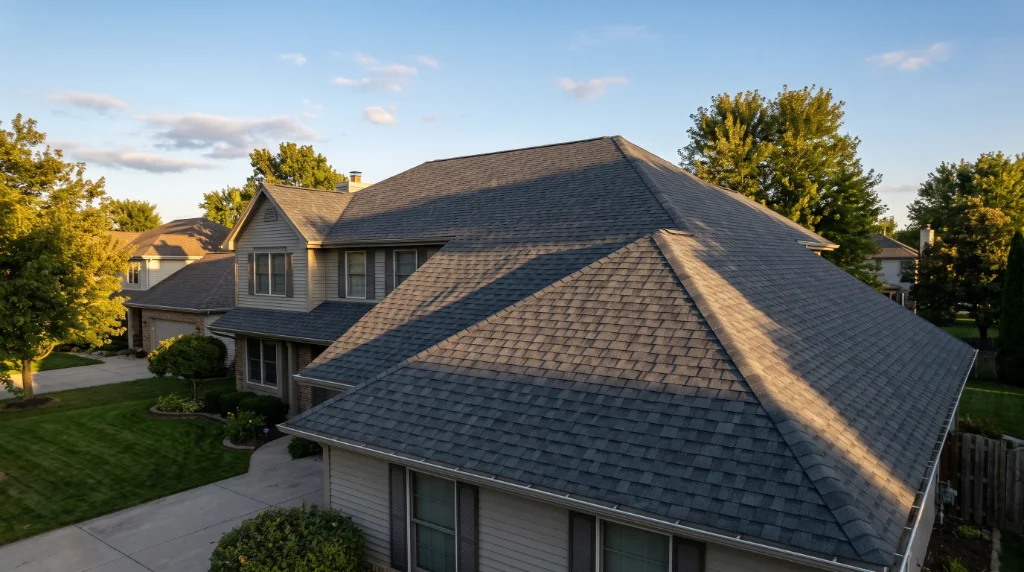
Here's the thing: not every ripple is a defect. Use this as a fast check.
Usually normal:
- Slight ripples across the whole roof in the first few weeks
- Shingle edges that look a little lifted on cool mornings
- Waves that fade as the weather warms up
Usually a problem:
- A hump, dip, or ridge in one spot
- Straight lines running up the roof every 4 feet (that's the width of a decking sheet, so the pattern is a giveaway)
- Waves that look the same or worse after 60 days
- Any sag along the ridge line
Why New Shingles Need Time to Lie Flat
Asphalt shingles ship in tight bundles. They come out with a slight curve and stiff edges, especially in cool weather. Each shingle has a strip of sealant that bonds it to the one below, but that strip needs sun and heat to activate.
In warm weather, shingles relax and seal in about two to six weeks. A roof replacement done in late fall or winter can take until spring. (Yes, a roof can look better in May than it did the day it was finished. Who would've thought?)
So if your roof is brand new and the ripples are mild and even, give it time.
6 Causes That Won't Fix Themselves
Alright, let's talk about the waves that stay. These come from what's under the shingles.
1. Wrinkled underlayment
Felt underlayment soaks up moisture. If it gets rained on or sits out overnight before the shingles go on, it wrinkles, and those wrinkles show through. Synthetic underlayment holds up much better.
2. Decking with no expansion gaps
Plywood and OSB sheets swell with humidity. They need about a 1/8-inch gap between them. Butted tight, the edges push up and form ridges.
3. Wet or damaged decking left in place
Soft, peeling, or warped sheets should be replaced during tear-off. If they get covered up, the new shingles follow every dip. Poor attic ventilation makes it worse, because trapped moisture warps the wood from below.
4. Old or thin decking
Older homes often have plank boards or thin 3/8-inch sheathing. Both flex between rafters. New shingles on top will look wavy even when the install is done right.
5. New shingles over old shingles
A layover saves money up front. But the new layer copies every curl and bump underneath.
6. Framing problems
Sagging rafters, a cracked truss, or uneven rafter spacing create big, smooth dips. This is the least common cause and the most serious one.
How to Check Your Roof From the Ground
Stay off the roof. You can learn a lot without a ladder.
- Check at midday. Low afternoon sun throws shadows that make small ripples look huge.
- Sight along the ridge from across the street. It should be straight.
- Take photos from the same spot each week. Photos beat memory.
- Look in the attic with a flashlight. Watch for dark stains, sheets sagging between rafters, and daylight where it shouldn't be. (It's the same place we start an inspection.)
- Note the pattern. Even ripples everywhere point to settling. Lines or one bad spot point to decking or framing.
What It Costs to Fix a Wavy Roof
Of course, none of this comes free, unless it's covered under warranty (more on that below). Here are broad ranges:
- Inspection: free to about $300
- Re-laying a section of shingles and underlayment: $300 to $1,500
- Replacing decking: $75 to $150 per sheet installed, plus the shingles above it
- Adding attic ventilation: $300 to $1,000
- Reinforcing rafters or repairing a truss: $1,000 to $4,000 or more
- Re-decking a full roof: several thousand dollars, depending on roof size
Prices swing with roof pitch, access, and local labor rates. Treat these as planning numbers, not quotes.
How Long the Fix Takes
The short version:
- Settling: 2 to 6 weeks of warm weather
- Inspection: about an hour
- Section repair or a few decking sheets: half a day to one day
- Structural repair: 2 to 5 days, plus permit time
One snag is matching shingles. If the color is back-ordered or comes from a different production run, a repair can wait a week or two for material. The patch may look slightly different at first.
Permits, Code, and Other Surprises
Shingle repairs rarely need a permit. Framing repairs usually do, and some towns want an engineer's letter for truss work. That can add one to three weeks before anyone picks up a hammer.
Code can surprise you too. Many areas limit a roof to two layers of shingles, and some inspectors require new sheathing over old plank decking. If your roof replacement quote skipped decking, ask why.
Who Pays for It?
Here's where your paperwork matters. If the waves come from installation, such as wrinkled underlayment, tight decking joints, or bad sheets left in place, the workmanship warranty should cover it. Contact the roofing company that did the job, in writing, with photos and dates.
If the cause is old framing or thin decking that was there before, it's usually a separate repair. Check your contract for a decking allowance and any notes about what was found during tear-off. Keep in mind that manufacturer warranties cover defective shingles, not install errors.
Your Next Steps
- Roof under 60 days old with mild, even ripples? Wait, and take weekly photos.
- See lines, a hump, a dip, or a sagging ridge? Don't wait. Request an inspection now.
- Check the attic for stains or sagging wood.
- Pull your contract and warranty. Note the install date.
- Send photos to your roofing company and ask for a written finding.
- Still not satisfied? Get a second inspection before you pay a final balance.
The Bottom Line
A wavy look right after a roof replacement is often just shingles settling, and warm weather takes care of it. Waves that form lines, sit in one spot, or last past 60 days come from the underlayment, decking, or framing. Those won't go away on their own.
What should you consider next? Think about how old the roof is, what pattern you see, and what your warranty says. Then get a roofing company on site to inspect both the roof and the attic. A small fix now costs far less than leaks and rot later.