.webp)
ACV vs. RCV Roof Coverage: What Homeowners Need to Know Before the Next Storm

Aaron Venegaz is the President and founder of Global Exterior Experts and has been in the construction / roofing industry for over 15+ years. He started the company back in 2010 and done everything from scheduling appointments to putting down roofs. He's also done everything from commercial roofing to residential roofing and has also worked with almost every single roofing material multiple times over the past 15 years.
Roof venting matters because your attic needs to breathe. Without a steady flow of air moving in at the eaves and out at the ridge, heat and moisture get trapped under your roof deck. That trapped air cooks your shingles in summer, rots your decking in winter, and drives up your energy bills year-round. Proper ventilation is one of the cheapest ways to protect the most expensive surface on your home.
Here's everything you need to know before you call a roofing company.
What Roof Ventilation Actually Is
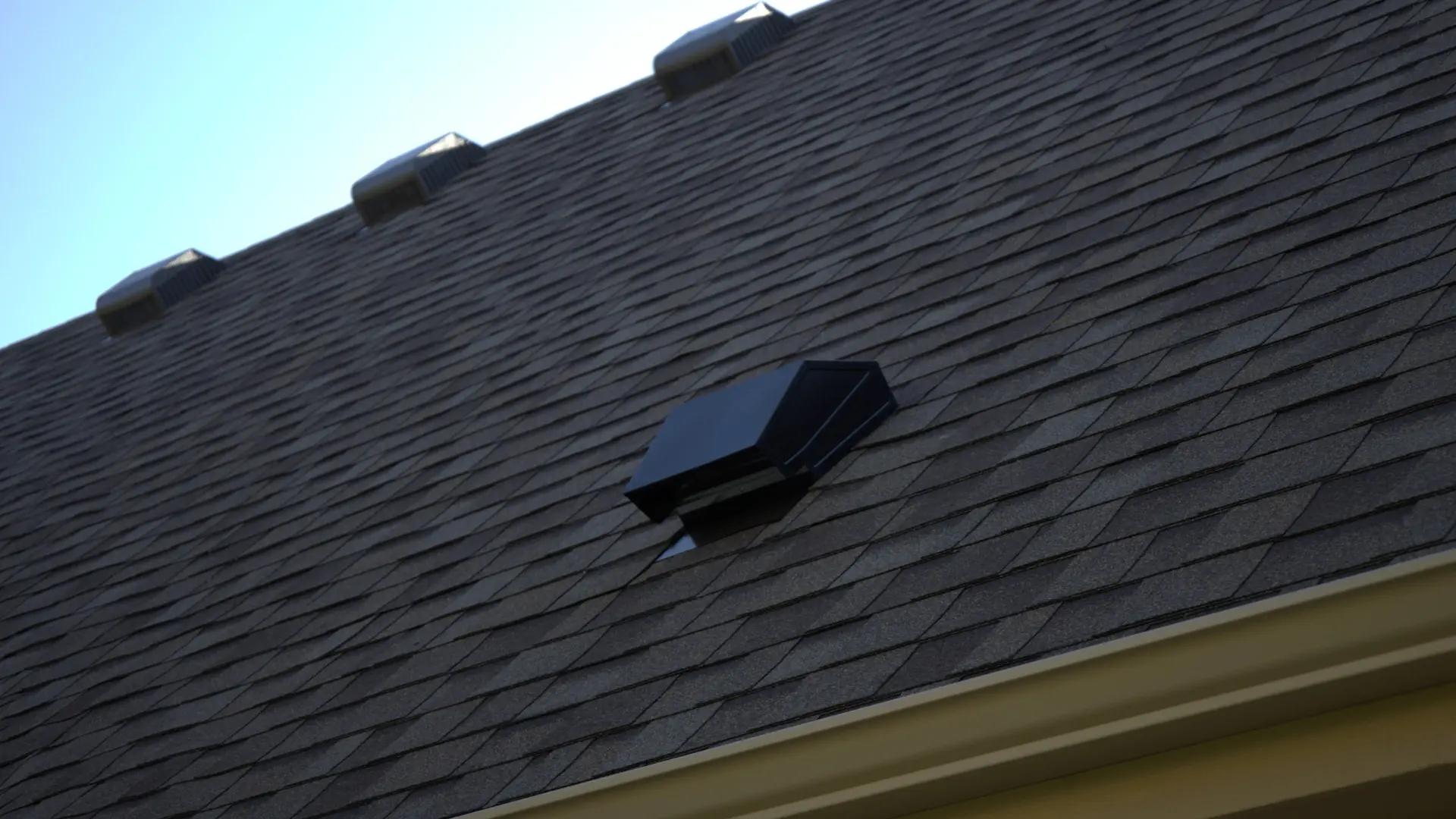
Roof ventilation is a balanced system of intake vents and exhaust vents that keeps air moving through your attic. Intake vents sit low, usually in the soffits under your roof's overhang. Exhaust vents sit high, usually at the ridge.
Hot air rises. Cool air gets pulled in low, warms up, and pushes out the top. That's the whole system. No motors required on most homes, just physics doing the work for free.
The key word is balanced. Exhaust without intake doesn't move air. It just sits there.
The Summer Problem: A 140-Degree Attic
Here's the thing about a poorly vented attic in July: on a 90-degree day, the space above your ceiling can hit 140 degrees or more.
That heat does real damage:
- Shingles bake from underneath and age years faster than they should
- Roof decking can warp and distort
- Heat radiates down into your living space, so your AC runs longer and harder
- Your cooling bill climbs, month after month
You're paying twice. Once in energy costs now, and again in an early roof replacement later.
The Winter Problem: Moisture and Rot
Winter flips the problem from heat to moisture, and moisture is worse.
Every shower, every pot of boiling water, even normal breathing pushes warm, humid air up through your ceiling into the attic. In a cold, unvented attic, that moisture condenses on the underside of the roof deck, on the nails, on the framing. It drips. It soaks insulation. Over time it rots the wood that holds your roof up.
Wet insulation also stops insulating. So your heating bill rises while your roof structure quietly deteriorates. Not a great trade.
Ice Dams: The Expensive One
If you live anywhere with real winters, this section is for you.
An ice dam forms when heat trapped in your attic melts the snow on your roof from below. That meltwater runs down to the cold eaves and refreezes into a ridge of ice. Water pools behind that ridge, backs up under your shingles, and finds its way into your walls and ceilings.
Ice dam damage routinely runs $1,000 to $5,000 per event, and severe cases involving interior water damage can go well past $10,000. Proper ventilation keeps the whole roof deck cold and even, so the snow melts from the sun, not from your escaping heat. No uneven melting, no dam.
The Warranty Issue Nobody Mentions
Alright, let's talk about the fine print, because this one surprises people.
Most major shingle manufacturers require proper attic ventilation as a condition of their warranty. If your attic isn't vented to spec and your shingles fail early, the manufacturer can deny the claim. That means a premature roof replacement comes entirely out of your pocket, even on a roof that's supposedly covered for 30 years.
Any roofing company worth hiring will document ventilation as part of the installation. If a bid doesn't mention it, ask why.
How Much Ventilation Your Roof Needs
The standard rule is 1 square foot of net free vent area for every 150 square feet of attic floor, split evenly between intake and exhaust. Some codes allow 1:300 when a vapor barrier is present or vents are properly balanced high and low.
Two things matter more than the raw number:
- Balance. Intake should equal or exceed exhaust. Exhaust should never outpace intake.
- Placement. Intake low at the soffits, exhaust high at the ridge, with a clear air path between them.
One quick warning: check your local code before assuming anything. Ventilation requirements vary by municipality, and inspectors do check this during a roof replacement permit review. A failed inspection can add a week or more to your project (who would've thought a few soffit vents could hold up a whole job?).
Common Vent Types, Quickly
You don't need to memorize these, but you should recognize them on a quote:
- Soffit vents – intake, under the eaves; the workhorse of most homes
- Ridge vents – continuous exhaust along the peak; low-profile and passive
- Box vents – static exhaust vents placed near the ridge
- Gable vents – exhaust in the triangular wall ends; often paired with soffits
- Turbine vents – wind-spun exhaust; effective but dependent on breeze
- Powered attic fans – electric or solar exhaust for tough layouts
For most homes, soffit intake plus a ridge vent is the cleanest, most reliable setup.
Warning Signs Your Roof Isn't Breathing
You don't need to climb into the attic to spot trouble. Watch for:
- Rooms directly under the roof that stay hot no matter what the thermostat says
- Ice dams or thick icicles along the gutters every winter
- Frost on the underside of the roof deck or on attic nails
- A musty smell, mold spots, or damp insulation in the attic
- Shingles curling, blistering, or shedding granules early
- Cooling bills that keep creeping up with no other explanation
Two or more of these? Get an inspection scheduled.
What Ventilation Work Costs
Of course, none of this comes free, but it's cheap compared to the damage it prevents.
Broad, realistic ranges:
- Adding soffit vents: roughly $300 to $600 for a typical home
- Installing a ridge vent: roughly $400 to $900, often less when bundled with a reroof
- Powered or solar attic fan: roughly $300 to $800 installed
- Full ventilation correction (intake, exhaust, clearing blocked airflow paths): $1,000 to $2,500
Timeline-wise, standalone vent work is usually a one-day job. Folded into a roof replacement, it adds little or no time at all, which is exactly why replacement is the moment to fix it. Material availability can occasionally stretch things a few days, especially for specialty ridge vent profiles, so build a small buffer into your planning.
Planning Your Next Step
If your roof is due for replacement in the next few years, make ventilation part of that conversation now, not an afterthought. Reroofing is the one time the entire system is open and every fix is cheap.
Practical next steps:
- Look at your eaves and ridge. Can you see intake vents low and exhaust high?
- Check the attic on a cold morning for frost, and on a hot afternoon for extreme heat
- Pull your last 12 months of energy bills and look for a creeping trend
- Get a written inspection that includes attic ventilation, not just the shingles
- Compare quotes on how they handle ventilation, not just price
The Bottom Line
A roof without proper venting fails early. It's that simple. Heat destroys shingles from below, moisture rots the structure from within, ice dams push water into your walls, and your warranty may not save you. The fix is inexpensive, fast, and permanent when done right.
Before your next roof replacement, or before another summer of baking heat, have a qualified roofing company evaluate your intake, your exhaust, and the balance between them. It's a one-day fix that protects a 30-year investment.