
Why Is My Ceiling Stained but My Roof Isn't Leaking?

Aaron Venegaz is the President and founder of Global Exterior Experts and has been in the construction / roofing industry for over 15+ years. He started the company back in 2010 and done everything from scheduling appointments to putting down roofs. He's also done everything from commercial roofing to residential roofing and has also worked with almost every single roofing material multiple times over the past 15 years.
Yes. A roof leak is one of the most common causes of attic mold. Mold needs three things: moisture, something to feed on, and time. A leaking roof supplies the moisture, and the wood roof deck and paper backed insulation supply the food.
EPA guidance is to dry wet building materials within 24 to 48 hours to prevent mold growth. In an attic, nobody is watching, so a small leak can stay wet for weeks.
Why Attics Are a Perfect Spot for Mold
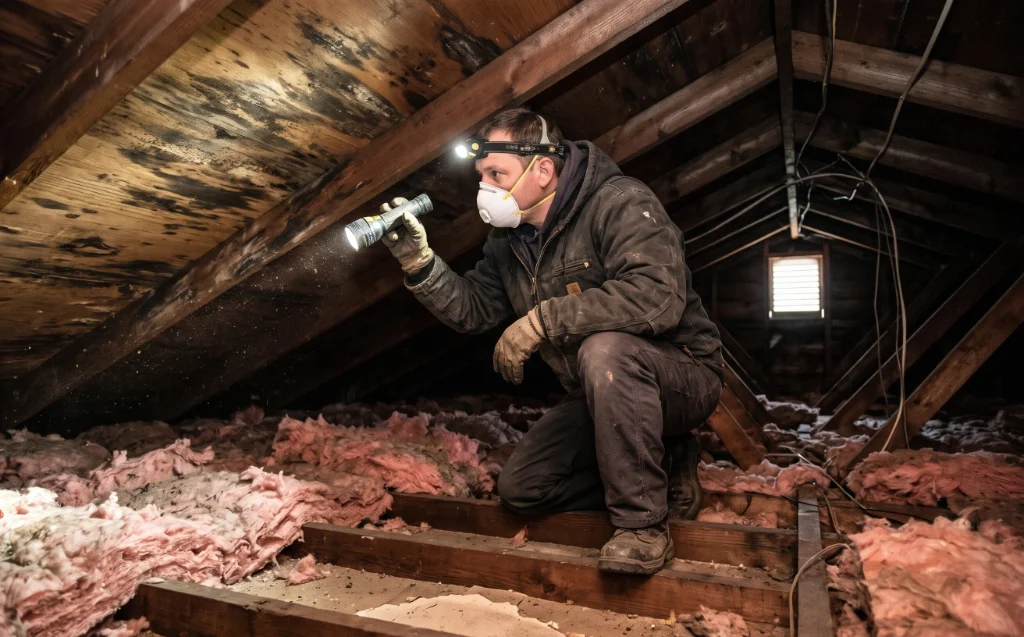
Here's the thing: an attic is dark, rarely visited, and full of wood. On top of that, airflow is often poor, so moisture hangs around.
Slow leaks are actually worse than big ones. A big leak drips onto your ceiling and you call someone fast. A slow leak around a vent pipe or chimney might just soak the same patch of decking every time it rains, and nobody notices until the smell shows up.
Where Roof Leaks Usually Start
Most attic leaks don't come from the middle of a shingle. They start where the roof changes direction or something pokes through it:
- Plumbing vent boots. The rubber collar around the pipe dries out and cracks, often after about 10 years.
- Chimneys and walls. Old or loose flashing lets water slip behind it.
- Valleys. Two roof slopes meet and channel a lot of water through one spot.
- Skylights. Seals and flashing wear out with age.
- Eaves. Ice dams push meltwater back under the shingles in winter.
Here's something many people don't realize: the water can travel along a rafter or the underside of the deck before it drips. So the moldy spot may be a few feet away from the actual hole. A good inspection traces the water trail back uphill to its source, then checks the shingles and flashing above that spot from the outside.
Signs of a Roof Leak in Your Attic
Grab a flashlight and check the attic after a heavy rain. Look for:
- Dark stains or water trails on the rafters and roof deck
- Damp, flattened, or discolored insulation
- Daylight coming through around vents or the chimney
- Rusty nails or rusty metal straps
- A musty, earthy smell
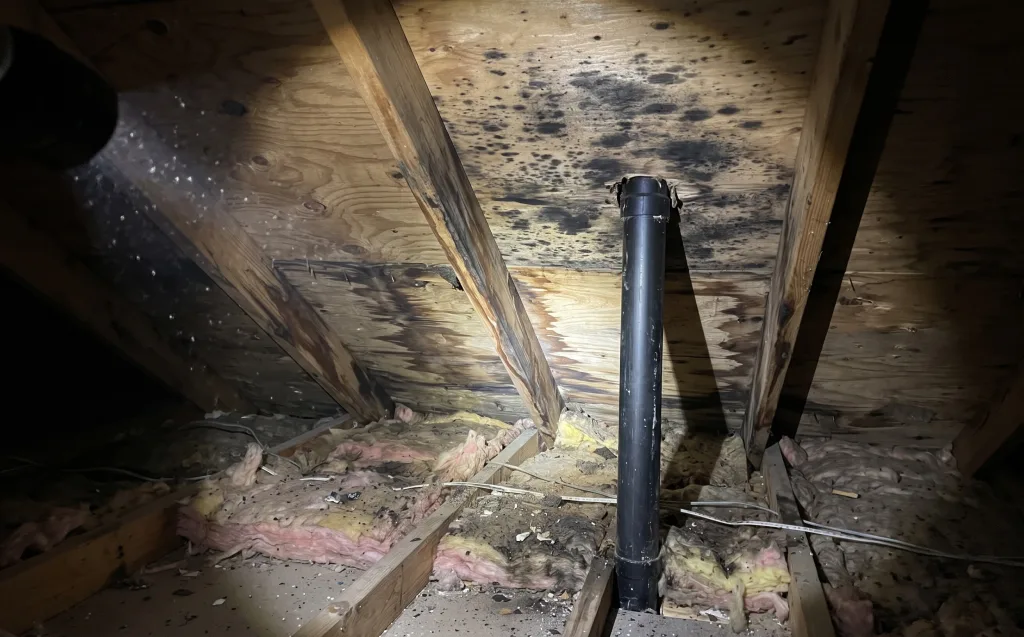
- Black, gray, or green spotting on the wood
Downstairs, you may notice a stained ceiling first. (Not every stain is the roof, by the way. Here's why your ceiling can be stained when the roof isn't leaking.) For the outside view, check these signs of a leaking roof.
Leak Mold vs. Condensation Mold
Not all attic mold comes from a leak. The pattern tells you which one you're dealing with:
- Mold from a leak sits in one area. It's usually near a chimney, vent pipe, skylight, valley, or the eaves, with water stains nearby.
- Mold from condensation spreads across large sections of the roof deck. It's often worse on the north side, where the sun never dries things out, and you'll see frost on nail tips in winter.
This matters because the fixes are different. A leak needs a roof repair. Condensation needs better ventilation and air sealing. Learn more about preventing roof condensation and what a ridge vent does.
Is Attic Mold Dangerous?
Mold can trigger allergies, asthma, and breathing irritation, especially for kids, older adults, and anyone with lung problems. Attic air can also leak down into the house through light fixtures and the attic hatch.
The bigger worry for your house is rot. Wood that stays wet loses strength. Over time, a long term leak can soften the roof decking enough that it needs to be replaced.
The Right Order to Fix It
Alright, let's talk about doing this in the right order. Clean the mold before fixing the leak, and it just grows back.
- Stop the leak. Repair the flashing, shingles, or vent boot that let water in.
- Dry everything out. Fans and dehumidifiers help.
- Remove the mold. EPA guidance says a homeowner can often handle an area under about 10 square feet. Bigger than that, hire a pro.
- Replace what's damaged. Wet insulation and soft or rotted decking should come out.
- Fix ventilation. Good airflow keeps the attic dry going forward.
One tip: don't just paint over moldy wood. Sealing over active mold without cleaning and drying first only hides the problem.
What It Costs
Of course, none of this comes free. Broad ranges for planning, not quotes:
- Roof leak repair: see our roof leak repair cost guide
- Attic mold removal: roughly $1,000 to $4,000 for many homes
- Large or hard to reach jobs: $6,000 to $15,000 when the whole attic is affected or insulation has to go
- Replacing decking: about $75 to $150 per sheet installed, plus the shingles above it
- Ventilation upgrades: $300 to $1,000
Price swings with attic size, access, and how far the mold spread. Catching it early keeps it on the low end.
How Long It Takes
- Roof leak repair: half a day to one day
- Drying: a few days, depending on how wet things got
- Mold removal: one to three days for most attics
- Decking and insulation replacement: one to two days
Weather can push the roof repair back a few days. And if decking is replaced as part of a bigger job, your town may require a permit. Check before work starts.
A few planning surprises worth knowing about. Shingle colors get discontinued, so a patch on an older roof may not match perfectly. Some attics are too tight to work in safely, which adds labor time. And if you're selling the house, a buyer's inspector will likely spot old mold stains, so keep your repair receipts and any cleanup paperwork handy. (If you're on the buying side, here's why a roof inspection before buying a house is worth it.)
Does Insurance Cover It?
Many homeowners policies cover sudden damage, like a storm tearing off shingles. They often don't cover slow leaks, wear and tear, or mold from long term moisture. Mold coverage is often limited or excluded, so read your policy carefully.
Take photos, write down dates, and report storm damage quickly. Here's what to know about whether homeowners insurance covers roof leaks.
How to Prevent It
- Get your roof inspected about once or twice a year and after big storms
- Check the attic each spring and fall
- Keep gutters clean so water doesn't back up under the shingles
- Make sure bath fans vent outside, not into the attic
- Fix small leaks right away
The Bottom Line
A leaking roof can absolutely cause attic mold, and slow leaks are the sneakiest. Stop the leak first, dry the attic, remove the mold, and replace anything that's wet or rotted.
What should you consider next? Take a look in your attic this week. If you see stains, wet insulation, or dark spots on the wood, call a roofing company to find the leak and check the decking. If the roof is near the end of its life, a roof replacement may fix the leak, the decking, and the ventilation all at once.