.webp)
What Is Roofing Underlayment and Why Does It Matter?

Aaron Venegaz is the President and founder of Global Exterior Experts and has been in the construction / roofing industry for over 15+ years. He started the company back in 2010 and done everything from scheduling appointments to putting down roofs. He's also done everything from commercial roofing to residential roofing and has also worked with almost every single roofing material multiple times over the past 15 years.
Before you hand over a deposit make sure you ask these nine questions: Are you licensed and insured? Can I see proof? Who does the actual work? What warranty comes with the job? What happens if the price changes? The answers you get to these questions will basically tell you everything you need to know about whether a roofing company deserves your trust and your money.
A roof is one of the biggest investments your property will ever need. Get the hiring part right, and the rest tends to fall into place. Get it wrong . . . and you could be paying twice for work that should've been done right the first time. So let's walk through the questions that protect you.
1. Are You Licensed, Bonded, and Insured?
This is the first question, and it is not optional. A real roofing company carries general liability insurance and workers' compensation. If a worker gets hurt on your property and there is no coverage; that bill can land on you.
Ask for current certificates. Don't just accept a verbal "yes." Though this might take a bit longer, call the insurance carrier listed and confirm the policy is active. It'll just takes five minutes but can save you from a world of trouble.
2. Will You Pull the Permit?
Here's the thing: most roof work needs a permit and the company doing the job should pull it. If someone tells you to pull your own permit that's a red flag and usually means they want the liability on you, not them.
Permits also trigger an inspection which is a great thing for you as the homeowner since a real licensed inspector confirms the work meets code which for most older homes, they don't.
A permit can cost anywhere from $150 to $500 depending on your city which by the way, that fee should already be built into the estimate.
3. Who Actually Does the Work?
Some companies sell the job off to subcontractors you've never met. That isn't always bad but you deserve to know who's actually doing the work.
Ask directly:
- Are your crews employees or subcontractors?
- Will the same crew be on my roof from start to finish?
- Who is my point of contact if something goes wrong?
You want one person responsible for the whole project. When five hands touch a job and nobody owns it a small problems turn into big ones.
Now this isn't a situation where you ask for their subcontractors to try to work with them directly since you think that you'd "Save Money" when the reality is, subcontractors don't tend to have the ability to estimate a project accurately, properly present the materials, and so on which the roofing company does for them.
4. What Warranty Do You Offer?
There are two warranties on every roof, and they are not the same.
- Manufacturer warranty: covers the shingles or materials themselves. This can run 25 to 50 years, sometimes lifetime on premium products.
- Workmanship warranty: covers the installation. This is the one people forget to ask about. A solid workmanship warranty runs 5 to 25 years.
Materials rarely fail on their own. Most leaks come from poor installation around valleys, flashing, and chimneys. So the workmanship warranty matters just as much as the brand on the box. Get both in writing.
5. Can You Show Me Local References and Recent Work?
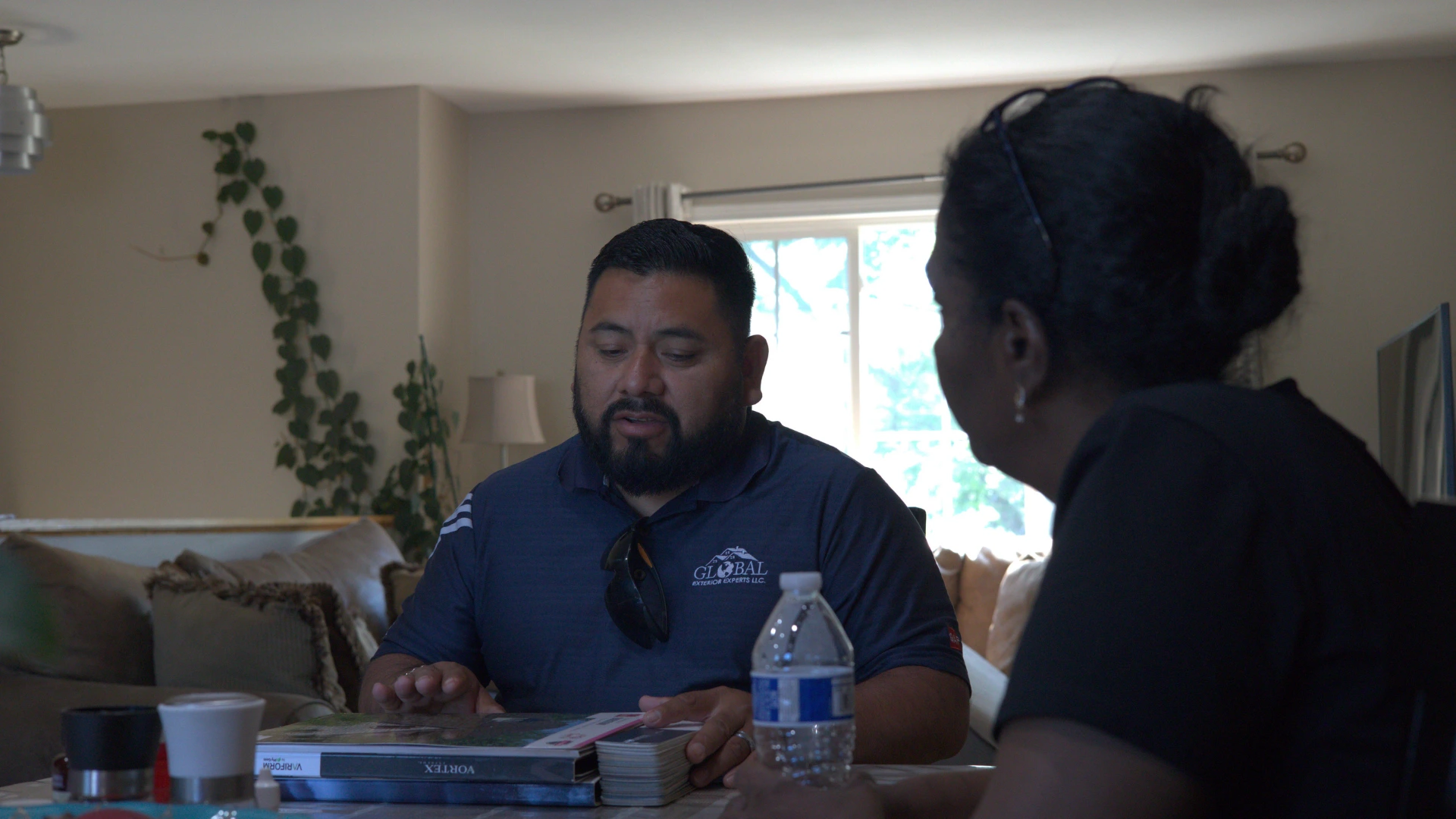
A company that does good work has a trail of happy customers behind it so just ask for three recent jobs in your area, ideally within the last year, and feel free to visit them.
Drive by if you can. Look at the lines, the flashing, the cleanup. Then check online reviews on more than one site. One glowing review proves nothing but a steady pattern across many reviews tells the real story.
(Worth noting: a brand-new company isn't automatically bad. But you'll want stronger proof and a tighter contract.)
6. What's Included in the Estimate, Line by Line?
A vague one-page quote is a setup for surprise charges. A detailed estimate should spell out the work clearly so make sure it includes:
- Tear-off and disposal of the old roof
- Type and brand of shingles or roofing material
- Underlayment, flashing, drip edge, and ventilation
- Permit fees
- Cleanup and final inspection
If two bids are far apart then the cheap one is usually leaving something out which won't really service you long-term.
7. What Will a Roof Replacement Cost, and How Long Will It Take?
A typical asphalt shingle Roof Replacement can be anywhere from $10,000 to $25,000 for an average home. Metal, tile, or slate can push well past $30,000. It all just comes down to the size, pitch, the number of layers being removed, and how complicated the roofline is.
Timeline-wise, most homes are done in one to three days. Bigger or steeper roofs take longer just due to the amount of work needing to be put in to install on a steep roof. Weather can and will stretch the schedule too, and a good crew won't rush a job in the rain just to hit a date.
One more thing: material delays happen. Certain shingle colors and metal panels can sit on backorder for weeks. Ask about lead times before you assume the work starts next Monday.
8. What Happens If You Find a Problem Mid-Job?
Once the old roof comes off, hidden issues sometimes show up: rotted decking, water damage, or bad framing. This is normal on most homes but what matters is how the company handles it.
You want a clear answer along the lines of: they stop, document the problem with photos, explain the fix, and get your approval before charging a dollar more. No surprise invoices. No "we'll sort it out later."
Get that change-order process in writing since it keeps everyone honest when the unexpected shows up which when we're talking roofs, it often does.
.webp)
9. How Will You Protect My Property and Clean Up?
A roof job is messy. Nails, debris, and old shingles end up everywhere if nobody plans for it.
Ask about how they protect your landscaping, siding, and windows during tear-off. Then ask about cleanup. A professional crew runs a magnetic sweep for nails and hauls away every scrap before they leave.
Your yard should look better when they go than the dumpster made it look mid-project. That detail says a lot about how a company treats your home.
Quick Recap: Your Hiring Checklist
Before you sign, make sure you have clear answers on:
- License, insurance, and bonding
- Who pulls the permit
- Who performs the work
- Both warranties, in writing
- Local references and real reviews
- A detailed, line-by-line estimate
- Honest cost and timeline ranges
- A written change-order process
- A real cleanup plan
What to Do Next
Get at least three written estimates, and ask all nine questions every time. The right roofing company will answer plainly and put it on paper. The wrong one will dodge, rush, or pressure you.
Take your time. A roof protects everything under it, so a few extra days of homework is always worth it. When you find a company that earns your confidence on these questions, you've found the one to hire.